
Listen to this Post
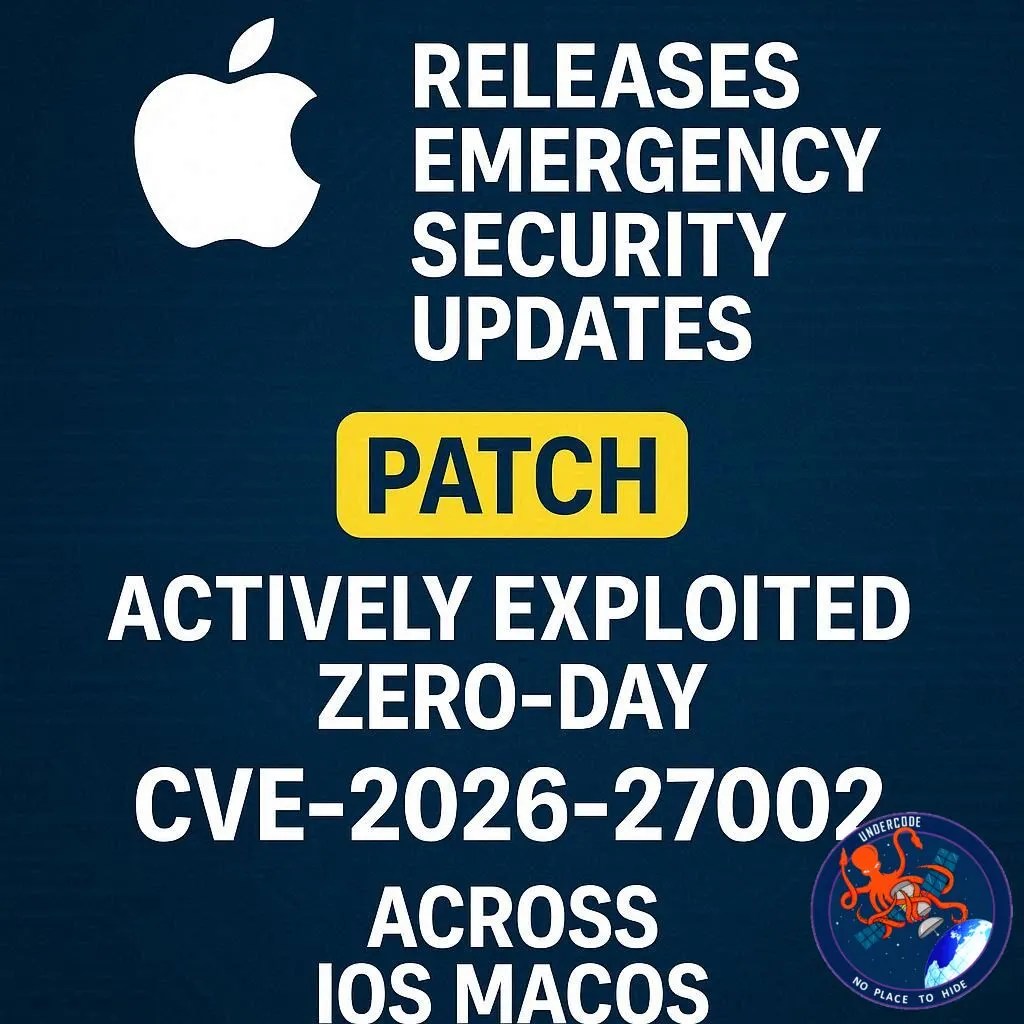 A Critical Memory Corruption Flaw Forces Apple Into Rapid Defensive Action
Apple has rolled out urgent security updates across its entire ecosystem, including iOS, iPadOS, macOS, watchOS, tvOS, and visionOS, to address an actively exploited zero-day vulnerability identified as CVE-2026-20700. The flaw, discovered by Google’s Threat Analysis Group, affects Apple’s Dynamic Link Editor, known as dyld, and allows attackers to execute arbitrary code on compromised devices. The fact that Google’s elite security team uncovered the issue strongly suggests that it may have been leveraged in targeted operations, potentially by nation-state actors or advanced commercial spyware vendors.
At the core of the vulnerability lies a memory corruption issue within dyld, a fundamental component responsible for loading and linking dynamic libraries in Apple operating systems. If exploited, attackers with memory write capabilities could manipulate the flaw to run malicious code. Apple confirmed it is aware of reports that the vulnerability may have been used in an “extremely sophisticated attack” targeting specific individuals running versions of iOS prior to iOS 26.
The advisory also referenced two additional vulnerabilities, CVE-2025-14174 and CVE-2025-43529, which were previously addressed in December 2025 following reports of active exploitation. CVE-2025-14174 is an out-of-bounds memory access flaw in ANGLE, a graphics abstraction layer used by Google Chrome on macOS. Affecting Chrome versions prior to 143.0.7499.110, this vulnerability could allow a remote attacker to trigger memory corruption through a specially crafted HTML page. With a CVSS score of 8.8, it posed a serious risk of arbitrary code execution.
Meanwhile, CVE-2025-43529 is a use-after-free vulnerability in Apple’s WebKit engine, the core technology that powers Safari and many third-party applications that rely on WebKit to render web content. When WebKit improperly manages memory and continues to access freed memory regions, attackers can exploit the condition using malicious web content. This can result in application crashes or full remote code execution. Like the ANGLE flaw, it carried a CVSS score of 8.8 and was actively exploited in the wild before being patched.
Apple addressed CVE-2026-20700 through improved state management within dyld, effectively hardening the system against memory manipulation. The company released updates for a wide range of devices, including iPhone 11 and later models, multiple generations of iPad Pro, iPad Air, iPad mini, and standard iPad devices. Security patches are now available across the latest supported versions of Apple’s operating systems, reinforcing the company’s layered defense strategy.
In addition to patching the zero-day flaw, Apple also deployed security updates for older supported versions of iOS, iPadOS, macOS, and Safari, ensuring broader protection for users who may not yet be on the newest major releases. The coordinated release across multiple platforms underscores the interconnected nature of Apple’s ecosystem and the potential impact of vulnerabilities within shared system components such as dyld and WebKit.
The disclosure pattern reveals a growing trend in which sophisticated actors increasingly target core system components rather than standalone applications. By focusing on memory corruption flaws in foundational elements like dynamic linkers and web rendering engines, attackers gain deeper system access and a higher probability of successful exploitation across multiple device categories.
The Expanding Threat Landscape Around Apple’s Core System Components
The exploitation of CVE-2026-20700 highlights how critical low-level system processes have become prime targets for advanced threat actors. Dyld operates at the heart of Apple’s runtime environment, managing how applications load libraries and execute code. Compromising such a component effectively opens the door to wide-ranging system manipulation.
When memory corruption occurs within a dynamic linker, the consequences can be severe. Attackers who achieve arbitrary code execution at this level may bypass traditional application sandboxing, escalate privileges, or implant persistent surveillance tools. The reference to “extremely sophisticated attacks” indicates that exploitation likely required significant technical expertise and possibly custom-built exploit chains.
The involvement of Google’s Threat Analysis Group is particularly notable. This team typically investigates government-backed cyber operations and high-end spyware campaigns. Their discovery suggests that the zero-day may have been deployed in targeted surveillance scenarios rather than broad, indiscriminate attacks.
WebKit and Browser-Based Exploitation Remain a High-Risk Vector
The earlier vulnerabilities in WebKit and ANGLE reinforce the ongoing risks associated with browser engines and graphics layers. Modern browsers handle complex rendering tasks and execute dynamic content, making them attractive attack surfaces. A single malicious webpage can trigger memory corruption if the underlying engine mishandles resources.
WebKit’s use-after-free flaw demonstrates how subtle memory management errors can cascade into full remote code execution. Because WebKit is embedded not only in Safari but also in countless third-party applications on iOS and macOS, a single vulnerability can ripple across the ecosystem. Attackers often combine such browser-based flaws with kernel or system-level vulnerabilities to construct complete exploit chains.
Device Coverage and Patch Distribution Strategy
Apple’s patch coverage spans a broad array of hardware generations, reflecting the company’s long-standing policy of supporting older devices with security updates. iPhone 11 and newer models, along with several iPad generations, received the dyld fix. Updates for macOS, watchOS, tvOS, and visionOS indicate that the vulnerability was not confined to mobile devices but extended throughout Apple’s integrated platform architecture.
The synchronized release across platforms reduces the window of exposure. However, patch deployment ultimately depends on user adoption. Devices that remain unpatched continue to represent viable targets for adversaries who may attempt to reuse or refine exploit techniques.
What Undercode Say:
The Strategic Implications of a Dyld-Level Zero-Day
The appearance of a dyld-based zero-day is more than just another security bulletin. It represents a direct strike at the architectural core of Apple’s operating systems. Dynamic linkers are trusted components, deeply embedded and rarely scrutinized outside advanced security circles. When attackers penetrate that layer, they are operating at a level that bypasses superficial defenses.
The sophistication mentioned in Apple’s advisory suggests that the exploit chain was likely highly selective. This was not mass malware distributed through spam campaigns. Instead, it signals targeted digital espionage, possibly aimed at journalists, political figures, corporate executives, or activists. Such operations often involve multi-stage payloads, stealth persistence mechanisms, and forensic evasion.
Memory corruption continues to dominate high-severity vulnerabilities across major platforms. Despite advancements in exploit mitigations like pointer authentication, sandboxing, and memory tagging, attackers persist in identifying logic flaws that allow controlled corruption. Each patch demonstrates incremental hardening, yet the cycle repeats.
The clustering of three high-risk vulnerabilities within months illustrates a broader reality. Attackers are not relying on single-entry exploits. They build chains. A WebKit bug delivers initial code execution. A dyld flaw escalates privileges. A kernel weakness cements persistence. Modern exploitation is modular, flexible, and often custom-built per target.
Google’s involvement highlights the increasingly collaborative dynamic between major technology companies in confronting advanced threats. Intelligence sharing between Apple and Google reflects recognition that nation-state level adversaries do not respect platform boundaries. Today’s surveillance toolkit may pivot seamlessly from Android to iOS depending on opportunity.
Another key implication lies in update fatigue. Apple’s rapid patch cadence is technically impressive, yet user behavior remains a variable. High-profile zero-days may motivate immediate updates among security-conscious users, but a portion of the ecosystem inevitably delays installation. In targeted campaigns, attackers often exploit this hesitation window.
There is also a broader conversation about software complexity. Modern operating systems are massive, interdependent structures. As feature sets expand, so does the attack surface. Even companies with mature secure development lifecycles cannot eliminate risk entirely. The realistic goal is rapid detection, responsible disclosure, and accelerated remediation.
This incident further underscores the rising commercial spyware market. Private vendors develop and sell sophisticated exploit chains to governments. When a vulnerability is described as being used in an “extremely sophisticated attack,” it frequently aligns with this market’s operational patterns. The economics of zero-days have shifted. Exploits are assets, traded quietly and deployed selectively.
From a defensive standpoint, Apple’s improved state management in dyld suggests tighter control over memory handling routines. While technical details remain undisclosed, such enhancements likely include stricter validation checks, hardened pointer usage, and refined lifecycle controls for loaded libraries.
Ultimately, the release demonstrates a reactive but effective security posture. Apple moved quickly, acknowledged active exploitation, and provided patches across supported devices. Transparency in acknowledging targeted attacks marks a notable shift from older industry norms where companies hesitated to confirm in-the-wild exploitation.
The larger lesson is unmistakable. Core system components are now primary battlegrounds in the cyber conflict landscape. Memory corruption at the foundation level is no longer theoretical. It is operational, strategic, and actively weaponized.
Fact Checker Results
✅ Apple confirmed CVE-2026-20700 was actively exploited in sophisticated targeted attacks.
✅ CVE-2025-14174 and CVE-2025-43529 were both high-severity vulnerabilities with CVSS 8.8 scores.
✅ Security updates were released across iOS, iPadOS, macOS, watchOS, tvOS, and visionOS to address these issues.
Prediction
🔮 Advanced attackers will continue targeting low-level system components like dynamic linkers and rendering engines.
🔮 Commercial spyware vendors are likely to refine multi-stage exploit chains combining browser and system-level flaws.
🔮 Rapid cross-platform patch releases will become the standard response model for ecosystem-wide zero-day threats.
▶️ Related Video (76% Match):
🕵️📝✔️Let’s dive deep and fact‑check.
References:
Reported By: securityaffairs.com
Extra Source Hub (Possible Sources for article):
https://stackoverflow.com
Wikipedia
OpenAi & Undercode AI
Image Source:
Unsplash
Undercode AI DI v2
Bing
🔐JOIN OUR CYBER WORLD [ CVE News • HackMonitor • UndercodeNews ]
📢 Follow UndercodeNews & Stay Tuned:
𝕏 formerly Twitter 🐦 | @ Threads | 🔗 Linkedin | 🦋BlueSky | 🐘Mastodon


