
Listen to this Post
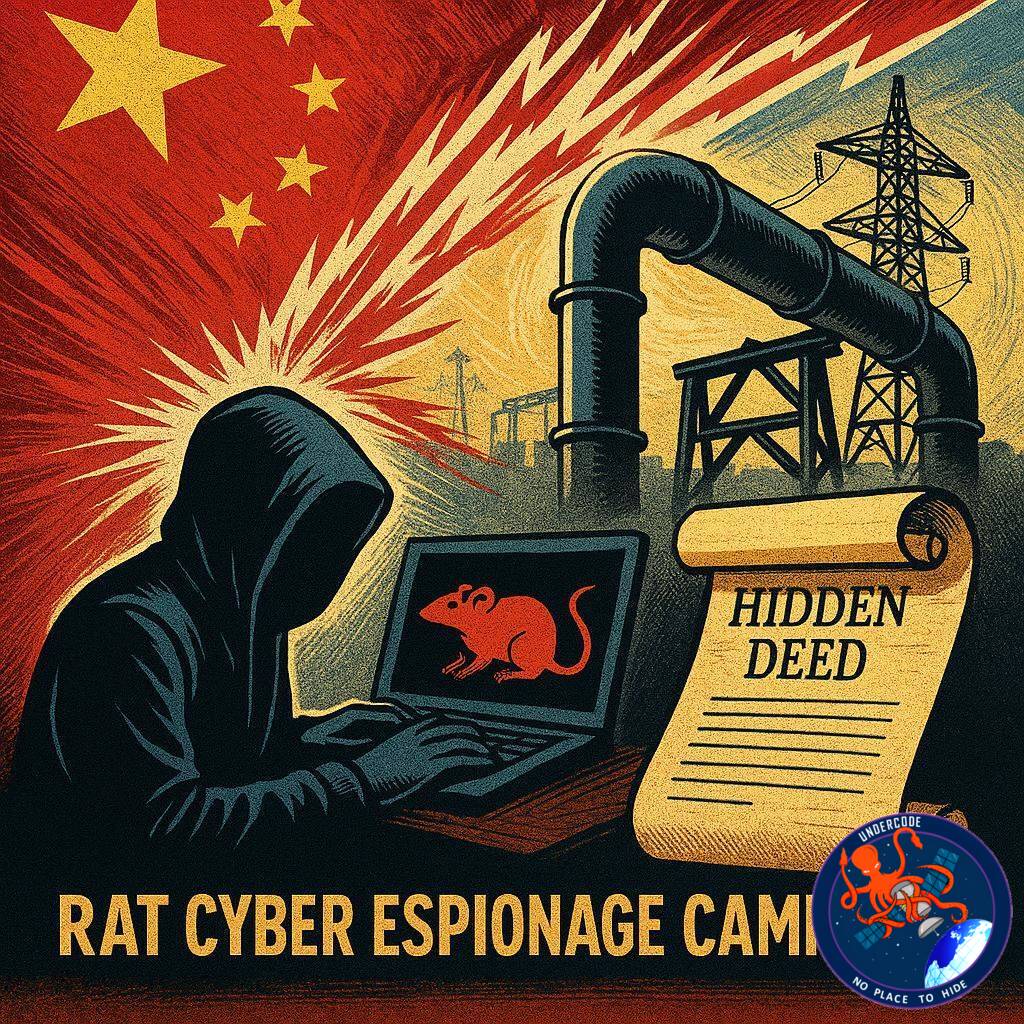 🧠 Executive Summary: A Multi-Wave Cyber Espionage Assault on Critical Energy Infrastructure
A highly sophisticated cyber espionage campaign tracked by Bitdefender Labs has revealed a sustained, multi-wave intrusion targeting an Azerbaijani oil and gas organization between late December 2025 and late February 2026. The operation has been attributed with moderate-to-high confidence to the Chinese-linked threat cluster FamousSparrow, overlapping with the broader Earth Estries ecosystem. The attack represents a significant escalation in cyber activity focused on energy infrastructure within the South Caucasus, a region increasingly central to European energy security.
The intrusion leveraged previously known vulnerabilities in Microsoft Exchange Server environments, specifically ProxyShell and ProxyNotShell exploit chains, to gain initial access. Once inside, attackers deployed a layered malware ecosystem centered on Deed RAT and Terndoor backdoors, both used across multiple waves of activity. These tools were delivered using advanced DLL sideloading techniques that evolved beyond traditional methods, incorporating a two-stage execution mechanism designed to evade sandbox detection and delay payload activation until legitimate application workflows completed.
The attackers demonstrated strong operational persistence, repeatedly re-entering the same compromised environment even after remediation attempts. Over three distinct intrusion waves, they rotated malware families, adjusted encryption schemes, and refined deployment methods while maintaining access through the same vulnerable Exchange entry point. Lateral movement was achieved through RDP sessions, SMB-based tools such as Impacket, and credential abuse involving domain administrator accounts, highlighting a well-coordinated post-compromise strategy.
Beyond technical sophistication, the campaign reflects a broader geopolitical context. Azerbaijan’s growing role as a strategic energy supplier to Europe—especially following disruptions in Russian gas transit routes and instability in alternative LNG supply chains—places it at the center of energy security dynamics. While no direct motive is confirmed, the targeting of this sector aligns with known intelligence-gathering priorities of state-aligned threat actors operating in contested geopolitical regions.
The intrusion ultimately provides a rare, detailed view into the evolution of Chinese APT tooling, especially the continued refinement of Deed RAT and its loader infrastructure. Changes in encryption mechanisms, module identifiers, compression algorithms, and execution flow demonstrate ongoing development rather than static reuse, reinforcing the idea that modern APT operations are continuously engineered systems rather than fixed malware campaigns.
💥 What Undercode Say: Anatomy of a Persistent State-Level Cyber Offensive
🧩 Strategic Expansion of FamousSparrow into Energy Infrastructure
The campaign marks a notable shift in the operational geography of FamousSparrow, previously associated with telecom, government, and tech sectors. The inclusion of an Azerbaijani energy entity indicates expansion into infrastructure tied directly to European energy stability. This suggests evolving intelligence priorities in regions impacted by shifting global supply routes.
⚙️ Evolution of DLL Sideloading into a Two-Stage Execution Trap
Unlike conventional sideloading, the malware introduces a dual-function trigger system within the DLL exports. By separating initialization and execution into staged API calls, the payload avoids early sandbox detection. This design forces execution only when the host application completes its full legitimate runtime sequence, significantly increasing stealth.
🧠 Deed RAT as a Modular and Continuously Evolving Platform
Deed RAT is no longer a static backdoor but a modular platform with evolving encryption, compression, and plugin handling logic. The shift from Snappy to Deflate, changes in magic values, and updated RC4/AES routines indicate active maintenance by its developers. This level of iteration is consistent with long-term espionage tooling rather than opportunistic malware.
🔁 Persistence Through Repeated Exchange Exploitation Cycles
Despite remediation attempts, attackers repeatedly returned to the same Microsoft Exchange entry point. This reflects an operational doctrine focused on persistence through redundancy rather than stealth alone. Each return wave introduced new tooling while preserving access pathways, demonstrating disciplined campaign management.
🌐 Geopolitical Alignment with South Caucasus Energy Security Shifts
The timing and sector selection align with Azerbaijan’s rising importance in European energy supply chains. While attribution does not confirm motive, the intelligence value of energy infrastructure in a geopolitically sensitive corridor makes it a high-priority target for state-aligned espionage actors.
🛡️ Multi-Layer Defense Evasion Beyond Traditional Malware Techniques
The campaign blends DLL sideloading, API hooking, memory patching, and encrypted payload chaining. These techniques collectively bypass signature-based detection systems and rely on behavioral gating. The malware effectively hides inside normal application execution paths, reducing visibility in forensic analysis environments.
🔄 Lateral Movement Driven by Credential Abuse and Administrative Trust
Attackers leveraged domain administrator credentials and tools like RDP and Impacket for internal movement. This reflects post-exploitation dominance rather than initial compromise reliance. Once inside, the attackers operated as trusted users, making detection significantly more difficult.
🧬 Technical Overlap Between FamousSparrow and Earth Estries Ecosystem
Shared tooling, execution patterns, and cryptographic routines indicate strong overlap between FamousSparrow and Earth Estries. This reinforces prior assessments by multiple security vendors that these clusters may represent interconnected or cooperating development ecosystems rather than isolated groups.
🔍 Fact Checker Results
Claim 1: Exchange vulnerabilities enabled initial access
✔ Supported by ProxyShell and ProxyNotShell exploitation patterns widely documented in security research.
Claim 2: Deed RAT uses evolving encryption and modular plugins
✔ Confirmed by observed changes in AES, RC4, Deflate, and module structure.
Claim 3: Attribution to FamousSparrow is moderate-to-high confidence, not absolute
✔ Accurate; attribution is probabilistic and based on TTP overlap, not direct proof.
📊 Prediction: Escalation of Energy-Sector Cyber Espionage in Eurasian Corridors
The pattern of repeated targeting of energy infrastructure strongly suggests continued expansion of APT operations into regions critical to European supply diversification. Future campaigns are likely to further refine stealth techniques such as execution-gated payloads and memory-only backdoors.
Deed RAT and related tooling will likely continue evolving toward fully fileless architectures, reducing disk presence and increasing reliance on in-memory execution chains. Exchange servers and similar perimeter systems will remain primary entry points due to persistent patch lag in enterprise environments.
If geopolitical pressure on energy routes in the South Caucasus increases further, cyber operations in this domain are expected to intensify, with more frequent multi-wave intrusion cycles and overlapping malware families deployed to maintain redundant access.
🕵️📝Let’s dive deep and fact‑check.
References:
Reported By: www.bitdefender.com
Extra Source Hub (Possible Sources for article):
https://www.twitter.com
Wikipedia
OpenAi & Undercode AI
Image Source:
Unsplash
Undercode AI DI v2
Bing
🔐JOIN OUR CYBER WORLD [ CVE News • HackMonitor • UndercodeNews ]
📢 Follow UndercodeNews & Stay Tuned:
𝕏 formerly Twitter 🐦 | @ Threads | 🔗 Linkedin | 🦋BlueSky | 🐘Mastodon


