
Listen to this Post
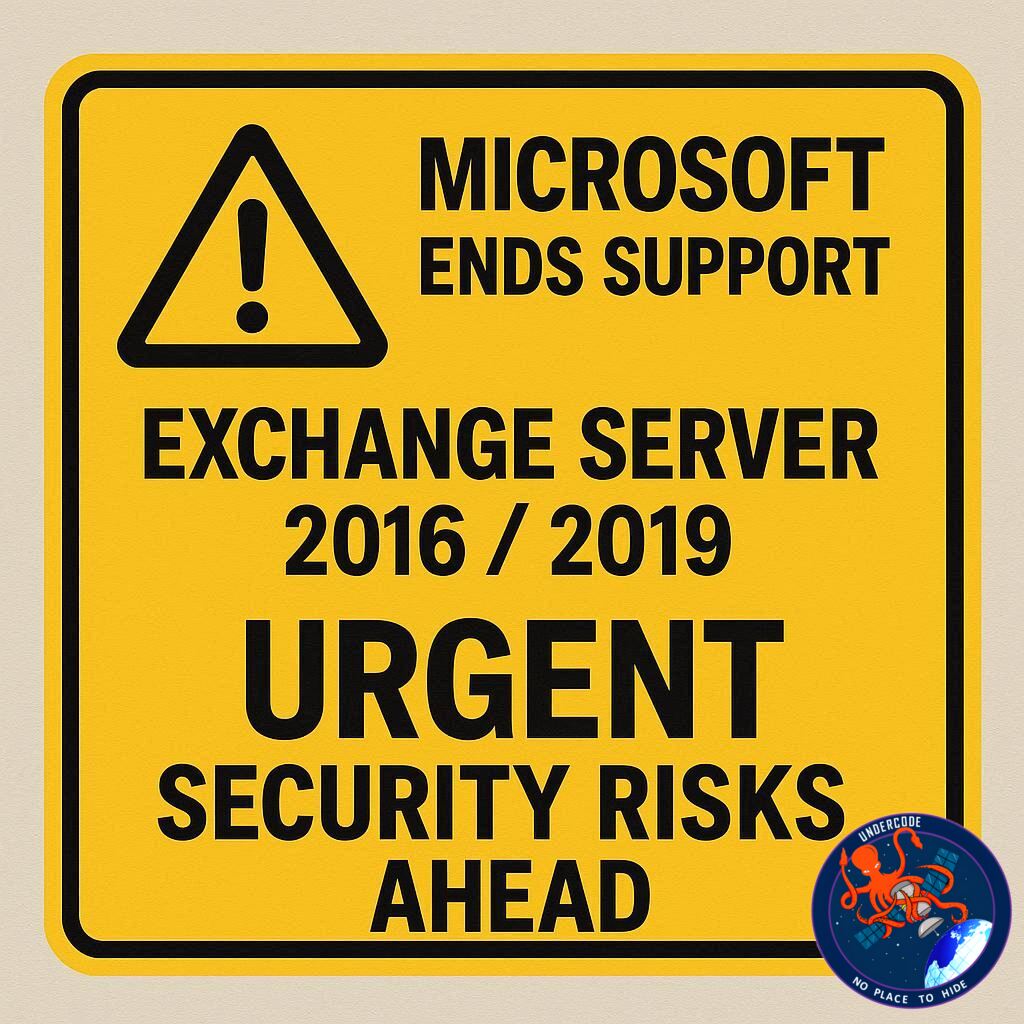
The countdown has officially ended. Microsoft has confirmed that Exchange Server 2016 and 2019 have reached the end of their support lifecycle as of October 14, 2025. This milestone marks a critical turning point for businesses and organizations relying on these platforms, leaving them exposed to potential cybersecurity threats if they fail to act quickly. With no further updates, patches, or security fixes, companies are now urged to upgrade to Exchange Server SE or migrate to Exchange Online to ensure the safety of their email infrastructure.
Exchange Server has long been a cornerstone of corporate email management, offering businesses a reliable platform for communication and collaboration. However, with the end of support, vulnerabilities will no longer be addressed, leaving outdated servers susceptible to exploitation. Microsoft’s announcement serves as both a warning and a call to action: organizations must evaluate their current infrastructure, plan migrations, and prioritize upgrades to avoid costly breaches. For many IT teams, this could mean significant resource allocation and strategic planning to ensure a seamless transition.
Historically, unsupported software becomes a prime target for cybercriminals. Hackers often focus on outdated platforms because known vulnerabilities remain unpatched, offering an easier entry point into corporate networks. The urgency of this transition is compounded by the increasing sophistication of cyberattacks, from ransomware to phishing schemes, which can compromise sensitive data and disrupt business operations. Companies still running Exchange Server 2016 or 2019 are now facing a ticking clock, where each day without an upgrade increases their exposure to risk.
The migration options Microsoft recommends include moving to Exchange Server SE, which provides enhanced security and management features, or transitioning to Exchange Online as part of Microsoft 365. Exchange Online not only delivers regular updates but also integrates advanced threat protection and cloud-based redundancy, ensuring a more secure and resilient email environment. Businesses opting for a cloud-based solution may also benefit from scalability, easier maintenance, and reduced on-premise infrastructure costs.
Organizations must also consider the broader implications of delayed migration. Beyond immediate security risks, unsupported servers can affect compliance with data protection regulations. Industries governed by strict privacy rules, such as finance and healthcare, may face penalties or legal consequences if they continue to operate outdated email systems. This adds a regulatory dimension to the security urgency, making proactive upgrades not just a technical priority but a business-critical necessity.
The transition away from Exchange Server 2016 and 2019 will require careful planning. IT teams should conduct thorough audits of existing email environments, identify dependencies, and ensure backup solutions are in place before migration. Staff training and change management will also play a crucial role in minimizing downtime and ensuring user adoption of the new systems. While the process may be resource-intensive, the alternative—remaining on unsupported servers—is far riskier and could result in significant financial and reputational damage.
Cybersecurity experts emphasize that the end of support is not merely a routine update schedule—it represents a fundamental shift in risk exposure. Companies that act now will safeguard their communications, protect sensitive data, and maintain business continuity. Those that delay may find themselves grappling with compromised networks, disrupted services, and escalating recovery costs. As cyber threats evolve, timely upgrades are not optional—they are essential.
What Undercode Say:
Microsoft’s official end-of-support announcement underscores a pattern seen across enterprise software lifecycles: aging infrastructure becomes a liability if left unmanaged. Exchange Server 2016 and 2019 served organizations well for years, but their vulnerabilities now demand immediate attention. Beyond the immediate security concerns, the migration push signals a broader industry shift toward cloud-based solutions. Exchange Online represents more than a software upgrade—it’s a strategic move toward resilience, scalability, and integrated threat protection.
From an operational standpoint, organizations face a dual challenge: balancing the technical complexity of migration with the need to maintain uninterrupted communication. Legacy systems often host critical workflows, third-party integrations, and compliance-sensitive data. A rushed or poorly planned migration could disrupt operations, highlighting the importance of phased rollouts, pilot testing, and comprehensive staff training. For many mid-sized enterprises, this may also involve cost-benefit analyses weighing on-premises management versus cloud subscription models.
Security risk amplification is another key consideration. Unsupported Exchange Servers are high-value targets for cybercriminals because exploits are well-documented and easy to weaponize. Attackers often scan the internet for vulnerable systems immediately after support ends, leading to a spike in exploitation attempts. Organizations must, therefore, treat the end-of-support date as a hard deadline rather than a flexible guideline. Cyber insurance policies, compliance audits, and internal security postures should be reviewed in light of this deadline.
Strategically, Microsoft’s push toward Exchange Online aligns with a larger enterprise trend: centralizing communication, leveraging cloud redundancy, and integrating AI-driven threat detection. While the upfront migration cost may seem steep, the long-term benefits—continuous patching, reduced IT overhead, and enhanced monitoring—often outweigh the initial investment. Businesses that embrace this transition early gain a competitive edge, whereas those who procrastinate risk reactive firefighting, potential data breaches, and reputational harm.
Additionally, the end-of-support announcement serves as a reminder of the need for lifecycle management policies within IT departments. Regular audits, upgrade schedules, and proactive planning are critical to mitigating risk. Enterprises that embed lifecycle management into their operational strategy are better positioned to handle future transitions without disruption. Cloud adoption also facilitates this proactive approach, offering seamless updates and ongoing vendor support, which is particularly valuable in industries with stringent compliance demands.
The human element is equally crucial. Employees accustomed to legacy systems may resist change, so communication, training, and support mechanisms must accompany technical migration. Properly managed, these changes can improve productivity, reduce user errors, and create a culture of cybersecurity awareness. From an analytical perspective, the end of support highlights the interplay between technological advancement, cybersecurity risk management, and organizational agility. Companies that fail to adapt risk falling behind, both operationally and reputationally, while those that migrate efficiently position themselves as resilient, forward-looking entities.
Fact Checker Results:
✅ Microsoft officially ended support for Exchange Server 2016 & 2019 on October 14, 2025.
❌ No further security patches will be released for these versions.
✅ Migration to Exchange Server SE or Exchange Online is recommended to maintain security compliance.
Prediction:
As cybercriminals rapidly target unsupported servers, we can expect an uptick in attempted breaches on outdated Exchange installations over the next 12 months. Organizations that delay upgrades may face ransomware attacks or data leaks, while early adopters of Exchange Online will see improved resilience, operational efficiency, and enhanced threat monitoring. 🌐🔐
🕵️📝✔️Let’s dive deep and fact‑check.
References:
Reported By: x.com
Extra Source Hub (Possible Sources for article):
https://stackoverflow.com
Wikipedia
OpenAi & Undercode AI
Image Source:
Unsplash
Undercode AI DI v2
Bing
🔐JOIN OUR CYBER WORLD [ CVE News • HackMonitor • UndercodeNews ]
📢 Follow UndercodeNews & Stay Tuned:
𝕏 formerly Twitter 🐦 | @ Threads | 🔗 Linkedin | 🦋BlueSky | 🐘Mastodon


