
Listen to this Post
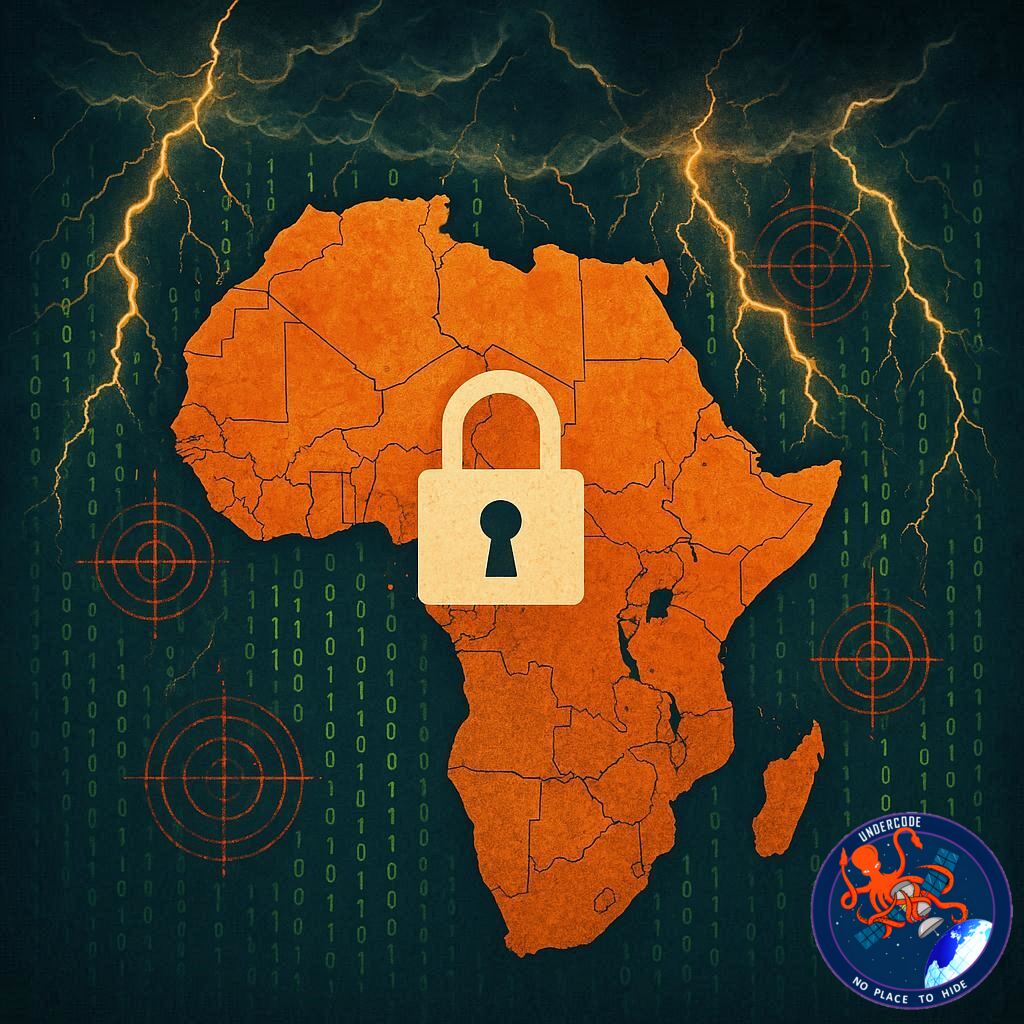
🌍 Introduction: The Continent Under Siege
In the digital era, Africa stands at the crossroads of rapid technological growth and relentless cyber warfare. Despite showing a slight decline in attacks, the continent remains the most targeted region globally. From Nairobi to Lagos, cybercriminals continue to exploit weak legal frameworks, underdeveloped defenses, and the continent’s booming digital adoption. The numbers are staggering, and the implications are profound — Africa’s cyber landscape tells a story of resilience, vulnerability, and transformation.
📉 Africa Remains the Global Hotspot for Cyberattacks
In September 2025, organizations across Africa recorded over 3,000 cyberattacks per week, maintaining their position as the top global targets even amid a 10% decline from previous months. According to Check Point Research, this downward trend may hint at improved regional cybersecurity policies and stronger law enforcement presence, though experts warn it’s too early to celebrate.
Omer Dembinsky, group manager at Check Point Research, suggests the dip could reflect better national investments in cybersecurity, including stronger regulations and digital awareness training. But he also cautions that the reduced attack frequency doesn’t necessarily mean attackers are backing off — they might simply be recalibrating.
Data from Check Point shows that Africa and the Global South continue to experience nearly double the weekly cyberattacks compared to North America and Europe. The situation is most severe in Eastern and Western Africa, where digital crime now represents roughly a third of all reported criminal activity. According to Interpol, nine out of ten African nations still lack the forensic and investigative capacity to properly combat cybercrime, leaving vast digital gaps open for exploitation.
Experts like Anna Yurtaeva, head of high-tech crime investigations for Group-IB in Singapore, explain that cybercriminals are thriving in these gaps. Africa’s less mature legal systems and growing underground markets have created an environment ripe for exploitation. “The African region ranks among the highest globally for compromised hosts and APT group activity,” she says, emphasizing that Africa is no longer just a target — it’s becoming a hub for global cybercriminal operations.
🕵️♂️ Phishing Over Ransomware: A Shift in Criminal Strategy
As African nations expand digital inclusion and mobile connectivity, cybercriminals have adapted their strategies. Instead of large-scale ransomware campaigns, attackers are leveraging phishing scams, investment frauds, and mobile-based cons. This mirrors the region’s digital profile — highly connected through mobile devices but often underprotected by advanced security systems.
Interpol’s recent three-month joint operation led to over 1,200 arrests across Africa, dismantling a major scam network responsible for $300 million in losses. Yet, despite these successes, Africa continues to rank among the top regions for compromised digital hosts. Yurtaeva warns that compromised devices often become stepping stones for larger crimes — data theft, extortion, and illicit system access sales on the Dark Web.
While ransomware remains a global menace, it’s less prevalent in Africa. Only 1% of 562 ransomware cases in September originated from the continent, with North America accounting for over half. Analysts speculate that ransomware syndicates often test their attacks in Africa before expanding globally, treating it as a digital “training ground” for more sophisticated campaigns elsewhere.
🔐 Building a Cyber-Resilient Africa
Despite the challenges, African countries are showing remarkable progress. According to John Paul Onyango, Check Point’s country manager for East Africa, the continent is slowly shifting toward a “prevention-first mindset.” This involves integrating artificial intelligence-driven defenses, nurturing cybersecurity talent, and fostering regional partnerships.
Experts agree that real progress requires a mix of technology and collaboration. Companies are urged to deploy multi-factor authentication, conduct security audits, and adopt managed detection and response (MDR) systems. However, Yurtaeva stresses that cooperation remains key: “National CERTs and global partnerships are essential for addressing the underground trade of corporate access,” she says. Active threat monitoring and proactive remediation must become the new standard.
In many ways, Africa’s cybersecurity struggle mirrors its broader digital journey — full of innovation, disruption, and untapped potential. Each attack not only tests its defenses but also shapes the evolution of a continent determined to define its own cyber future.
What Undercode Say:
Africa’s cybersecurity challenge isn’t simply about numbers or attack volume; it’s a geopolitical and economic reality. The continent’s rapid digitalization, mobile-first economy, and youthful online population make it an irresistible target for both opportunistic hackers and state-sponsored espionage groups. The irony is striking: the same factors driving Africa’s tech renaissance are also fueling its cyber vulnerability.
While the 10% dip in attacks seems encouraging, it’s likely temporary. Cybercrime is adaptive. Threat actors regroup, retool, and return with refined methods. The surge of compromised systems sold on the Dark Web reveals a deeper truth — Africa’s cybercrime ecosystem isn’t just being exploited; it’s evolving into a self-sustaining digital black market.
This transformation poses three major risks:
Economic Drain: Cyberattacks erode investor confidence, stifle digital trade, and inflate insurance costs for African firms.
Data Sovereignty Threats: State-backed cyber espionage undermines national security and regional stability.
Talent Deficit: The chronic shortage of cybersecurity professionals leaves organizations reactive instead of proactive.
Yet, amid the chaos, there’s opportunity. Africa can leapfrog traditional cybersecurity models by integrating AI-driven defense, regional intelligence sharing, and education-first initiatives. Countries like Kenya, Nigeria, and South Africa are already piloting digital resilience frameworks that blend public-private collaboration and threat-sharing alliances.
Undercode views this as a pivotal moment: Africa stands on the edge of either a cyber breakthrough or a digital collapse. The direction it takes will depend on how quickly it can unify policy, technology, and human capital. In this new digital battleground, resilience isn’t a luxury — it’s survival.
🔍 Fact Checker Results
✅ Africa remains the most attacked region globally, according to Check Point Research.
✅ Cyberattacks decreased by 10% in September 2025, reflecting early signs of improved defense measures.
❌ No evidence supports a sustained long-term reduction in attacks; most experts predict cyclical resurgence.
📊 Prediction
🔮 Africa’s cybersecurity landscape will intensify over the next 18 months. Expect more sophisticated phishing and espionage campaigns targeting financial and infrastructure sectors. 🌐 Governments that invest in AI-driven defense and cross-border intelligence sharing will emerge as cyber-resilience leaders, while others may become digital safe havens for threat actors. 🚀
🕵️📝✔️Let’s dive deep and fact‑check.
References:
Reported By: www.darkreading.com
Extra Source Hub (Possible Sources for article):
https://www.instagram.com
Wikipedia
OpenAi & Undercode AI
Image Source:
Unsplash
Undercode AI DI v2
Bing
🔐JOIN OUR CYBER WORLD [ CVE News • HackMonitor • UndercodeNews ]
📢 Follow UndercodeNews & Stay Tuned:
𝕏 formerly Twitter 🐦 | @ Threads | 🔗 Linkedin | 🦋BlueSky | 🐘Mastodon


