
Listen to this Post
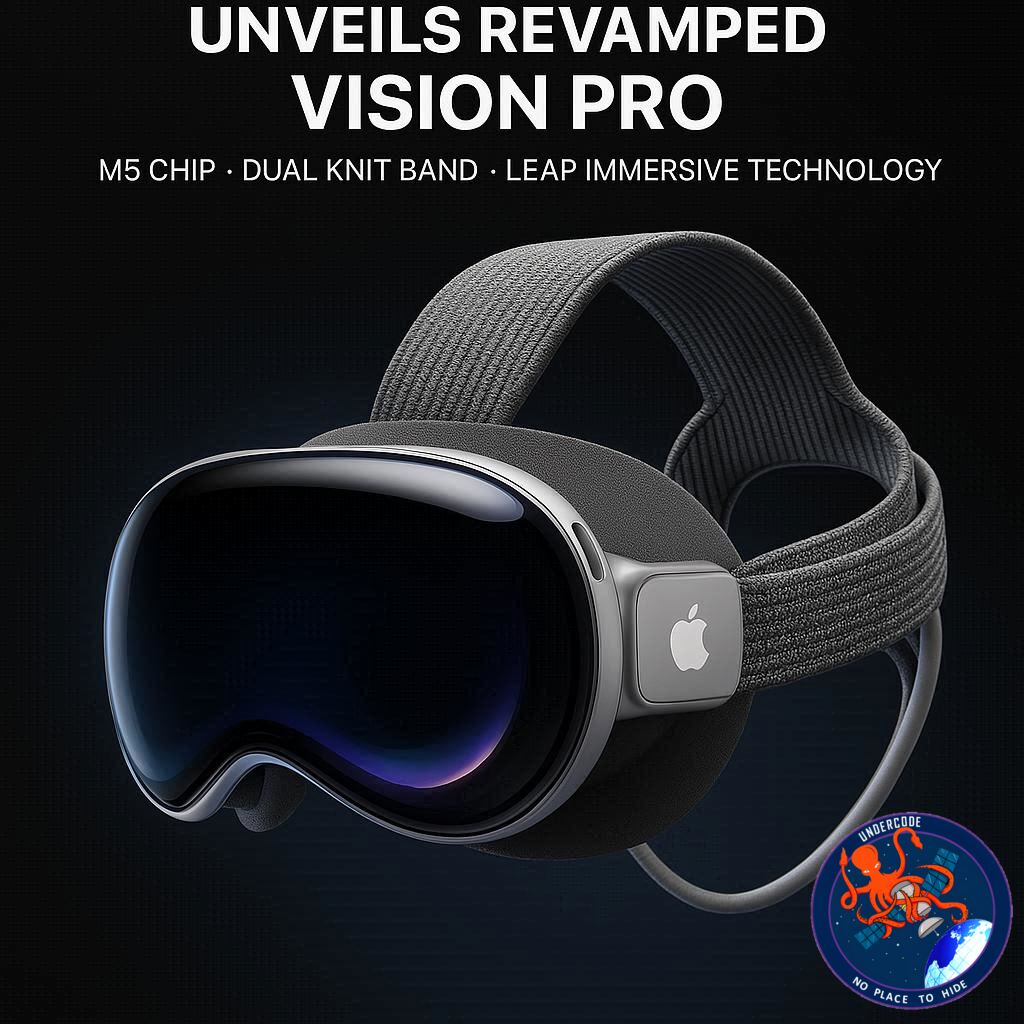
Apple has once again pushed the boundaries of immersive technology with the announcement of the updated Apple Vision Pro. Revealed alongside the latest iPad Pro and MacBook Pro featuring the new M5 Apple silicon, this revised Vision Pro brings notable hardware upgrades and comfort-focused design enhancements. With pre-orders now live in key global markets, Apple aims to redefine user experiences in spatial computing and augmented reality.
The new Apple Vision Pro, set to officially launch on October 22 in countries including Australia, Canada, France, Germany, Hong Kong, Japan, the UAE, the UK, and the U.S., will also see preorders opening in mainland China and Singapore starting October 17. At the heart of this upgrade is the M5 chip, which Apple claims offers a performance boost over its predecessor. This includes the ability to render 10% more pixels on the device’s micro-OLED displays, alongside refresh rates that now reach up to 120Hz. The result is sharper visuals, smoother motion, and reduced blur during high-intensity spatial experiences, making the device more appealing to both professionals and tech enthusiasts.
Complementing this technological leap is the introduction of the Dual Knit Band, designed with user comfort in mind. The band features soft, breathable materials combined with a counterbalanced design, allowing users to enjoy extended sessions without strain. Additionally, the dual-function Fit Dial allows for independent adjustment of the upper and lower straps, ensuring a secure and personalized fit tailored to each user’s preferences. These refinements underscore Apple’s attention to ergonomic design, addressing prior concerns about wearable comfort during extended usage.
Apple’s ongoing commitment to innovation in augmented and spatial computing is evident in this update. The M5 chip not only boosts graphical performance but also optimizes battery efficiency, promising longer usage periods without compromising performance. For creators and professionals working in 3D modeling, immersive media, or interactive applications, this marks a significant step forward in hardware capability. The high-refresh-rate displays coupled with improved pixel density enhance the realism of virtual environments, making the Vision Pro a more compelling tool for both productivity and entertainment.
Beyond the hardware, Apple’s ecosystem integration ensures that the Vision Pro remains a seamless companion to other Apple devices. Users can expect a fluid transition between iPad, MacBook, and Vision Pro experiences, allowing for multitasking and cross-platform productivity. The improved chip and display technology also expand possibilities for augmented reality applications, from immersive educational tools to spatial collaboration platforms.
The pre-order availability in multiple markets signals Apple’s confidence in global demand for high-end AR devices. While pricing and detailed specifications were not disclosed in this announcement, the inclusion of advanced components like the M5 chip and the ergonomic Dual Knit Band indicates Apple’s strategy to appeal to both enterprise and premium consumer segments.
What Undercode Say:
Apple’s strategic move to introduce the M5 chip in the Vision Pro aligns with a broader trend in the tech industry toward high-performance, energy-efficient processors. By enabling 10% more pixels and 120Hz refresh rates, Apple is addressing both visual fidelity and user comfort—two critical pain points in AR/VR adoption. The Dual Knit Band demonstrates an understanding that hardware adoption is not solely about power but also ergonomics; a device that strains the user’s head or face is less likely to see extended usage.
From an analytical perspective, the M5 upgrade may also serve as a foundation for more complex AR applications, such as AI-driven spatial interfaces, real-time 3D collaboration, and professional-grade immersive media production. The increased pixel density combined with higher refresh rates directly contributes to reducing motion sickness—a key barrier in widespread AR adoption. Apple’s holistic approach, combining hardware, display, and comfort innovations, positions Vision Pro not just as a gadget, but as a potential platform for next-generation computing experiences.
Moreover, the timing of the launch and staggered preorders highlight Apple’s careful market strategy. By prioritizing high-demand regions first, Apple can generate momentum and media coverage while ensuring supply chains are managed efficiently. This staged approach also allows Apple to gather early user feedback and address potential firmware or software adjustments before expanding to additional markets.
The ecosystem integration is another crucial factor. The Vision Pro, when paired with other Apple devices, could redefine workflow paradigms for creative professionals. Imagine a designer adjusting 3D models in AR while simultaneously referencing data from a MacBook Pro or iPad Pro—this interoperability enhances productivity in ways standalone AR devices cannot replicate.
Apple’s continued investment in display technology and ergonomic design also hints at longer-term ambitions in spatial computing. The incremental improvements—better chip, higher pixel count, and enhanced comfort—indicate a gradual but deliberate roadmap toward devices that could eventually replace traditional screens for certain professional and consumer applications.
The dual-function Fit Dial, though seemingly minor, reflects Apple’s attention to personalization. As AR and VR headsets evolve, comfort customization will likely become a competitive differentiator. Apple appears to be setting a benchmark here, blending luxury design with functional adaptability.
While the Vision Pro remains a premium device, these updates could accelerate broader AR adoption if paired with compelling software ecosystems. Third-party developers and creative studios will likely find the upgraded hardware a more viable platform for immersive storytelling, interactive training, and collaborative experiences. The implications extend beyond entertainment; education, healthcare, and industrial design could all see tangible benefits.
In conclusion, Apple’s revised Vision Pro underscores the company’s dual focus on performance and user experience. By marrying the M5 chip’s processing power with display improvements and comfort-focused design, Apple is not just releasing a new device—it is crafting a foundation for the next wave of spatial computing. The potential for creative innovation, professional productivity, and mainstream AR adoption is now more tangible than ever.
Fact Checker Results:
✅ The M5 chip enables rendering of 10% more pixels.
✅ Refresh rates reach up to 120Hz for smoother visuals.
❌ No specific pricing details were provided in the announcement.
Prediction:
Apple’s Vision Pro, with its upgraded chip and ergonomic design, could become the go-to device for AR professionals and high-end consumers. Expect adoption to expand in creative industries first, followed by enterprise applications, potentially reshaping workflows in 3D design, spatial collaboration, and immersive media. 🚀
🕵️📝✔️Let’s dive deep and fact‑check.
References:
Reported By: 9to5mac.com
Extra Source Hub (Possible Sources for article):
https://www.medium.com
Wikipedia
OpenAi & Undercode AI
Image Source:
Unsplash
Undercode AI DI v2
Bing
🔐JOIN OUR CYBER WORLD [ CVE News • HackMonitor • UndercodeNews ]
📢 Follow UndercodeNews & Stay Tuned:
𝕏 formerly Twitter 🐦 | @ Threads | 🔗 Linkedin | 🦋BlueSky | 🐘Mastodon


