
Listen to this Post
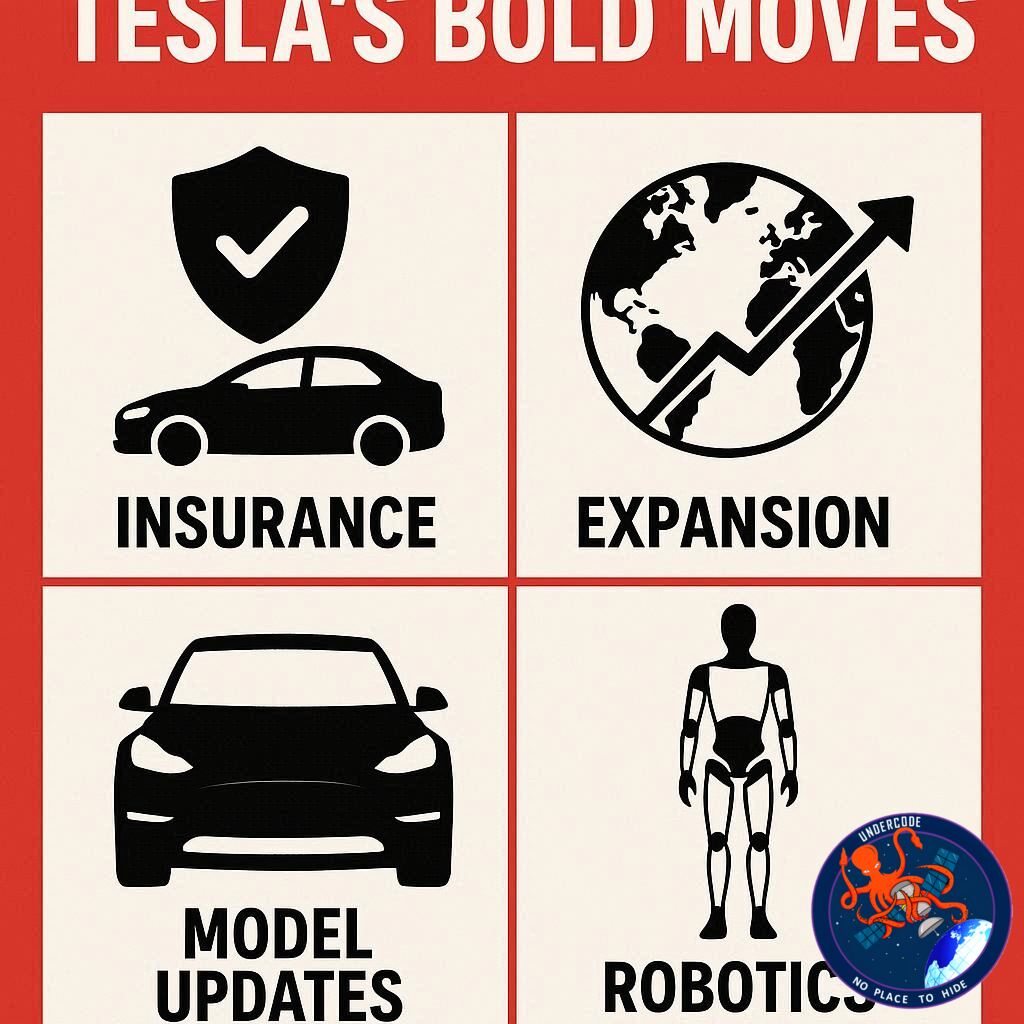
Tesla continues to reshape the automotive and technology landscape with strategic moves that span from in-house insurance to futuristic robotics. The company is steadily expanding its footprint, not just in vehicle production but in services and innovative technologies, reinforcing its ambition to dominate multiple industries simultaneously. Recent developments—from the expansion of Tesla Insurance to Florida, a rare interior color update for the Model Y in China, milestones at Gigafactory Texas, and progress toward Optimus V3 humanoid robot production—highlight a company that thrives on both incremental and groundbreaking advancements.
Tesla Insurance Expands to Florida
Tesla Insurance, launched in late 2019, was revolutionary as it allowed the company to offer in-house coverage for Tesla owners, eliminating dependency on third-party insurers. Despite the innovation, expansion has been slow, with coverage currently available in twelve states including Arizona, California, Colorado, Illinois, Maryland, Minnesota, Nevada, Ohio, Oregon, Texas, Utah, and Virginia. California faces regulatory restrictions preventing real-time insurance adjustments via telematics. Tesla uses a Safety Score system, currently in Beta v2.2, which tracks driving behaviors such as Hard Braking, Aggressive Turning, Excessive Speeding, Late-Night Driving, and more to determine insurance rates.
Recently, Tesla filed to update its Private Passenger Auto program in Florida, marking the first state expansion in over three years since the launch in Utah and Maryland. The company is also exploring additional markets like Georgia, New Jersey, Oregon, and Virginia, and has attempted European expansion, though coverage has yet to materialize there. Tesla Insurance’s main advantage is its deep understanding of Tesla vehicles, parts, and repair processes, which encourages drivers to switch from conventional providers.
Model Y Gains New Interior Option in China
Tesla introduced a light grey interior option for the Model Y L in China, priced at $1,120. This marks a notable departure from Tesla’s traditional Black and White interiors for mass-market vehicles, though premium models like the Model S and Model X already offered more variety. The new light grey option is currently exclusive to the Model Y L in China, with potential U.S. availability uncertain, possibly by the end of 2026. While the Model Y L is larger than the standard Model Y, it does not match full-size SUVs, disappointing some U.S. consumers seeking a larger vehicle. Nevertheless, the update signals Tesla’s attention to regional market preferences and incremental vehicle personalization.
Gigafactory Texas Hits Half-Million Vehicle Milestone
Tesla’s Gigafactory Texas celebrated rolling out its 500,000th vehicle, a white Model Y, highlighting the facility’s pivotal role in production. The factory, near Austin, manufactures the Model Y and Cybertruck and will eventually produce the Cybercab, a high-volume autonomous two-seater designed with a manufacturing process resembling a high-speed electronics line rather than a traditional automotive assembly line. Elon Musk emphasized that this approach could redefine production scalability for Tesla vehicles.
Optimus V3: Tesla Moves Toward Mass Production
Tesla may be approaching the final design phase of its Optimus V3 humanoid robot, according to reports from China. Tesla allegedly placed a $685 million order for linear actuators, enough for approximately 180,000 units, with deliveries expected in Q1 2026. While Tesla has not confirmed this, the scale of the order suggests plans beyond prototype production. Overcoming prior design challenges, particularly with the robot’s hands, indicates Tesla may soon begin mass production of Optimus V3, further cementing its ambitions beyond automotive into robotics and AI-driven technologies.
What Undercode Say: Strategic Expansion and Technological Dominance
Tesla’s trajectory reflects a multi-pronged strategy that combines incremental expansion with disruptive innovation. The insurance expansion into Florida signals a careful, regulated approach to scaling Tesla Insurance, leveraging proprietary knowledge of vehicle repair and performance to reduce costs and improve customer satisfaction. Unlike traditional insurers, Tesla can dynamically assess risk through the Safety Score, which uses behavioral telematics to tailor premiums. This data-driven model could, over time, create a more precise and fair insurance marketplace, challenging conventional insurers.
The Model Y L’s light grey interior in China represents Tesla’s sensitivity to regional preferences, showing the company’s willingness to diversify its offerings for different markets. While this may seem minor, it demonstrates Tesla’s understanding of consumer psychology and localized branding, which can enhance market loyalty and differentiate Tesla in crowded EV segments.
Gigafactory Texas’ milestone of 500,000 vehicles underscores Tesla’s operational efficiency and the scalability of its manufacturing ecosystem. The Cybercab production, designed like a high-speed electronics line, may set a new standard for mass production of autonomous vehicles, reducing costs and increasing throughput. This methodology aligns with Musk’s broader vision of transforming mobility through AI and automation, creating vehicles that can operate seamlessly with minimal human intervention.
The Optimus V3 development hints at Tesla’s ambitions beyond automotive dominance. By investing heavily in robotics and ordering mass components, Tesla signals a commitment to scaling humanoid robotics, potentially integrating these machines into manufacturing, logistics, or consumer applications. Optimus could redefine labor-intensive industries, creating a synergy between Tesla’s EV and AI-driven robotics ambitions. While skepticism remains about mass production feasibility, these strategic bets reveal a company leveraging its supply chain, R&D, and cross-industry expertise to anticipate the next technological frontier.
Tesla’s moves indicate a broader strategy: diversify offerings while maintaining proprietary control over production and services. Each initiative—insurance, regional vehicle customization, innovative factory design, and humanoid robotics—demonstrates an ecosystem-focused approach where Tesla’s vehicles, services, and AI-driven solutions reinforce one another. This integrated strategy is central to sustaining Tesla’s competitive edge, allowing the company to capture value across automotive, insurance, and robotics sectors simultaneously.
Fact Checker Results
✅ Tesla Insurance currently operates in 12 U.S. states and is expanding to Florida.
✅ The Model Y L’s light grey interior is exclusive to China, priced at $1,120.
✅ Gigafactory Texas produced its 500,000th vehicle and will produce the Cybercab.
Prediction
🚀 Tesla is likely to continue careful geographic expansion of Tesla Insurance, potentially becoming a major disruptor in auto coverage within five years.
🤖 Optimus V3 humanoid robots could begin limited production in 2026, creating a new revenue and innovation stream for Tesla.
🌎 Regional vehicle customization, like the Model Y L interior, may expand globally, enhancing brand loyalty and market penetration.
If you want, I can also make a more visually appealing, SEO-optimized version of this article ready for publication, keeping all the sections but making it more magazine-style. Do you want me to do that?
🕵️📝✔️Let’s dive deep and fact‑check.
References:
Reported By: www.teslarati.com
Extra Source Hub (Possible Sources for article):
https://www.medium.com
Wikipedia
OpenAi & Undercode AI
Image Source:
Unsplash
Undercode AI DI v2
Bing
🔐JOIN OUR CYBER WORLD [ CVE News • HackMonitor • UndercodeNews ]
📢 Follow UndercodeNews & Stay Tuned:
𝕏 formerly Twitter 🐦 | @ Threads | 🔗 Linkedin | 🦋BlueSky | 🐘Mastodon


