
Listen to this Post
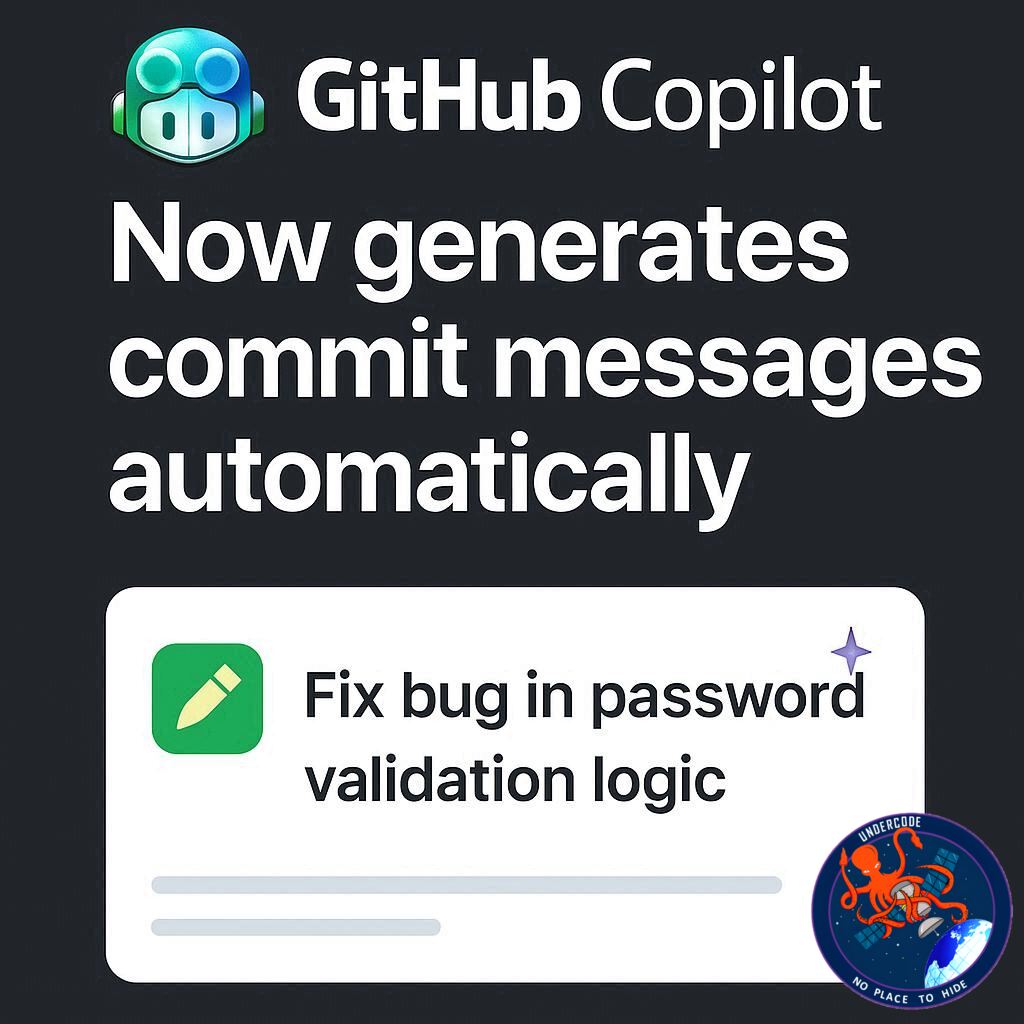
GitHub has taken another leap toward making software development faster and more intuitive. With the latest update, GitHub Copilot can now automatically generate commit messages for file changes directly on github.com. Previously available only in public preview, this feature is now fully rolled out to all Copilot users, promising to streamline one of the most repetitive tasks in coding: documenting changes.
the Update
GitHub Copilot’s new functionality brings contextual commit message suggestions to developers, allowing them to focus more on writing code and less on describing what they just did. When enabled, Copilot scans the changes made in a file and generates a concise, relevant commit message summarizing those edits. Standard operations like file deletions or adding empty files will still follow GitHub’s existing default messages, such as “Delete FILENAME” or “Add FILENAME.”
This feature is available to every GitHub Copilot user across all plans. Individual developers can easily opt out of Copilot-generated commit messages through the toggle in their Copilot settings, giving them full control over their workflow. Enterprises and organizations, including those using GitHub Enterprise Cloud with specific data residency requirements, can opt in via their administrator settings. Organizations that already participate in public preview features will automatically receive this functionality.
Notably, enterprises with enforced commit metadata rulesets will continue to see default commit messages for organization-related files. This ensures that automated messages do not conflict with internal governance or compliance requirements. The feature has already sparked conversations within the GitHub Community, with developers sharing insights and suggestions for best practices when using Copilot-generated commit messages.
What Undercode Say:
GitHub’s move to integrate AI-generated commit messages is a subtle but meaningful advancement in developer tooling. While commit messages may seem like a minor aspect of software development, they are critical for collaboration, project tracking, and debugging. By automating this process, Copilot is reducing cognitive load, allowing developers to focus on actual coding logic rather than documentation minutiae.
From an analytical perspective, this feature also signals GitHub’s deeper integration of AI into the software lifecycle. Historically, developers have relied on consistent commit practices to maintain codebase clarity, especially in large teams. Copilot-generated messages, when done well, can enhance consistency, reduce human error, and even assist in onboarding new team members by providing clear historical context.
There is, however, a potential trade-off. Automated messages might lack the nuance or intention behind certain changes, particularly for complex refactoring or architectural decisions. Enterprises with strict commit guidelines may find themselves needing to review or adjust messages, which introduces an additional step rather than removing one. Moreover, for teams with strong coding culture emphasizing detailed, narrative-style commit messages, Copilot could either be a supportive assistant or a disruptive shortcut depending on adoption and moderation policies.
The feature is also a clear demonstration of GitHub’s strategy to embed AI into everyday development workflows beyond coding suggestions. By extending AI assistance to documentation, GitHub is pushing toward a fully AI-augmented developer experience. Developers who embrace Copilot-generated commit messages are likely to see productivity gains, especially in agile environments where frequent commits are standard.
Another interesting angle is the impact on open-source contributions. Contributors often struggle to write descriptive commits that maintain clarity across diverse project teams. Copilot can act as a leveling tool, offering quality commit suggestions even for newcomers, which could increase the overall quality and readability of open-source repositories.
GitHub’s move is also indicative of a broader trend: AI is gradually permeating every aspect of software engineering, not just code writing. From code review to testing, project management, and now commit documentation, developers are entering an era where repetitive or mundane tasks are increasingly automated, potentially transforming the role of developers from pure coders to strategic problem-solvers.
By combining context-aware suggestions with human oversight, Copilot-generated commit messages strike a balance between efficiency and accountability. The feature respects existing workflows, providing an opt-in or opt-out choice depending on individual or organizational preferences. This flexibility demonstrates that GitHub understands developer workflows are diverse and cannot be fully standardized without some degree of human control.
Looking forward, we might see enhancements that integrate Copilot with other aspects of version control, like automatically generating pull request summaries or linking commit messages to issue tracking systems. Such integrations could make GitHub not only a repository for code but also a centralized hub for intelligent project documentation.
Ultimately, Copilot-generated commit messages are more than a convenience—they are a signal of how AI is reshaping software development practices. Developers who adopt this technology early will likely gain a competitive edge, benefiting from faster documentation, fewer errors, and a more streamlined workflow. The feature also emphasizes the importance of blending AI assistance with human judgment, ensuring that efficiency does not come at the cost of clarity or accountability.
Fact Checker Results:
✅ GitHub Copilot now offers contextual commit message suggestions.
✅ The feature is available to all Copilot users, with opt-in/opt-out options.
❌ It does not replace default commit messages for organizations with strict metadata rules.
Prediction:
🚀 In the next year, AI-generated commit messages could become a standard for both individual developers and enterprise teams, enhancing productivity and consistency. Developers may begin relying on AI not just for coding but also for comprehensive project documentation. This trend could lead to fully AI-assisted version control workflows, reducing human error and improving collaboration across teams worldwide.
If you want, I can also craft a more engaging, narrative-style version with storytelling and real-life developer scenarios, which could make this article even more compelling for tech blogs. Do you want me to do that next?
🕵️📝✔️Let’s dive deep and fact‑check.
References:
Reported By: github.blog
Extra Source Hub (Possible Sources for article):
https://www.linkedin.com
Wikipedia
OpenAi & Undercode AI
Image Source:
Unsplash
Undercode AI DI v2
Bing
🔐JOIN OUR CYBER WORLD [ CVE News • HackMonitor • UndercodeNews ]
📢 Follow UndercodeNews & Stay Tuned:
𝕏 formerly Twitter 🐦 | @ Threads | 🔗 Linkedin | 🦋BlueSky | 🐘Mastodon


