
Listen to this Post
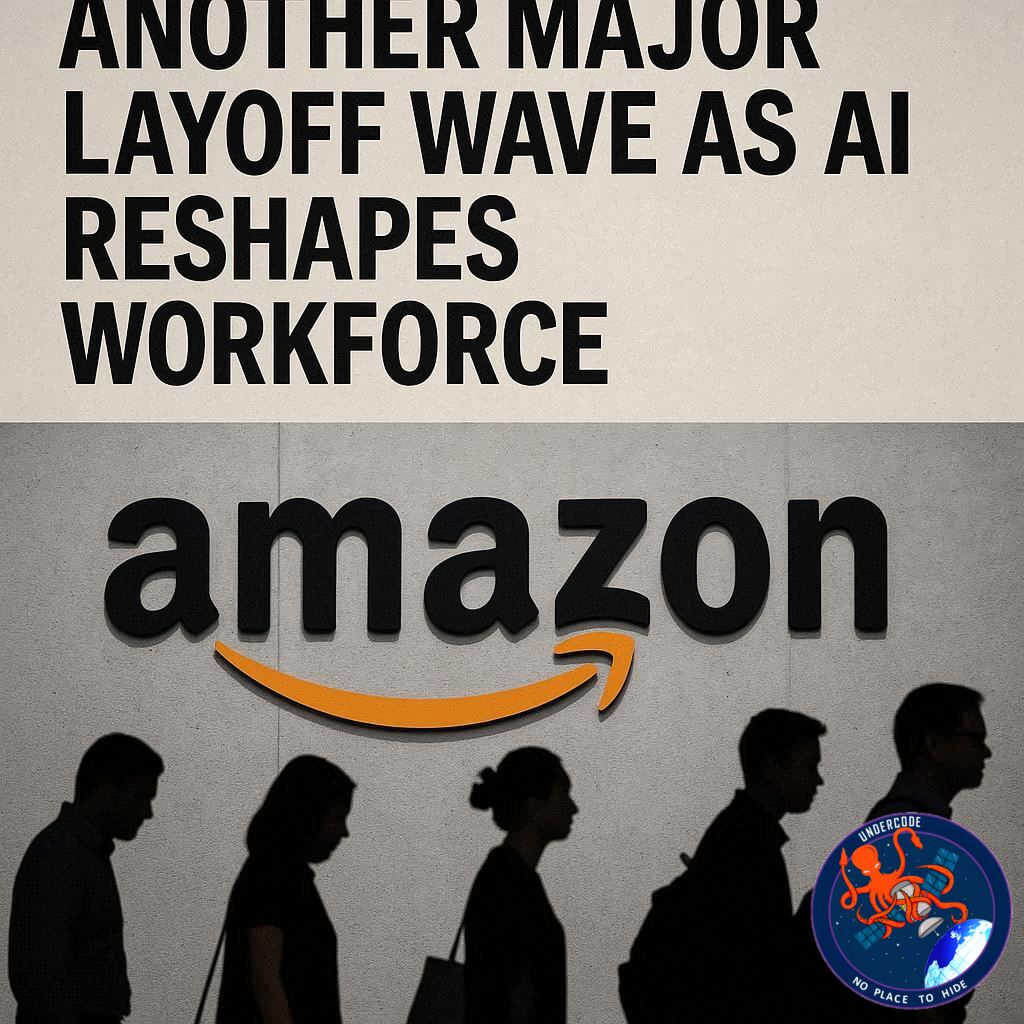
The Inevitable Shift in Amazon’s Employment Era
Amazon, once celebrated for its unstoppable expansion and massive workforce, now stands at the crossroads of automation and human resource optimization. According to a report by Fortune, the tech and e-commerce giant is preparing for yet another round of layoffs—this time targeting up to 15% of its Human Resources (HR) division, known internally as the People eXperience Technology (PXT) team. The planned cuts are not confined to HR; several other divisions within Amazon’s consumer business are also reportedly on the chopping block.
The PXT division, led by Senior Vice President Beth Galetti, is a global department of over 10,000 employees, including recruiters, technology specialists, and traditional HR professionals. Sources close to the matter suggest that the restructuring will focus on reducing redundant roles as Amazon shifts its operational focus toward efficiency and artificial intelligence integration. However, no exact number of job losses or official timeline has been disclosed.
The Broader Context Behind the Cuts
The latest workforce reductions follow a series of similar actions across Amazon’s global operations. Earlier this year, hundreds of roles were already eliminated from the Amazon Web Services (AWS) cloud unit, a move that the company justified as a “necessary step” in realigning resources toward innovation and customer-focused development.
Amazon CEO Andy Jassy has been transparent about the company’s transformation under the pressure of rapid AI adoption. In a memo to employees, Jassy stated that the implementation of Generative AI tools and AI agents would “change the way our work is done” and inevitably lead to a reduction in some traditional corporate positions. His message was both a warning and a forecast: Amazon’s future workforce would be smaller, smarter, and more technologically driven.
The memo also hinted at a long-term restructuring strategy. “We will need fewer people doing some of the jobs that are being done today, and more people doing other types of jobs,” Jassy wrote. “As we roll out more AI systems, this will reduce our total corporate workforce as we gain efficiency across the company.”
A Shift Driven by AI and Efficiency
Amazon’s aggressive push into AI and automation is not a surprise. The company plans to spend over $100 billion in capital expenditures this year to expand its cloud and AI infrastructure. These investments are part of a broader strategy to maintain dominance in the rapidly evolving tech ecosystem—where data, speed, and automation define competitiveness.
The irony lies in the fact that AI, while promising productivity and innovation, simultaneously disrupts the very workforce that built the foundation of Amazon’s empire. HR, once considered the human heart of corporate culture, is now being reshaped by algorithms, predictive analytics, and AI-driven management systems.
What Undercode Say:
Amazon’s recent layoffs illuminate a fundamental paradox of modern capitalism: efficiency at the cost of humanity. The world’s largest online retailer, which once prided itself on being a massive job creator, is now turning to automation and AI not just for innovation—but for survival in an economy increasingly ruled by machine intelligence.
These cuts are more than a business decision. They represent a strategic realignment of the corporate structure, reflecting the new reality where human oversight gives way to algorithmic governance. By reducing the HR workforce, Amazon isn’t just saving costs—it’s signaling a future where recruitment, employee management, and performance tracking are largely automated processes.
The AI-Driven Redefinition of Work
The underlying message in Jassy’s memo is clear: AI isn’t just assisting workers—it’s replacing them. Amazon’s massive investments in generative AI are creating a cascading effect across every layer of its organization. The PXT team’s downsizing could serve as a prototype for future reductions across other departments, especially those heavily dependent on manual oversight or repetitive tasks.
Yet, there’s another side to the coin. AI also creates entirely new categories of employment—roles that require deep expertise in machine learning, data ethics, and automation governance. In other words, while traditional HR staff may face layoffs, demand for AI governance specialists, data interpreters, and algorithmic ethicists will likely surge.
Economic Ripples Beyond Amazon
This restructuring will likely influence other major corporations to reevaluate their workforce strategies. When a corporate giant like Amazon initiates cuts tied to AI deployment, competitors such as Google, Walmart, and Microsoft are bound to follow. It’s the domino effect of digital transformation—once one company proves that automation yields efficiency, others are compelled to do the same or risk falling behind.
But such transitions come with social and psychological costs. The displacement of thousands of workers, many of whom have specialized skills in human resource management, raises an ethical question: How do we balance innovation with employment stability?
The Symbolism of HR Cuts
Amazon targeting its HR division first is symbolically powerful. HR represents empathy, communication, and the human side of business. Cutting deeply into that sector signals a new philosophy: data over emotion, metrics over intuition. It’s not just about reducing headcount—it’s about transforming the culture of how people are valued and managed within the company.
This approach reflects a wider corporate trend in the tech world—the shift from people-centric leadership to performance-centric systems. Efficiency, once a metric of productivity, has become the moral compass guiding billion-dollar corporations.
Looking Forward: A Workforce of Machines and Minds
If Amazon continues at this pace, its workforce by 2030 could be dramatically different—leaner, more technical, and less dependent on human labor. Employees will likely interact more with AI-driven systems than with direct managers. Performance evaluations may become fully automated, and recruitment could rely entirely on predictive analytics rather than human judgment.
This transformation will undoubtedly make Amazon faster and more scalable, but it could also erode the human culture that once defined its brand identity. The company that pioneered “customer obsession” may now be evolving into one that prioritizes algorithmic efficiency above all.
The ultimate question remains: will this transformation make Amazon stronger, or will it strip away the empathy and creativity that humans bring to business?
🔍 Fact Checker Results
✅ Reports from Fortune confirm Amazon’s plan to cut up to 15% of its HR division.
✅ Andy Jassy’s internal memo publicly addressed upcoming workforce reductions tied to AI integration.
❌ No official confirmation yet on the exact number or date of the layoffs.
📊 Prediction
💼 Expect further restructuring waves by mid-2025 as Amazon scales its AI infrastructure.
🤖 Human oversight roles will continue to decline, replaced by AI-based management systems.
📉 Global employment in tech-driven HR functions could shrink by 25% over the next three years.
🕵️📝✔️Let’s dive deep and fact‑check.
References:
Reported By: timesofindia.indiatimes.com
Extra Source Hub (Possible Sources for article):
https://www.linkedin.com
Wikipedia
OpenAi & Undercode AI
Image Source:
Unsplash
Undercode AI DI v2
Bing
🔐JOIN OUR CYBER WORLD [ CVE News • HackMonitor • UndercodeNews ]
📢 Follow UndercodeNews & Stay Tuned:
𝕏 formerly Twitter 🐦 | @ Threads | 🔗 Linkedin | 🦋BlueSky | 🐘Mastodon


