
Listen to this Post
Introduction: A Giant’s Reckoning
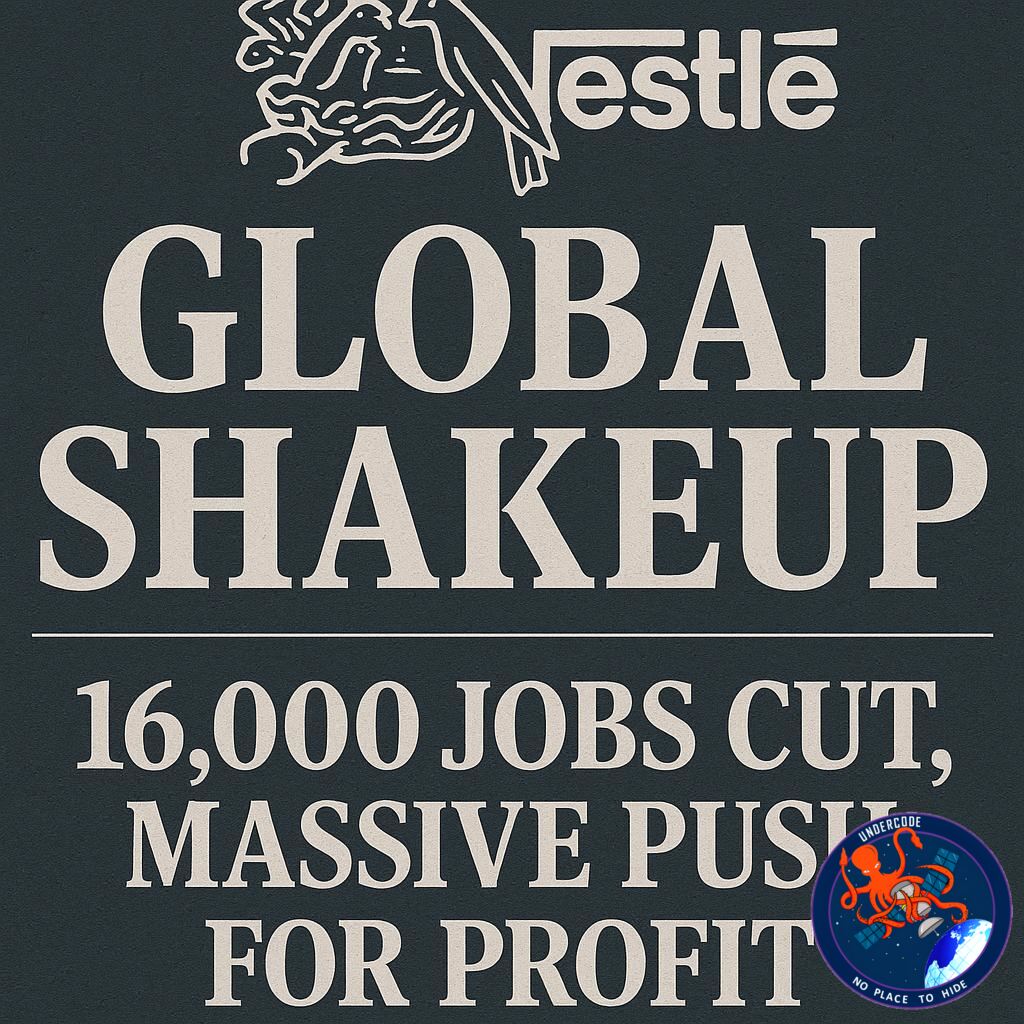
In one of the most dramatic restructuring moves in recent corporate history, Nestlé—the world’s largest food and beverage company—is cutting 16,000 jobs globally. The layoffs mark a defining moment for the Swiss conglomerate as it seeks to reinvent itself under new CEO Philipp Navratil. The company, known for household favorites like Nescafé, KitKat, and Maggi, is undergoing a transformation that blends ambition with austerity: fewer employees, sharper focus, and a renewed bet on high-margin products. For millions of consumers and thousands of employees, this is not just a business decision—it’s a reflection of how legacy brands are fighting to stay relevant in a volatile, profit-hungry global market.
The Great Reset at Nestlé
Nestlé has announced plans to slash 16,000 jobs worldwide over the next two years. Among these, 12,000 are white-collar positions—primarily in management and office operations—while another 4,000 roles will be trimmed from its manufacturing, logistics, and supply chain divisions. The move is part of a sweeping effort to streamline operations, improve efficiency, and refocus on high-return categories like coffee, confectionery, and premium consumer goods.
Under Philipp Navratil’s new leadership, the company aims to shed layers of bureaucracy and move with more agility. Nestlé’s internal audits suggest that many departments had become bloated and inefficient, slowing down innovation and decision-making. The company’s strategic portfolio reviews—especially within its water, premium beverage, and nutritional supplement segments—are expected to conclude soon, setting the stage for sharper strategic focus.
Financially, the overhaul comes at a time of mounting pressure. Nestlé’s share price has fallen roughly 35% since 2022, and sales growth hit a weak 2.2% in 2024, though it recovered modestly to 3.3% in 2025’s first nine months. Reported net sales stood at CHF 65.9 billion (€70.9 billion), marking a 1.9% year-on-year decline. Analysts say the company’s performance has been hindered by global trade barriers and rising external costs—particularly the U.S.’s 39% import tariff on Swiss goods, which has squeezed margins.
Still, Nestlé’s leadership is optimistic. The restructuring is expected to yield annual savings of around 1 billion Swiss francs, contributing to a broader 3 billion Swiss franc cost-saving goal by 2027. Chris Beckett, an analyst at Quilter Cheviot, noted, “Management have grand ambitions to bring Nestlé back to where it has historically been, but for now the company is a work in progress.”
A Leadership Carousel
Adding to the turbulence is a period of management upheaval. In September, former CEO Laurent Freixe was dismissed for breaching company conduct—failing to disclose a relationship with a subordinate. Shortly after, Chairman Paul Bulcke stepped down earlier than expected, making way for Pablo Isla, the former Inditex CEO known for transforming Zara into a global powerhouse.
Into this maelstrom stepped Philipp Navratil, who swiftly rolled out the company’s bold restructuring plan. His mantra: “Nestlé must change faster to compete.” Navratil’s emphasis on a “performance mindset” signals a shift toward meritocracy and accountability—values he believes are essential for restoring Nestlé’s dominance.
Despite the leadership chaos, there are signs of resilience. Nestlé’s organic sales grew strongly across major product lines, buoyed by price hikes in key categories such as coffee, chocolate, and culinary products. The company’s third-quarter 2025 results were particularly impressive, with real internal growth of 1.5%, beating analyst expectations of 0.3%.
The market responded with enthusiasm: Nestlé’s shares jumped 8% within hours of the restructuring announcement. Investors interpreted the cuts not as weakness, but as a signal of renewed discipline and a strategic return to fundamentals.
Management reaffirmed full-year guidance, targeting operating margins above 16% and predicting stronger organic growth than in 2024. Analysts say the company still trades at a discount compared to peers—a reflection of lingering skepticism—but optimism is growing that Nestlé may finally be staging its long-awaited turnaround.
What Undercode Say:
The Nestlé story is a case study in corporate reinvention under pressure. On paper, the move to cut 16,000 jobs sounds brutal—but strategically, it reflects a broader truth about global business in the 2020s: profitability has overtaken expansion as the new frontier.
Philipp Navratil’s vision hinges on leaner operations and sharper brand focus. By eliminating layers of middle management and reinvesting in high-margin sectors, Nestlé is trying to emulate the agility of smaller, more disruptive food companies. It’s a paradoxical approach: shrinking to grow.
This strategy aligns with trends seen across consumer staples—Unilever, PepsiCo, and Kraft Heinz have all embarked on similar efficiency drives. Yet, the risk lies in execution. Workforce cuts often generate short-term financial relief but can erode morale and innovation if poorly managed. Nestlé’s long-term success will depend on how effectively it can rebuild its internal culture after such a massive restructuring.
The management turmoil only complicates this transition. Trust and continuity are essential in times of transformation, and the back-to-back exits of Freixe and Bulcke could have easily destabilized the company. Navratil’s leadership style—described by insiders as “direct, analytical, and performance-driven”—may help reestablish order, but it also sets a tone of high pressure. For employees, this could mean a more demanding and metrics-heavy work environment.
Financially, the timing is both opportune and risky. Nestlé’s core segments—coffee and confectionery—remain resilient against inflation, but global trade tensions and fluctuating exchange rates threaten margins. The U.S. import tariff highlights how vulnerable Swiss exporters are to geopolitical frictions.
Still, the 8% stock rally following the announcement shows that investors believe in Navratil’s strategy. The market’s response suggests faith in Nestlé’s ability to pivot—proof that confidence, once shaken, can be quickly restored through bold action.
The challenge ahead is cultural, not financial. Nestlé must transform not only its balance sheet but also its identity—from a sprawling corporate giant to a nimble, innovation-driven player. That requires redefining what “Nestlé” stands for in 2025 and beyond: not just heritage and trust, but speed, creativity, and relevance.
If Navratil delivers, Nestlé could emerge leaner, faster, and more profitable. If he fails, the cuts may simply mark another chapter in the slow erosion of a global icon.
Fact Checker Results:
✅ Job cuts confirmed: 16,000 roles globally, 12,000 office, 4,000 manufacturing.
✅ Annual savings target verified: 1 billion CHF yearly by 2027.
❌ Rumors of product-line closures beyond water and supplements not verified.
Prediction:
🚀 Nestlé’s turnaround will likely accelerate by mid-2026, as the company reaps the benefits of streamlined operations and higher margins. Yet, short-term morale shocks and leadership scrutiny will persist. If Navratil maintains transparency and delivers consistent quarterly growth, Nestlé could reclaim its reputation as one of the world’s most dependable blue-chip stocks.
🕵️📝✔️Let’s dive deep and fact‑check.
References:
Reported By: www.euronews.com
Extra Source Hub (Possible Sources for article):
https://www.stackexchange.com
Wikipedia
OpenAi & Undercode AI
Image Source:
Unsplash
Undercode AI DI v2
Bing
🔐JOIN OUR CYBER WORLD [ CVE News • HackMonitor • UndercodeNews ]
📢 Follow UndercodeNews & Stay Tuned:
𝕏 formerly Twitter 🐦 | @ Threads | 🔗 Linkedin | 🦋BlueSky | 🐘Mastodon


