
Listen to this Post
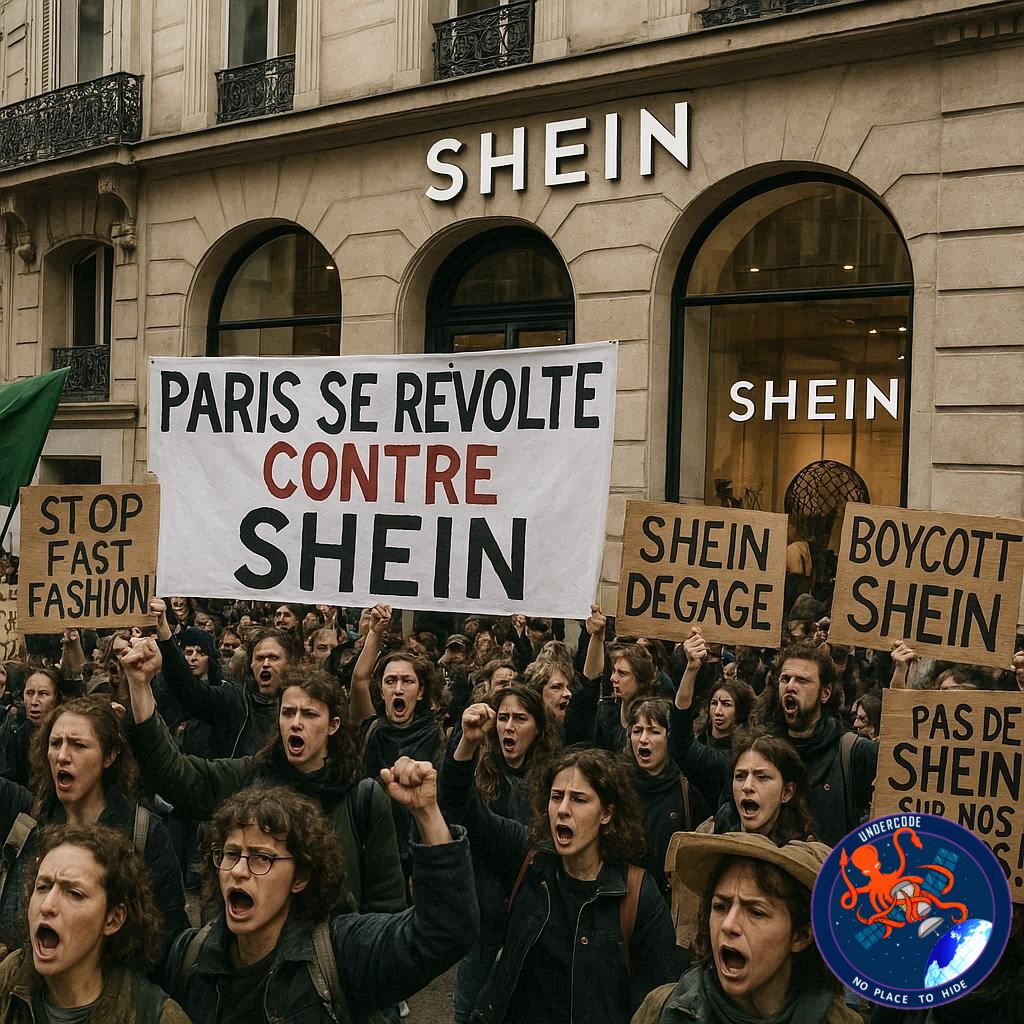
🎯 Introduction: A Clash Between Fashion and Conscience
When Paris, the world’s fashion capital, becomes the stage for a retail rebellion, the whole industry pays attention. Chinese fast-fashion titan Shein, known for its dizzying product turnover and bargain prices, is set to open its first physical store in Paris on November 1. But instead of a red-carpet welcome, the company faces an avalanche of outrage. Politicians, designers, and retail workers are uniting against what they call an “invasion” of unethical fashion into the sacred halls of Parisian style.
A City in Protest: Paris Rejects Shein’s Arrival
Shein’s 1,000-square-meter boutique will open on the sixth floor of the legendary BHV Marais department store, a space that offers breathtaking views of the Eiffel Tower. Yet behind the glamour lies deep resentment. Paris Mayor Anne Hidalgo voiced her opposition on LinkedIn, condemning the opening as a betrayal of Parisian values. Her post resonated widely, with an online petition to block Shein’s entry gathering nearly 100,000 signatures within a single week.
Department Store Workers Walk Out
The backlash quickly moved from words to action. On Friday, BHV Marais employees abandoned their posts and marched outside the historic 19th-century building in protest. Their message was clear: Shein’s business model, rooted in ultra-cheap labor and environmental neglect, conflicts with the ethical standards of French retail. “We have always been a beautiful store with beautiful brands,” one employee told The New York Times, “and we try to promote corporate social responsibility.”
Expanding Controversy: Shein’s Next Targets
Despite the uproar, Shein shows no signs of slowing down. The company plans to open stores in five more French cities—Dijon, Reims, Grenoble, Angers, and Limoges—inside locations affiliated with Galeries Lafayette. Yet even that prestigious brand is distancing itself. Galeries Lafayette’s management stated it does not share Shein’s “values” and hinted that the move may breach contractual agreements, marking a rare public rebuke within the French retail scene.
France Fights Back With New Legislation
The controversy has fueled political momentum. France is now accelerating its crackdown on fast fashion. In September, the Senate passed a series of laws targeting companies like Shein and Temu. These include taxes of up to €10 per item sold, bans on fast-fashion advertising, and mandatory environmental impact reports. The French antitrust authority also slapped Shein with a €40 million fine in July for misleading consumers about its sustainability claims.
Shein’s Defense: “Honoring French Fashion”
In response, Shein’s executive chairman, Donald Tang, insisted that the company’s expansion “honors France’s position as a fashion capital.” He framed the move as a celebration of global style accessibility. Yet his statement did little to calm the storm. Several homegrown brands—including Aime, Talm, and Le Slip Français—have announced their withdrawal from BHV Marais in protest, accusing Shein of undermining craftsmanship, transparency, and fair labor.
What Undercode Say: The Anatomy of a Fashion Revolt
What’s happening in Paris is more than a protest against one company; it’s a symbol of a deeper cultural war within fashion. France, long the custodian of luxury, heritage, and craftsmanship, now faces a moral dilemma: can it coexist with an industry built on disposability and speed?
Shein represents the new face of fashion globalization. With algorithms dictating designs and factories churning out thousands of garments daily, it thrives on immediacy, not artistry. For Paris—a city that birthed haute couture—the contrast couldn’t be starker. The outrage isn’t just about Shein’s labor or environmental record; it’s about defending the very definition of fashion as a cultural expression, not just a commodity.
French lawmakers’ response reflects a larger European movement toward ethical consumption. By taxing fast fashion and banning its ads, France isn’t merely legislating—it’s leading a moral reformation. The move challenges a generation of shoppers to question the hidden cost of cheap clothing: who makes it, and at what price?
The protests at BHV Marais are especially symbolic. Department store employees, often unseen in the glamour of retail, have become the voices of conscience. Their defiance sends a message to the world: fashion cannot thrive on exploitation.
Yet, there’s also irony here. French consumers, like others worldwide, have fueled Shein’s meteoric rise. The demand for instant style gratification runs deep, even among those who publicly condemn it. The tension between ethical ideals and consumer behavior remains unresolved.
For Shein, Paris was meant to be a trophy, proof of legitimacy in the fashion world. Instead, it’s become a battleground that exposes the fragility of fast fashion’s global dominance. The company’s business model—fast, cheap, and borderless—collides directly with Europe’s growing insistence on sustainability and transparency.
The withdrawal of local brands from BHV Marais adds a dramatic twist. It’s not just about protest—it’s about preservation. These labels are defending their creative territory, ensuring that Paris remains synonymous with artistry, not mass production.
In the long run, the outcome of this clash may define the next chapter of global fashion. If France succeeds in setting new legal precedents, it could inspire other nations to follow suit. If Shein manages to adapt, it may signal a transformation in how fast-fashion giants engage with cultural and environmental responsibility.
The question now is simple yet profound: can a brand built on speed learn the patience of craftsmanship?
🔍 Fact Checker Results
✅ Paris Mayor Anne Hidalgo publicly opposed Shein’s store opening via LinkedIn.
✅ French Senate has passed legislation targeting fast-fashion taxation and advertising bans.
❌ Galeries Lafayette’s direct involvement with Shein remains disputed due to contractual ambiguities.
📊 Prediction
🇫🇷 France will likely become the first major European nation to codify anti–fast fashion laws by 2026.
🌍 Shein may pivot toward limited-edition collections and sustainability marketing to repair its image.
🧵 The clash in Paris could ignite a global wave of ethical fashion reform, reshaping how the world defines “style” in the next decade.
🕵️📝✔️Let’s dive deep and fact‑check.
References:
Reported By: timesofindia.indiatimes.com
Extra Source Hub (Possible Sources for article):
https://stackoverflow.com
Wikipedia
OpenAi & Undercode AI
Image Source:
Unsplash
Undercode AI DI v2
Bing
🔐JOIN OUR CYBER WORLD [ CVE News • HackMonitor • UndercodeNews ]
📢 Follow UndercodeNews & Stay Tuned:
𝕏 formerly Twitter 🐦 | @ Threads | 🔗 Linkedin | 🦋BlueSky | 🐘Mastodon


