
Listen to this Post
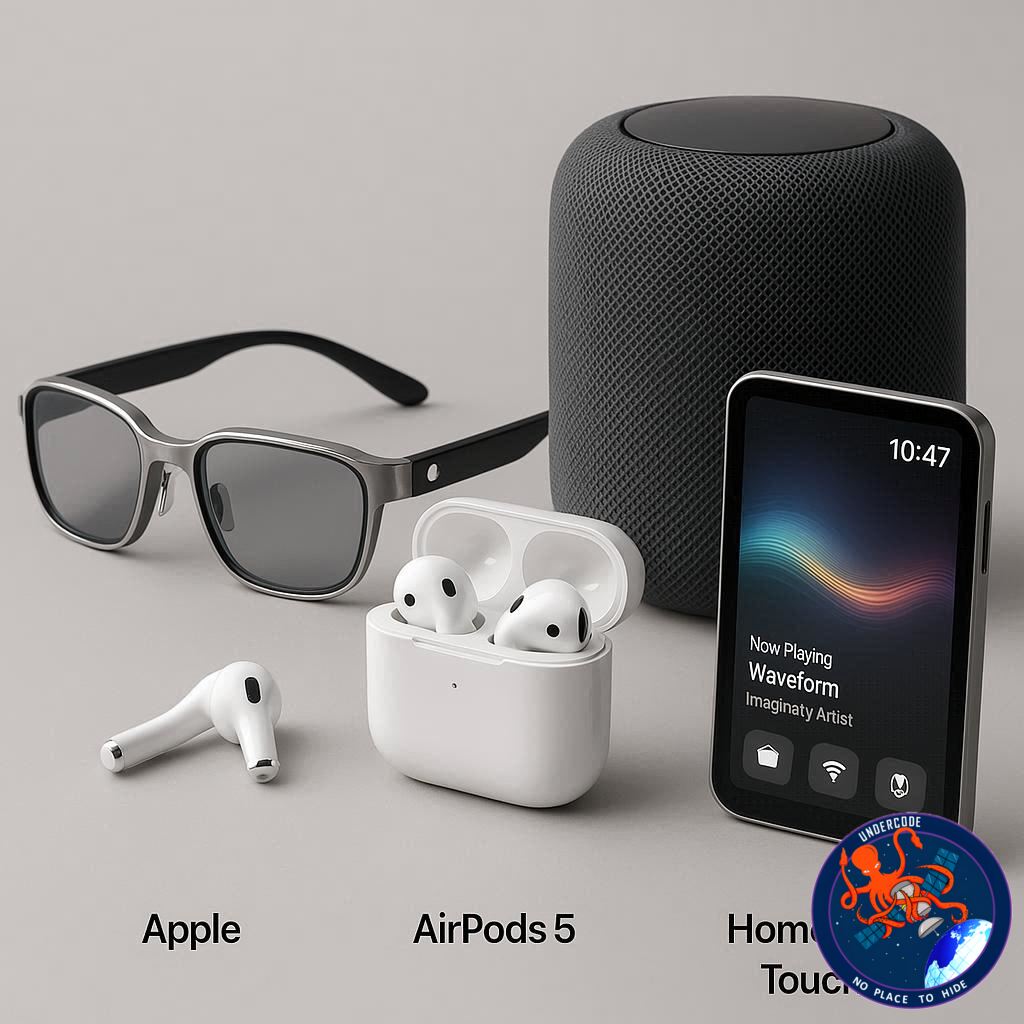
Apple’s world of innovation never sleeps. Each whisper, each rumor, shapes expectations for what might soon redefine our relationship with technology. This week’s flood of speculation from Bloomberg’s Mark Gurman and others paints a fascinating picture: Apple is laying groundwork not just for one new device, but for an entire ecosystem that stretches from your ears to your living room walls—and maybe even your eyes.
The Future Through Apple’s Lens
Apple’s long-rumored smart glasses may soon become reality. According to insider reports, Apple Glasses will run visionOS, the same operating system powering the Vision Pro headset. The twist? These glasses could function in two distinct modes—a full visionOS version when paired with a Mac and a lighter, mobile-optimized interface when connected to an iPhone.
This hybrid design suggests Apple wants users to experience seamless integration across devices. Imagine editing on your Mac with full augmented overlays, then stepping out with the same glasses that switch to a minimalist mode, offering notifications or directions without distraction. It’s a glimpse into an adaptive ecosystem—one that knows when you’re stationary, mobile, or working.
Analysts have long speculated that the Vision Pro was just a stepping stone—a testbed for the technologies that will power more wearable, everyday products. Apple Glasses could be that bridge, finally shrinking mixed reality from bulky headset to everyday eyewear.
AirPods 5 and the H3 Chip: Listening Smarter
Apple’s AirPods line is also evolving quietly but strategically. The AirPods 5 are reportedly in development, though they might skip advanced health sensors like heart rate monitoring for now. Instead, Apple is focusing on refining performance, with an H3 chip under construction to deliver lower latency and richer sound.
Gurman and analyst Ming-Chi Kuo both hint at future AirPods with built-in cameras, potentially arriving by 2026. It sounds wild, but Apple’s broader AI ambitions could make sense of it—tiny sensors capturing spatial data to enhance AR experiences, fitness tracking, or even gesture recognition.
Though Apple has been cautious in linking the H3 chip directly to these camera features, it’s clear that the company’s wearables strategy is maturing beyond sound. AirPods are transforming into multifunctional health and AR companions, not just earbuds.
HomePod Touch: The Smart Speaker’s Evolution
One of the most intriguing revelations concerns the long-awaited HomePod Touch, which may arrive next spring. Bloomberg reports two models:
J490 – A tabletop version with a display mounted on a speaker base.
J491 – A wall-mounted variant, blending digital interactivity with home design.
Pricing is rumored at around $350, though Apple is still exploring ways to lower costs—potentially aiming for a more competitive $299. The design philosophy appears to mirror the company’s growing push into ambient computing—devices that blend into the home yet remain powerful hubs for information, entertainment, and automation.
Apple’s rumored wall-mounted HomePod would compete with smart displays like Google’s Nest Hub Max or Amazon’s Echo Show, but with Apple’s trademark polish, deeper privacy integration, and perhaps, the full might of Siri’s neural engine.
Displays Get Smarter Too
Finally, Apple is preparing two new external displays, with leaks from macOS 26.1 beta revealing support for a built-in Center Stage camera—a long-awaited fix for the camera-less $5,000 Pro Display XDR. Additionally, Apple’s new M5 iPad Pro supports external displays at 120Hz refresh rates, hinting that the next Studio Display may follow suit.
Though early expectations of a 2025 launch were dashed, insiders now expect these monitors to debut in early 2026, coinciding with new M5 MacBook Pro and iMac lines.
For professionals and creators, that means sharper visuals, smoother performance, and possibly, the tightest integration yet between iPad, Mac, and display hardware.
What Undercode Say:
Apple’s rumored roadmap shows a clear philosophical shift—from devices that do more individually to devices that connect better together. It’s not just about specs or new chips anymore; it’s about building an invisible web between your eyes, ears, and environment.
The Apple Glasses strategy feels like the natural successor to Vision Pro’s experimental stage. Apple is quietly perfecting contextual computing—interfaces that anticipate intent, adjust seamlessly, and merge digital and real without friction. The dual-mode visionOS concept aligns perfectly with Apple’s historical pattern: start with complexity (Mac), refine into elegance (iPhone), and finally, merge into wearability (Watch, Glasses).
The H3 chip represents something deeper than just better audio. Apple’s chip division has always been the company’s silent weapon. With the H3, expect more neural efficiency, not just sound quality. Low latency audio will become critical when spatial computing expands—imagine AirPods syncing in real time with Glasses or Vision Pro for 3D sound mapping.
As for the HomePod Touch, its rumored dual-form design reveals Apple’s growing confidence in modular ecosystems. The wall-mounted version could redefine how we think of home assistants—more display, less clutter, more context. Apple is betting on homes becoming digital command centers, where music, calls, FaceTime, and HomeKit automation fuse into one tactile interface.
The new display lineup further cements Apple’s move toward convergence. Pro workflows are being redesigned for multi-device fluidity—Macs, iPads, and displays functioning as one intelligent creative surface.
Taken together, these rumors suggest that 2026 might be Apple’s “connective year,” where its devices stop feeling like separate tools and start behaving like parts of one living system. It’s not about one revolutionary product anymore—it’s about ecosystem evolution.
And perhaps, that’s Apple’s real innovation story.
Fact Checker Results
✅ Multiple sources confirm Apple’s ongoing work on visionOS-based glasses and an H3 chip.
✅ Bloomberg’s Gurman and Ming-Chi Kuo align on AirPods and HomePod timelines.
❌ Exact release windows and pricing remain speculative until Apple’s next event.
Prediction 🔮
Apple’s 2026 lineup could mark the start of “Vision Everywhere”—a seamless blend of AR, AI, and personal devices. Expect Apple Glasses to debut alongside the H3-powered AirPods, forming a sensory duo for immersive interaction. Meanwhile, the HomePod Touch may quietly become the anchor of Apple’s smart home strategy, bridging voice, vision, and ambient computing in one elegant frame.
🕵️📝✔️Let’s dive deep and fact‑check.
References:
Reported By: 9to5mac.com
Extra Source Hub (Possible Sources for article):
https://www.reddit.com
Wikipedia
OpenAi & Undercode AI
Image Source:
Unsplash
Undercode AI DI v2
Bing
🔐JOIN OUR CYBER WORLD [ CVE News • HackMonitor • UndercodeNews ]
📢 Follow UndercodeNews & Stay Tuned:
𝕏 formerly Twitter 🐦 | @ Threads | 🔗 Linkedin | 🦋BlueSky | 🐘Mastodon


