
Listen to this Post
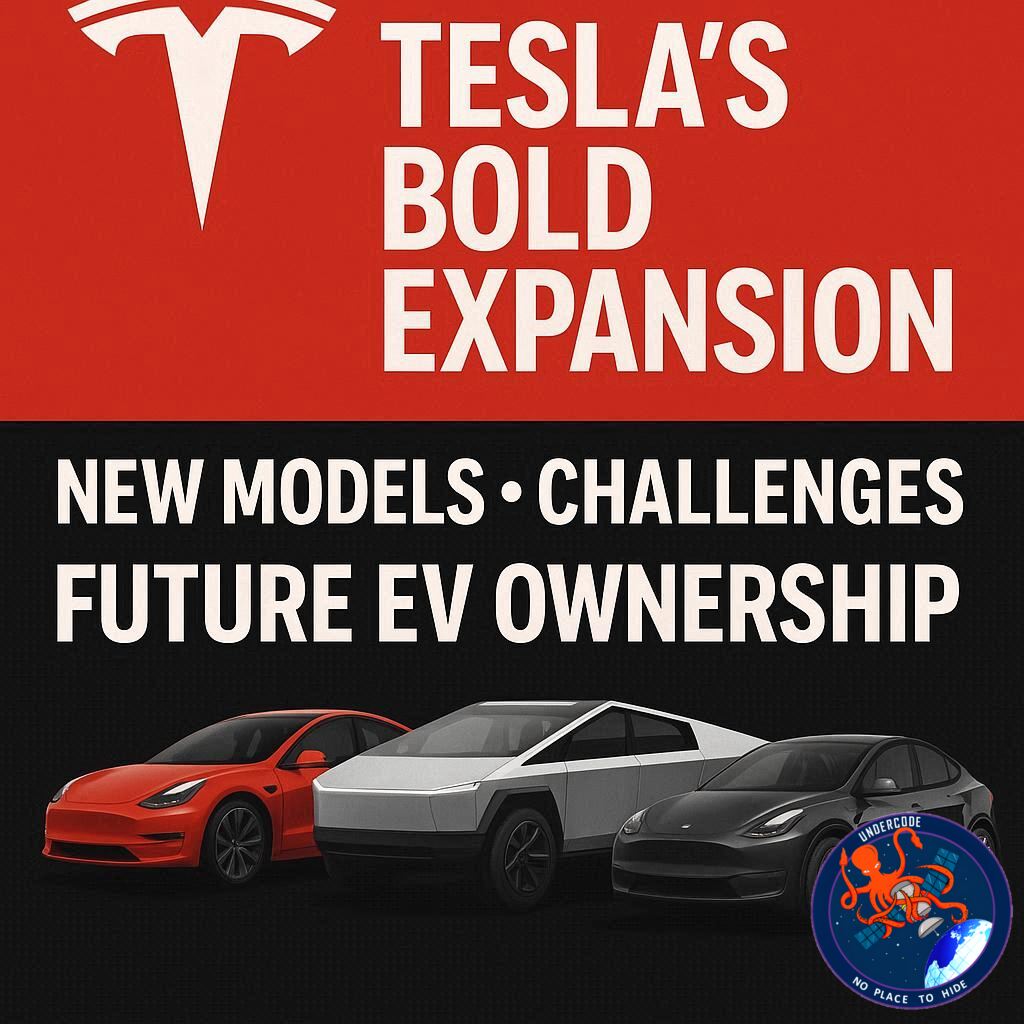
The New Electric Surge Begins
In the heart of Austin, Texas, a quiet revolution hums beneath the steel skeleton of Tesla’s Gigafactory. Drones circling above capture what Elon Musk calls “the next wave”—thousands of new Model Y Standard units rolling out with renewed intensity. Only days after announcing the “Standard” variants of both Model 3 and Model Y—Tesla’s latest attempt to redefine affordability in electric mobility—the production lines are alive and relentless. These new models, priced under $40,000, mark Tesla’s counterattack against the loss of the U.S. EV tax credit, which once provided a $7,500 boost per car.
But while legacy automakers like Ford, General Motors, and Stellantis scale back, Tesla accelerates. As others struggle with cost pressures and demand uncertainty, the Austin plant’s output tells another story—one of confidence, momentum, and quiet defiance. Tesla isn’t just a carmaker anymore; it’s a synthesis of robotics, AI, and industrial innovation.
Across the ocean, however, storm clouds gather. Norway—one of Tesla’s strongest markets—is preparing to phase out its long-standing electric vehicle subsidies. In a country where 98% of all new cars sold last month were electric, the government says it has achieved its mission: converting its population to sustainability. Finance Minister Jens Stoltenberg announced plans to phase out EV incentives by 2027, a decision that could impact Tesla’s pricing power in a region that once fueled its European dominance.
Starting in 2026, Norway will reduce tax exemptions on EVs priced above 300,000 crowns (around $29,700). This means even the cheapest Tesla Model Y trim will lose its tax-exempt status, and by 2027, VAT exemptions will disappear entirely. Critics like Christina Bu, head of the Norwegian EV Association, warn that these changes could push buyers back to fossil-fueled cars, eroding years of progress.
Meanwhile, Elon Musk’s predictions are proving eerily accurate. As U.S. tax credits vanish, Tesla’s rivals are stumbling. GM reported a $1.6 billion loss from its EV investments, Ford expects its electric demand to fall by half, and Stellantis has begun to retreat from its bold EV-only production goals. Musk had warned that subsidies were “propping up” competitors—an artificial safety net masking the true state of consumer demand. Without those incentives, traditional automakers are being forced to confront an uncomfortable truth: the public isn’t buying their EVs in droves.
Tesla’s market share has slipped from 79% in 2020 to 49% in 2024, but its dominance remains unmatched. Nearly half of all electric cars sold in the U.S. still bear the Tesla badge. More impressively, the company has just logged its strongest quarter ever, nearing half a million deliveries—even as the industry cools. Tesla’s focus on autonomy and artificial intelligence is rapidly becoming its defining advantage.
On a more human note, Tesla ownership continues to evolve beyond the driveway. A growing number of drivers are proving that home charging isn’t essential. Through strategic use of Superchargers—especially during off-peak hours—and public charging stations at places like grocery stores, owners are learning how to manage costs effectively. Charging late at night can cost as little as $0.18 per kWh versus $0.47 during the day, saving some drivers hundreds annually. For one owner, a full charge cost just $11 compared to $26 at peak hours—or $40+ for a gas fill-up. It’s a new lifestyle, blending convenience, cost-efficiency, and even small rituals like watching the sunrise during an early charge.
From production lines in Texas to tax policy debates in Norway and shifting mindsets among global consumers, Tesla sits once again at the epicenter of a changing automotive world. The message is clear: the age of subsidies may be ending, but Tesla’s age of innovation has only just begun.
What Undercode Say:
Tesla’s strategy is a masterclass in resilience. When other automakers respond to subsidy losses with retreat, Tesla answers with expansion. The decision to ramp up “Standard” model production amid financial headwinds demonstrates a calculated confidence—an understanding that long-term dominance is built on economies of scale, not government incentives.
Musk’s stance on removing subsidies was never just ideological—it was strategic. Tesla’s vertically integrated model allows cost control from battery chemistry to software updates, creating a competitive moat that legacy manufacturers can’t easily breach. Those companies depend on partnerships, suppliers, and government programs to stay profitable in the EV space. Tesla depends on itself.
The Norwegian shift is equally symbolic. For years, Norway has been a beacon of green transition—a glimpse into a post-fossil future. Its decision to end EV incentives might sound like a threat, but it actually signals maturity. A sustainable market doesn’t need subsidies to survive. If Tesla can maintain its appeal in Norway without tax breaks, it will prove that electric mobility has reached true economic parity with combustion.
Meanwhile, the Model Y Standard rollout represents more than affordability—it’s Tesla’s bridge to mass-market consolidation. The company understands that widespread adoption depends on emotional accessibility as much as price. Consumers want practicality wrapped in aspiration, and Tesla’s brand delivers both.
On the operational side, Giga Texas serves as Tesla’s blueprint for global scaling. By decentralizing production and pushing for regional autonomy, the company reduces logistical friction while amplifying local economic impact. It’s no longer just about selling cars—it’s about embedding Tesla into the industrial fabric of every continent.
There’s also a cultural undercurrent to Tesla’s momentum. As owners without home charging continue to adapt and thrive, they’re rewriting the rules of EV ownership. What was once seen as an obstacle has become part of the brand’s mythos—innovation through improvisation. Tesla doesn’t just build vehicles; it builds ecosystems of behavior and belief.
Competitors like Ford and GM are still battling identity crises. Their EVs are products; Tesla’s are experiences. The difference is psychological as much as it is technological. And that’s why, even as others downsize, Tesla continues to grow—quietly rewriting the narrative of what a car company can be in the 21st century.
At its core, this moment is about conviction. Tesla believes the future belongs to those who innovate relentlessly, even when incentives fade. Musk was right: removing subsidies doesn’t hurt Tesla—it exposes the industry’s true hierarchy.
Fact Checker Results
✅ Tesla has officially begun ramping Model Y Standard production at Giga Texas.
✅ Norway’s government confirmed plans to phase out EV subsidies by 2027.
✅ General Motors, Ford, and Stellantis have announced EV slowdowns post-subsidy loss.
Prediction 🔮
Tesla will use this transitional phase to consolidate global dominance. As competitors stumble without subsidies, Tesla’s autonomous and AI-driven strategy will widen its lead. Expect stronger margins from Texas production, further autonomy breakthroughs, and a new narrative in 2026: Tesla as the first post-subsidy car empire.
🕵️📝✔️Let’s dive deep and fact‑check.
References:
Reported By: www.teslarati.com
Extra Source Hub (Possible Sources for article):
https://www.reddit.com/r/AskReddit
Wikipedia
OpenAi & Undercode AI
Image Source:
Unsplash
Undercode AI DI v2
Bing
🔐JOIN OUR CYBER WORLD [ CVE News • HackMonitor • UndercodeNews ]
📢 Follow UndercodeNews & Stay Tuned:
𝕏 formerly Twitter 🐦 | @ Threads | 🔗 Linkedin | 🦋BlueSky | 🐘Mastodon


