
Listen to this Post
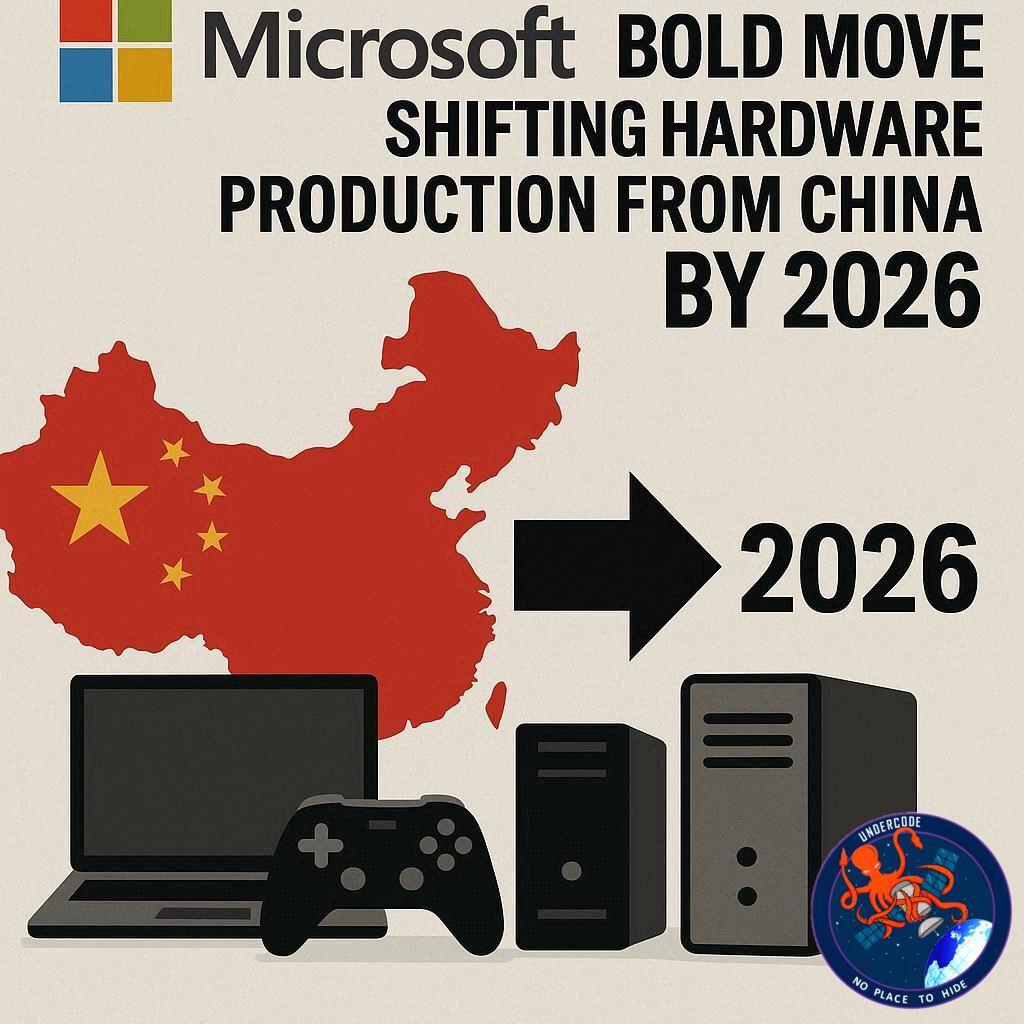
As tensions between the U.S. and China continue to escalate, major tech giants are reevaluating their global supply chains. Microsoft is now at the forefront of this shift, reportedly planning a sweeping relocation of its manufacturing operations to countries outside China as early as 2026. This strategy aims to mitigate geopolitical risks, safeguard production continuity, and maintain its competitive edge in an increasingly uncertain global market.
Microsoft’s Manufacturing Overhaul
Microsoft is preparing a significant revamp of its production strategy, moving the bulk of its upcoming hardware manufacturing outside of China by 2026. Sources cited by Nikkei Asia reveal that the company’s initiative spans its Surface line of laptops, data center servers, and core components. Microsoft has already asked multiple suppliers to plan for “out of China” production, covering everything from parts to final assembly.
The scope of this effort is extensive. One supply chain executive described it as covering both notebooks and server products, highlighting the challenge of relocating production at the component level. While assembly relocation is manageable, shifting entire supply chains—including sourcing and manufacturing of key components—is far more complex.
Microsoft’s goal is ambitious: by 2026, it aims for the majority of its hardware to be produced entirely outside China. Estimates suggest the company distributes roughly 4 million Surface devices annually, and it has already relocated a substantial portion of its server manufacturing in recent years due to strategic importance. The company now requires at least 80% of the bill of materials for servers to be sourced internationally, reflecting a broader strategy to reduce dependence on China.
The initiative also touches other product lines. For Xbox consoles, Microsoft is exploring non-China production, although full relocation is not yet mandatory. Industry insiders note logistical hurdles, emphasizing that while assembly relocation is straightforward, sourcing components abroad presents a radical challenge, particularly with the tight 2026 timeline.
Microsoft’s strategy mirrors broader trends in American technology. Amazon Web Services is reportedly reducing purchases from Chinese PCB suppliers for AI servers, while Google is scaling up server assembly in Thailand. These moves reflect a larger, industry-wide effort to diversify supply chains and mitigate the risks of geopolitical tensions and potential disruptions in U.S.-China relations.
What Undercode Say: Strategic and Analytical Insight
Microsoft’s planned overhaul is more than a reaction to political pressure; it represents a strategic pivot in global manufacturing. The move underscores how U.S. tech companies are increasingly aware of the vulnerabilities in China-centric supply chains. By shifting production abroad, Microsoft is not only mitigating geopolitical risk but also positioning itself to respond faster to market fluctuations, global demand shifts, and potential trade restrictions.
The decision to prioritize servers first is particularly telling. Data centers are critical infrastructure for cloud computing, AI, and enterprise services, making them highly sensitive to supply chain interruptions. By ensuring that 80% of server components are internationally sourced, Microsoft reduces the risk of bottlenecks that could ripple across its enterprise operations.
However, executing this vision is far from simple. Relocating assembly lines is manageable, but overhauling component sourcing is a massive undertaking. Suppliers will need to establish new facilities, negotiate international logistics, and ensure quality standards are met. The 2026 timeline adds pressure, leaving little margin for delays or unforeseen regulatory challenges.
This strategy also signals a potential trend for the broader tech industry. Companies like Amazon and Google have already begun diversifying production, hinting at an emerging paradigm where reliance on a single nation for critical hardware becomes increasingly untenable. For Microsoft, success in this initiative could redefine its global supply chain resilience, setting a new benchmark for other tech giants facing similar geopolitical uncertainties.
Financially, the shift could be both a risk and an opportunity. Initial costs will likely spike due to new manufacturing setups, supplier audits, and logistical complexity. Yet, in the long term, Microsoft may benefit from reduced tariffs, fewer political entanglements, and greater operational flexibility—key advantages in a volatile global economy.
Furthermore, this move could reshape technology manufacturing hubs outside China. Countries like Vietnam, India, Thailand, and Mexico may see increased investment, creating new employment opportunities and regional supply networks. Microsoft’s decision could catalyze a broader realignment of global tech manufacturing, emphasizing diversification and resilience over cost minimization.
The initiative also reflects a subtle shift in corporate strategy from cost-driven production toward risk-driven, geopolitically aware planning. Microsoft’s approach may encourage competitors to reassess not only where they produce but also how they structure their global procurement, logistics, and inventory management.
Ultimately, Microsoft is signaling that geopolitical awareness is becoming as critical as technical innovation in maintaining market leadership. The company’s 2026 production goals suggest that tech giants can no longer afford to ignore the risks of concentrated supply chains, and that proactive diversification is essential to long-term sustainability.
Fact Checker Results
✅ Microsoft is planning to shift significant hardware production outside China by 2026.
✅ The strategy covers Surface laptops, data center servers, and potentially Xbox consoles.
❌ Full relocation of all Xbox production is not confirmed or mandatory yet.
Prediction
📊 By 2026, Microsoft could successfully relocate most hardware production outside China, inspiring a broader industry shift. This may accelerate investment in Southeast Asia and Latin America, reshaping global tech supply chains. Companies that fail to diversify may face increased geopolitical and operational risks, while early adopters of this strategy could gain long-term competitive advantages.
🕵️📝✔️Let’s dive deep and fact‑check.
References:
Reported By: timesofindia.indiatimes.com
Extra Source Hub (Possible Sources for article):
https://www.github.com
Wikipedia
OpenAi & Undercode AI
Image Source:
Unsplash
Undercode AI DI v2
Bing
🔐JOIN OUR CYBER WORLD [ CVE News • HackMonitor • UndercodeNews ]
📢 Follow UndercodeNews & Stay Tuned:
𝕏 formerly Twitter 🐦 | @ Threads | 🔗 Linkedin | 🦋BlueSky | 🐘Mastodon


