
Listen to this Post
The New Age of Intelligent Enterprise
The rise of artificial intelligence is no longer a prediction — it’s the reality transforming every corner of business. According to Gartner, within the next two years, nearly half of all business decisions will be either fully automated or supported by AI agents. The implications are massive: productivity, precision, and personalization are being rewritten. Yet, while AI holds promise, it also carries risk. The organizations that succeed are not the ones rushing to adopt the latest model, but the ones asking the right questions first.
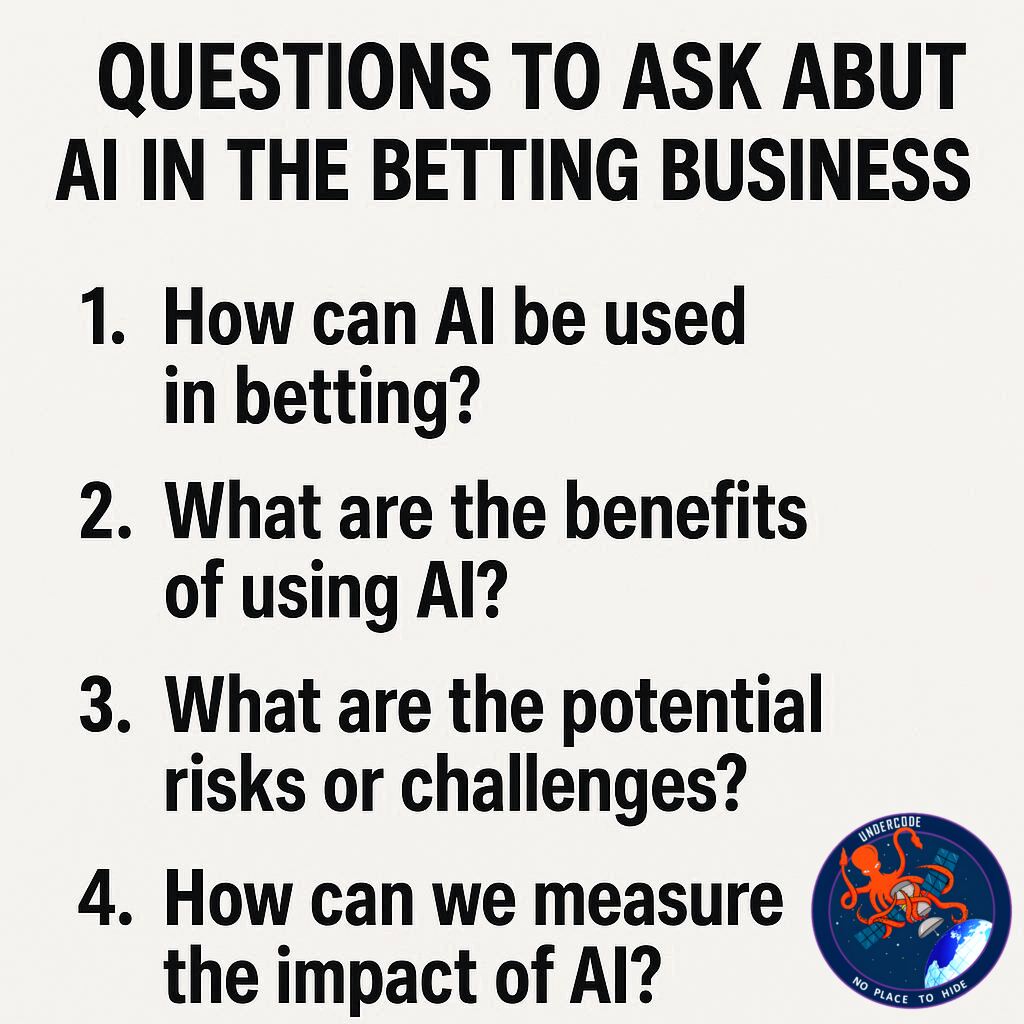
At the Snowflake Summit 2025 in San Francisco, four leading executives from industries as diverse as pharmaceuticals, banking, cloud computing, and fintech shared their experiences — their victories, their surprises, and their cautionary tales. Their message was clear: before betting on AI, leaders must confront four crucial questions.
1. What’s My Cloud Strategy?
Wayne Filin-Matthews, Chief Enterprise Architect at AstraZeneca, revealed how the pharmaceutical giant is weaving AI into the very fabric of scientific discovery. AstraZeneca’s AI-enabled research assistant is accelerating the process of developing new medicines by ensuring scientific methods are reproducible and data-driven. The company collaborates with academic powerhouses like Stanford University, experimenting with agentic AI teams that complement human researchers.
But the lesson wasn’t just about success. Filin-Matthews warned that AI cannot thrive without a robust cloud foundation. AstraZeneca operates in 126 markets, and AI now automates the creation of marketing content and drug information — yet every innovation depends on scalable, well-structured cloud data. His message: “You cannot be AI-first without being cloud-first.”
2. Have I Addressed Data Governance Concerns?
For Amit Patel, Chief Data Officer at Truist, the banking sector’s tight regulations make AI both promising and perilous. Patel stressed that data lineage and governance are the bedrock of any trustworthy AI initiative. Every data source must be verifiable, authorized, and compliant.
Patel discovered that deploying large language models (LLMs) in a corporate environment is nothing like using ChatGPT at home. Guardrails are essential. Metadata must guide model interpretation, and all inputs must come from governed sources. He cautioned that while enthusiasm for AI is high, true deployment demands patience, structure, and strong regulatory frameworks. “It’s not a point-and-click process,” he said. “It’s about setting expectations and building a foundation that lasts.”
3. What’s the Quality of My Outputs?
At Snowflake, Chief Data and Analytics Officer Anahita Tafvizi found herself in a unique position: both developer and first customer of her own company’s AI tools. Her team co-created Snowflake Intelligence, which empowers users to design their own AI data agents. But as innovation accelerates, maintaining trust in AI outputs becomes critical.
Tafvizi highlighted a recurring dilemma: balancing speed with quality. “Is 95% accuracy good enough?” she asked. In fields where a small margin of error could cost millions, probably not. Her approach is meticulous — focusing on governance, lineage, semantic models, and metadata to ensure that innovation doesn’t outpace responsibility. Her insight is sharp: “Velocity means nothing if people can’t trust the results.”
4. Have I Considered Unanticipated Benefits?
At TS Imagine, Chief Data and Analytics Officer Thomas Bodenski discovered AI’s greatest strength may lie beyond automation. While AI reduced manual workloads, it also unlocked unexpected improvements — faster processes, better accuracy, and wider coverage.
Before AI, Bodenski’s team manually processed over 100,000 vendor emails each year — an exhausting task consuming two and a half full-time employees. Missing one crucial message could shut down trading systems for thousands of professionals. Now, AI handles the flood seamlessly, eliminating human error and freeing teams for strategic work.
Even weekends have changed: where support once paused on Saturdays, an AI agent now handles inquiries, routing tickets to the right specialists. Bodenski’s takeaway is profound: AI isn’t just about doing less. It’s about doing better, faster, and smarter.
What Undercode Say:
The conversation around AI in business has shifted from “if” to “how fast.” Yet these four questions reveal a deeper truth: AI transformation is more about foundations than flash.
Filin-Matthews’ story reminds us that AI thrives on cloud readiness — without scalable, structured data systems, even the smartest models collapse under their own complexity. The “AI-first” movement sounds exciting, but it’s meaningless without cloud-first principles. In many ways, AI is a reflection of infrastructure maturity.
Patel’s narrative exposes another layer: the illusion of simplicity. Many executives expect AI deployment to mirror consumer experiences — fast, intuitive, magical. But corporate environments are regulatory minefields. His insistence on governed sources and transparent lineage underscores an industry-wide tension: innovation versus compliance. The future belongs to leaders who can navigate both.
Tafvizi brings us into the psychological dimension of AI — trust. No matter how advanced the model, without confidence in its outputs, adoption stalls. Her emphasis on governance and semantic modeling signals a new frontier in enterprise AI: explainability and reliability as competitive differentiators. Businesses won’t just compete on speed; they’ll compete on credibility.
Finally, Bodenski’s case challenges the narrative that AI replaces humans. Instead, it redefines human value. The automation of tedious work doesn’t eliminate people; it amplifies their strategic impact. His experience proves that the most transformative benefits of AI are often accidental — the secondary gains that appear only after adoption.
Taken together, these insights reveal a pattern: AI success depends less on tools and more on readiness — cloud, governance, quality, and open-minded leadership. Companies that skip these steps will drown in their own data. Those that invest in foundations will lead the next era of intelligent business.
🔍 Fact Checker Results
✅ Gartner predicts that 50% of business decisions will be AI-augmented by 2027.
✅ AstraZeneca, Truist, Snowflake, and TS Imagine executives all confirmed AI integration initiatives at Snowflake Summit 2025.
❌ AI implementation does not yet eliminate the need for human oversight or governance structures.
📊 Prediction
By 2027, most major enterprises will deploy AI not as an assistant, but as a co-decision maker. 🌐
Data governance will become the new currency of trust, defining which companies thrive in an automated economy. 💼
And just as electricity transformed factories a century ago, AI will transform decision-making itself — quietly, fundamentally, and irreversibly. ⚙️
🕵️📝✔️Let’s dive deep and fact‑check.
References:
Reported By: www.zdnet.com
Extra Source Hub (Possible Sources for article):
https://stackoverflow.com
Wikipedia
OpenAi & Undercode AI
Image Source:
Unsplash
Undercode AI DI v2
Bing
🔐JOIN OUR CYBER WORLD [ CVE News • HackMonitor • UndercodeNews ]
📢 Follow UndercodeNews & Stay Tuned:
𝕏 formerly Twitter 🐦 | @ Threads | 🔗 Linkedin | 🦋BlueSky | 🐘Mastodon


