
Listen to this Post
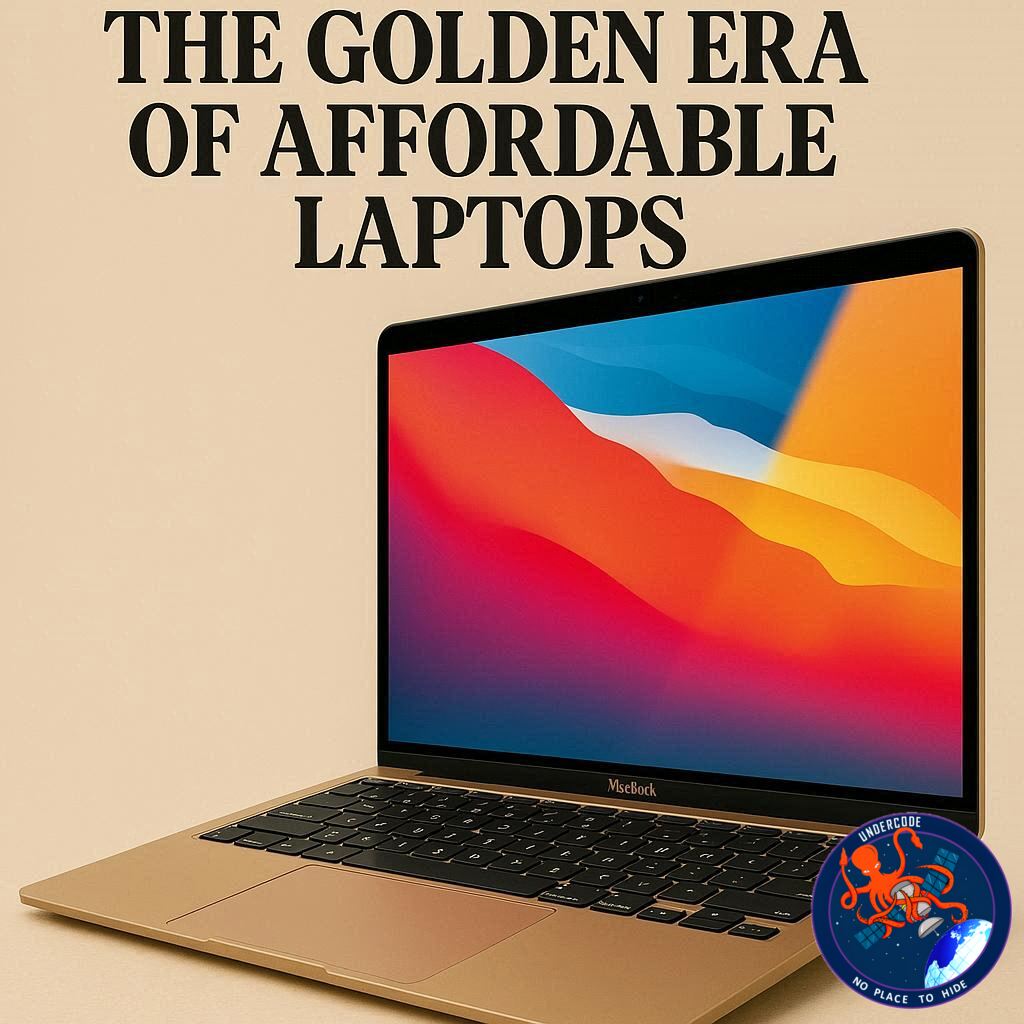
Introduction: The Dawn of a New Mac Era
The Apple Silicon era has redefined what it means to own a MacBook. Once a luxury item for designers and professionals, Apple’s laptops are now entering a new phase — one where performance meets accessibility. With brand-new models starting as low as $599, and Apple’s latest macOS update officially leaving Intel Macs behind, the company is signaling the close of one chapter and the beginning of another. But with global tariffs on the horizon, the current wave of deals could be the final breath of affordable Apple computing. For anyone contemplating an upgrade, this may be the most strategic — and emotional — moment to take the leap.
Apple’s Silicon Strategy: The Complete Evolution
Since the debut of Apple’s own silicon chips, MacBooks have transformed dramatically — not just in power, but in design, efficiency, and pricing philosophy. From the M1 MacBook Air that first introduced Apple’s game-changing performance-per-watt ratio, to the M5 MacBook Pro unveiled this week, each generation reflects Apple’s relentless march toward dominance over both hardware and software.
The Classic: M1 MacBook Air
Launched as Apple’s first-ever ARM-based laptop, the M1 MacBook Air became an instant classic. Its silent operation, all-day battery life, and sharp Retina display made it an ideal entry point for users switching from Intel Macs. Even four years later, it remains shockingly competitive — available for $599 at Walmart, it’s arguably the best value MacBook ever sold. While limited to 256GB in most models, the M1 Air retains one unique charm: it’s the only Apple Silicon MacBook available in true gold.
The Redesign: M3 MacBook Air
The 2022 redesign introduced a cleaner, more modern look with MagSafe, thinner bezels, and new Midnight and Starlight finishes. Powered by the M2 and later M3 chips, the Air line expanded into 15-inch territory — appealing to those who wanted a larger display without the heft of a MacBook Pro. Deals on the M3 Air are becoming scarce, but for multitaskers, the 15-inch M3 model with 24GB of unified memory at $1099 remains an excellent mid-range option.
The Current Champion: M4 MacBook Air
Apple’s M4 generation, released earlier this year, refined the formula once more. With a new Center Stage webcam, Sky Blue color, and an already lower entry price, the M4 Air is proof that Apple is finally balancing design, power, and affordability. It’s faster, cooler, and better optimized than ever. Prices start at $899, with even the higher-end 15-inch models staying under $1500 — a rare feat in Apple’s pricing history.
The Professional Edge: M4 MacBook Pro
For creators and professionals, the M4 Pro series offers one of the most advanced laptop displays in the world: miniLED, ProMotion, and an incredible 1000 nits of sustained brightness. Combined with expanded ports, improved thermals, and 1080p webcam quality, it’s a machine that feels purpose-built for both performance and longevity. The M4 Pro 14-inch model at $1399 provides perhaps the most balanced mix of power and portability in Apple’s entire lineup.
The New Arrival: M5 MacBook Pro
Just released, the M5 MacBook Pro breaks tradition by appearing only in the base configuration — no Pro or Max variants yet. It’s about 15% faster than the M4, but interestingly still 10% slower than the M4 Pro in CPU performance. Apple seems to be positioning it as a transition device rather than a full generational leap. Early pricing starts at $1599, and while discounts haven’t arrived yet, analysts expect markdowns by early 2026.
What Undercode Say:
Apple’s pricing strategy right now feels like a delicate balancing act between accessibility and anticipation. On one hand, the M1 and M3 discounts suggest Apple is clearing inventory in preparation for a bigger strategic pivot — possibly toward a new entry-level “A18 Pro” MacBook that would unify its mobile and desktop ecosystems. On the other, the introduction of the M5 chip marks the beginning of Apple’s next power cycle — a move designed not just to boost performance, but to establish a clear hierarchy within its product line.
From an analytical standpoint, Apple is using psychological pricing as a weapon. The $599 M1 Air serves as a marketing anchor: it draws attention to affordability while subtly pushing consumers toward the pricier M4 and M5 tiers. This is classic Apple — create a tempting “budget” option, but ensure the real sales volume happens a step higher.
Moreover, the macOS Tahoe update dropping Intel support wasn’t just a technical decision; it was a business one. It pushes millions of users toward Silicon Macs under the guise of “software compatibility,” effectively forcing an upgrade cycle. Apple is, once again, controlling the pace of its ecosystem — not through persuasion, but through quiet, calculated obsolescence.
There’s also a design language shift unfolding. The disappearance of the Gold MacBook signals Apple’s movement toward more neutral, mature aesthetics. The company is aligning visual identity with its new corporate tone — cool, minimal, and professional. “Sky Blue” and “Starlight” aren’t just colors; they’re branding statements meant to convey calm innovation rather than youthful playfulness.
From an economic view, looming global tariffs could soon drive MacBook prices higher, particularly in the U.S. and European markets. If Apple decides to absorb those costs temporarily, expect thinner margins and faster product cycles to compensate. If not, this could very well be the last era of sub-$1000 Apple laptops — at least for a while.
The rise of AI-driven chip optimization also plays a hidden role here. The M4 and M5 chips feature enhanced neural engines, signaling Apple’s focus on making macOS AI-native. In this context, buying an M1 MacBook might feel like purchasing a legend, but it’s also an admission of staying in a pre-AI generation of hardware.
In short, Apple’s current lineup tells a story of transition — a graceful handoff between legacy and the future. Whether you buy an M1 for nostalgia or an M5 for innovation, you’re witnessing Apple’s masterclass in balancing sentiment, performance, and profit.
Fact Checker Results
✅ macOS Tahoe indeed drops support for most Intel-based Macs.
✅ The M1 MacBook Air is confirmed to retail for as low as $599 at Walmart.
❌ No official statement yet confirms an upcoming A18 Pro-powered MacBook, though industry rumors suggest it’s in testing.
Prediction 🧠
The M5 generation will set the stage for Apple’s biggest transition since 2020 — a move toward unified AI performance across all devices. Expect a new “MacBook SE” or entry-level A-series model in 2026, targeting students and budget-conscious creators. Prices under $700 will soon vanish, but the line between iPad and Mac will blur like never before.
🕵️📝✔️Let’s dive deep and fact‑check.
References:
Reported By: 9to5mac.com
Extra Source Hub (Possible Sources for article):
https://www.quora.com
Wikipedia
OpenAi & Undercode AI
Image Source:
Unsplash
Undercode AI DI v2
Bing
🔐JOIN OUR CYBER WORLD [ CVE News • HackMonitor • UndercodeNews ]
📢 Follow UndercodeNews & Stay Tuned:
𝕏 formerly Twitter 🐦 | @ Threads | 🔗 Linkedin | 🦋BlueSky | 🐘Mastodon


