
Listen to this Post
Introduction
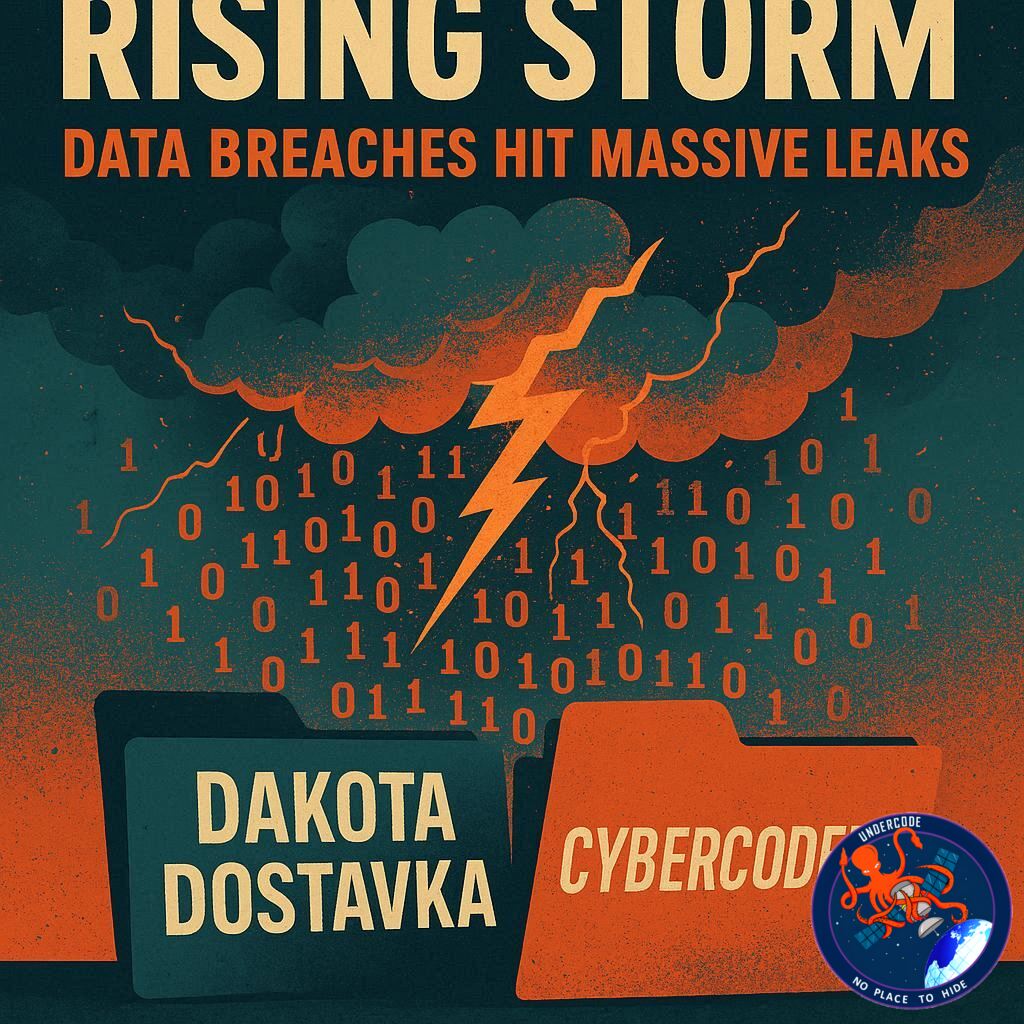
In a digital world increasingly reliant on data, the past week has delivered two major shockwaves from the dark web. Two companies — one a local Russian food delivery service, the other a prominent American tech recruiting platform — have reportedly suffered massive data breaches, exposing the personal details of tens of millions. The incidents, affecting Dakota Dostavka and CyberCoders, highlight a growing crisis in global cybersecurity: the ease with which threat actors are breaching corporate defenses and trading sensitive information online.
What makes these breaches alarming is not only the volume of data but also the industries affected — from food delivery to high-end tech recruitment. Both companies represent the lifeblood of digital convenience and employment connectivity, making their compromise more than a technical failure — it’s a breach of trust.
the Reported Breaches
According to Dark Web Intelligence (@DailyDarkWeb), Russia-based Dakota Dostavka, a popular food delivery service, has reportedly suffered a major data breach, with a threat actor leaking a database containing 40,000 customer records. The leaked data reportedly includes personal information such as names, contact numbers, addresses, and order histories — a treasure trove for phishing and identity theft campaigns.
While 40,000 records may seem small compared to global-scale breaches, the impact on customer privacy is significant. Localized businesses like Dakota Dostavka often lack the cybersecurity maturity of multinational corporations, making them soft targets for opportunistic hackers. Reports suggest the database is already circulating on dark web forums, potentially for resale or use in spam and fraud campaigns.
Meanwhile, across the Atlantic, a far larger incident has been reported. CyberCoders, one of the United States’ leading tech recruitment platforms, is said to have fallen victim to a massive cyberattack. A threat actor claims to have stolen 274 GB of data, compromising records of over 32 million candidates.
This dataset likely contains resumes, professional histories, contact details, and possibly even salary expectations — an information goldmine for cybercriminals specializing in corporate espionage, spear-phishing, and employment scams. The leak also raises fears about how easily threat actors can manipulate professional data to impersonate job candidates or recruiters, leading to deeper infiltration into corporate systems.
The contrast between the two incidents — one regional and relatively small, the other global and massive — illustrates a single, unified truth: no company is too big or too small to be targeted. The common thread is the weaponization of personal data as both a commodity and a weapon on the dark web.
Cybersecurity experts warn that such breaches are likely to increase in frequency and sophistication, fueled by a growing underground economy that trades in stolen digital identities. The fact that both leaks were made public by the same dark web monitoring source also suggests the rise of more transparent threat reporting — but at the cost of global anxiety over who might be next.
What Undercode Say:
The Dakota Dostavka and CyberCoders breaches are not isolated mishaps — they’re signposts of a global trend where data is the new battlefield. What’s unfolding here is a convergence of two troubling realities: the rise of opportunistic cybercrime targeting under-secured regional businesses and the exploitation of high-value data from enterprise-scale platforms.
For Dakota Dostavka, this breach underscores a chronic weakness across mid-tier digital companies in Eastern Europe — minimal investment in data encryption, outdated infrastructure, and the dangerous assumption that “small targets” escape hacker attention. Yet, in 2025, no digital footprint is too small to exploit. Food delivery services store sensitive data that can be monetized or weaponized through identity theft or targeted scams.
On the other hand, the CyberCoders leak is a strategic nightmare. With over 32 million candidate profiles exposed, the data has immense market value — not just for criminals but for competitors and hostile intelligence entities. The breach could enable social engineering attacks at an industrial scale. Imagine phishing emails crafted with exact employment histories and recruiter names — that’s a social engineer’s dream scenario.
The recruitment and HR sector has been increasingly targeted because it bridges both corporate and personal data ecosystems. Candidate resumes often contain a full picture of someone’s professional identity — name, location, skills, and even social media links. Once that data is breached, it’s almost impossible to fully retract or protect.
These two incidents together represent a microcosm of the new digital threat matrix: decentralized attacks, global impact, and a blurred line between personal and corporate exposure. It’s not just about stealing data anymore — it’s about controlling digital identities and using them as leverage.
For governments and cybersecurity watchdogs, these cases highlight the urgent need for better international coordination on cyber law enforcement. Threat actors are no longer confined by borders, but legislation still is. A hacker in one jurisdiction can devastate businesses across continents within hours.
As the digital economy expands, cybersecurity cannot remain an afterthought or a checkbox. It must evolve into a core business strategy. Companies like CyberCoders, which handle massive user data, need to rethink their storage models — encrypting sensitive fields, employing zero-trust frameworks, and investing in dark web monitoring.
Meanwhile, smaller firms like Dakota Dostavka need scalable security solutions that don’t rely on expensive enterprise tools but still offer fundamental protections — data masking, regular audits, and employee awareness training.
Ultimately, these incidents serve as a grim reminder: the digital age runs on trust, and every breach erodes it further. Unless businesses, users, and governments unite to treat data security as a shared responsibility, these breaches will only grow in scale and consequence.
Fact Checker Results
✅ Reports from Dark Web Intelligence confirm both Dakota Dostavka and CyberCoders data leaks.
✅ CyberCoders breach allegedly involves 32 million candidate profiles, totaling 274 GB of data.
❌ No official confirmation yet from either company on the full scope or verification of leaked data.
Prediction 🔮
Expect a wave of targeted phishing and recruitment fraud attempts in the coming months, using data from these leaks. Cybercriminals will likely impersonate recruiters or delivery companies to exploit victims. As cyberattacks grow more data-driven and localized, the digital world edges closer to a new reality — where your professional resume or food order could be the next weapon in someone else’s hands.
🕵️📝✔️Let’s dive deep and fact‑check.
References:
Reported By: x.com
Extra Source Hub (Possible Sources for article):
https://www.stackexchange.com
Wikipedia
OpenAi & Undercode AI
Image Source:
Unsplash
Undercode AI DI v2
Bing
🔐JOIN OUR CYBER WORLD [ CVE News • HackMonitor • UndercodeNews ]
📢 Follow UndercodeNews & Stay Tuned:
𝕏 formerly Twitter 🐦 | @ Threads | 🔗 Linkedin | 🦋BlueSky | 🐘Mastodon


