
Listen to this Post
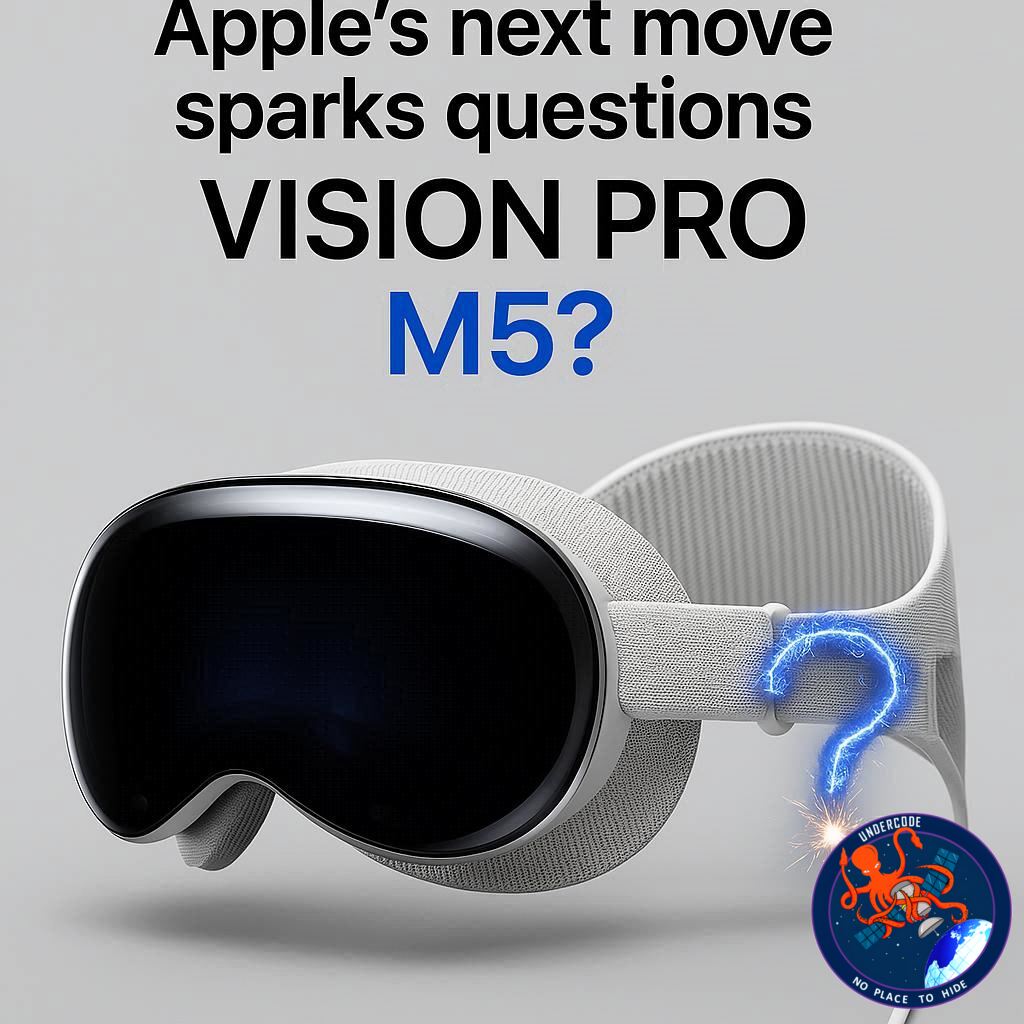
The arrival of Apple’s Vision Pro (M5) is stirring curiosity, not just for its rumored upgrades, but for an unexpected twist — it may not fully support the original Developer Strap. This $299 accessory, originally built to help developers test high-performance graphics and immersive apps, is now facing compatibility concerns. Hidden within Apple’s latest beta code, references suggest a “Limited Developer Strap Connected” message, signaling potential issues for those still using the first-generation model.
This revelation, though subtle, carries major implications for developers who rely on the strap’s USB-C connection for testing and debugging. Apple’s move hints at a quiet hardware evolution — possibly a new strap design or interface standard for the Vision Pro (M5). The discovery, first noticed by 9to5Mac and MacRumors, shows an updated asset icon within the beta, depicting what might be the new strap. Notably, the current strap has also gone offline from Apple’s Developer Store, with availability set to resume on October 22 — the same day the M5 launches.
While Apple hasn’t publicly commented, the timing strongly suggests an upgraded developer accessory is coming. Much like last year’s synchronized release of the Vision Pro and the first Developer Strap, Apple seems poised to roll out both together once again. Still, the message buried in the code — “The Developer Strap attached to Apple Vision Pro is not fully supported; functionality may be limited” — offers a warning. Developers may soon need to upgrade their tools to keep pace with Apple’s evolving headset technology.
The current strap’s role has been central to the Vision Pro development experience. It replaces the right audio band, providing a USB-C port that enables easier data transfers, debugging, and power supply — essential for extended testing sessions. If the new headset changes internal architecture or data protocols, even slightly, the old strap might lose some of its functionality. Apple’s silence, meanwhile, leaves developers guessing whether this is a deliberate product push or a technical necessity driven by internal design refinements.
For context, Apple’s previous rollout pattern often signals subtle yet significant shifts in hardware standards. Each iteration tends to push accessories toward new configurations — often improving power management, latency, or bandwidth between connected devices. If that trend holds, the Vision Pro (M5) could be introducing new I/O specifications or bandwidth enhancements incompatible with the older strap.
The developer community, ever watchful, is already dissecting every byte of the beta code. Many speculate that Apple is refining its accessory ecosystem to better support real-time rendering, high-resolution passthrough, or extended mixed-reality sessions. Whatever the case, the discontinuation of the first Developer Strap before the new headset’s launch isn’t coincidence — it’s choreography. Apple is quietly preparing the stage for another round of hardware synergy.
And beyond the developer ecosystem, this small shift tells a larger story: Apple’s AR/VR vision is accelerating. As the company tightens integration between software tools and hardware peripherals, it’s shaping an environment where even small components — like a strap — play critical roles in overall performance.
What Undercode Say:
Apple’s latest compatibility riddle reflects a long-standing strategy: gradual evolution wrapped in mystery. By tweaking one peripheral at a time, Apple ensures forward momentum while nudging its ecosystem toward newer, faster, and more profitable standards. The incompatibility between the Vision Pro (M5) and the original Developer Strap is not a bug — it’s a signal.
First, let’s consider what this means technically. The Vision Pro (M5) could be shifting to a faster data bus or a modified interface to support advanced rendering capabilities. With immersive content becoming increasingly demanding — think volumetric video, live mixed-reality overlays, and 3D object persistence — Apple needs every connected accessory to handle more bandwidth and lower latency. The old strap, designed for the first-gen Vision Pro’s architecture, may simply lack the throughput to keep up.
Second, there’s an ecosystem strategy at play. Apple has always controlled its accessory compatibility with precision. From Lightning cables to MagSafe chargers, every generation subtly guides users toward an upgraded experience (and, often, new purchases). The Developer Strap situation fits neatly into that pattern. It ensures that those building apps for the Vision Pro (M5) are testing on the most current, optimized hardware.
But the timing is what’s fascinating. Apple has aligned the re-release of the strap and the headset for October 22 — a synchronized drop that feels intentional. The message is clear: the M5 is more than an iteration; it’s a new chapter in Apple’s spatial computing roadmap.
For developers, this means more than just buying new gear. It implies that Apple’s mixed-reality platform is moving into a phase of refinement and specialization. Each accessory may soon become a modular piece in a tightly interlocked ecosystem — from advanced developer straps to future mixed-reality controllers and sensory bands.
From a business standpoint, Apple’s accessory evolution strategy is brilliant. By controlling both the hardware and the development environment, the company ensures consistency while generating an ongoing revenue stream from peripheral upgrades. It’s a model that’s worked flawlessly across iPhone and Mac ecosystems — and it’s now being replicated in the AR/VR domain.
There’s also the psychological factor: subtle incompatibility pressures developers to stay current, while giving Apple’s ecosystem a sense of constant forward motion. The hidden messages in beta code, the delayed product listings, and the synchronized restock dates all contribute to an atmosphere of anticipation — a technique Apple has mastered for decades.
And yet, the question remains: is this about innovation or control? Likely both. The Vision Pro’s next evolution demands hardware tuned for precision, but it also keeps Apple firmly at the center of every technological layer. For developers, that’s both an opportunity and a constraint.
If the rumors prove true, the new Developer Strap could introduce faster data access, improved comfort, or even built-in diagnostics for performance feedback — tools that make development more seamless and immersive. But for now, one fact is clear: Apple’s path to the future of spatial computing is paved with incremental, deliberate steps — and this compatibility shift is one of them.
Fact Checker Results:
✅ Beta code confirms partial incompatibility messages for old Developer Strap.
✅ The original strap is temporarily unavailable until October 22.
❌ Apple has not officially confirmed the release of a new strap yet.
Prediction:
Apple will likely unveil a redesigned Developer Strap alongside the Vision Pro (M5) 🎧, featuring upgraded connectivity or faster data transfer for real-time testing. Expect Apple to position it as essential for next-gen mixed-reality app creation 🔮 — a move that further consolidates its control over the entire developer ecosystem.
🕵️📝✔️Let’s dive deep and fact‑check.
References:
Reported By: 9to5mac.com
Extra Source Hub (Possible Sources for article):
https://www.linkedin.com
Wikipedia
OpenAi & Undercode AI
Image Source:
Unsplash
Undercode AI DI v2
Bing
🔐JOIN OUR CYBER WORLD [ CVE News • HackMonitor • UndercodeNews ]
📢 Follow UndercodeNews & Stay Tuned:
𝕏 formerly Twitter 🐦 | @ Threads | 🔗 Linkedin | 🦋BlueSky | 🐘Mastodon


