
Listen to this Post
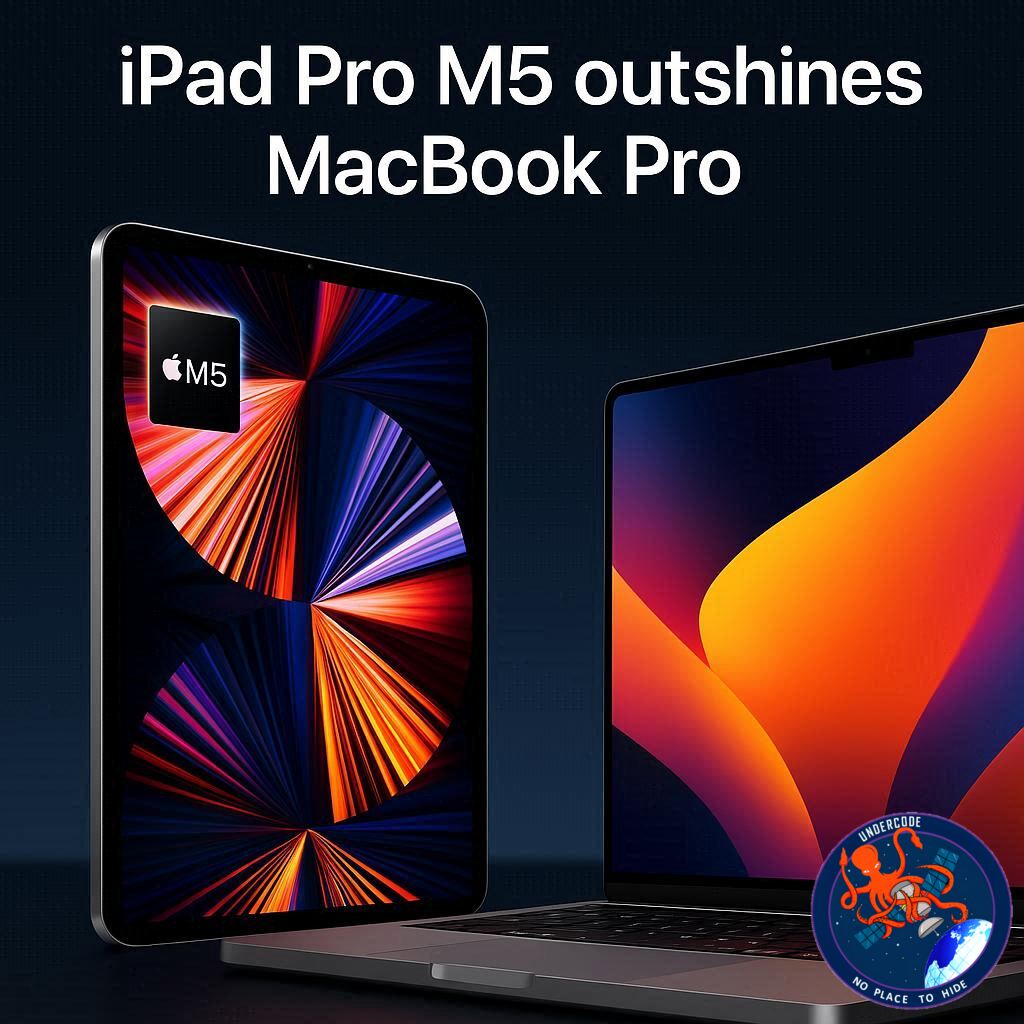
Apple’s latest wave of devices—the M5 iPad Pro, M5 MacBook Pro, and Vision Pro—have just hit reviewers’ hands, and one trend stands out clearly: Apple’s iPad hardware continues to outpace its Mac lineup. While macOS remains a powerhouse in software, the iPad’s hardware innovation seems to sprint ahead, bringing features to users faster than the MacBook Pro. From ultra-thin designs to cutting-edge chips, the M5 iPad Pro is setting new standards that the MacBook Pro has yet to match.
Apple’s M5 Devices
The M5 iPad Pro is a showcase of Apple’s most advanced hardware. It features the new Tandem OLED Ultra Retina XDR display, Touch support, Face ID, and Apple’s N1 wireless chip. Its design is ultra-thin and modern, representing Apple’s current vision of premium mobile hardware. In contrast, the M5 MacBook Pro retains a bulky, four-year-old chassis, uses a non-OLED Liquid Retina XDR display, relies on Touch ID instead of Face ID, and lacks Apple’s latest wireless and cellular technology.
While iPadOS 16 has made huge strides in software, macOS still holds advantages in flexibility, multitasking, and professional applications. However, when it comes to hardware, Apple clearly prioritizes the iPad as a testing ground for its latest tech innovations. Rumors indicate that some of the iPad’s advantages—OLED displays, Touch support, Face ID, thinner designs, and N-series wireless chips—will eventually make their way to MacBooks, but these upgrades are expected only next year or even further down the line.
Apple’s strategy seems clear: the Mac remains a mature, stable platform, while the iPad acts as a showcase for experimentation. Despite the M5 MacBook Pro’s impressive performance, the absence of certain hardware features and cellular options shows Apple’s focus remains split. The new M5 iPad Pro, with its cutting-edge innovations, represents the future of Apple’s hardware experimentation.
Accessories also complement these devices, including AirPods Pro 3, fast-charging USB-C adapters, Apple Pencil Pro, protective tomtoc tablet sleeves, and aluminum laptop stands from Twelve South. These help enhance both Mac and iPad experiences, although the hardware gap between the two remains notable.
What Undercode Say: Apple’s Innovation Priorities
Apple’s approach to hardware innovation has always been strategic rather than uniform. The M5 iPad Pro receiving advanced features like the N1 chip and cellular modem while the MacBook Pro lags behind is no accident—it reflects a broader philosophy. iPads are seen as high-visibility devices with rapid adoption curves, making them ideal for rolling out new technologies without risking Mac users’ expectations of stability and continuity.
The MacBook Pro’s slower hardware evolution highlights Apple’s balance between innovation and maturity. Macs are professional tools for creative and technical work, where stability, reliability, and backward compatibility are paramount. Introducing experimental hardware too quickly could disrupt workflows that professionals rely on. iPads, in contrast, cater to a mix of creative, productivity, and entertainment use, allowing Apple to test new chips, displays, and connectivity features with fewer constraints.
This hardware divergence also raises questions about user experience priorities. OLED displays, Touch support, and Face ID offer tangible benefits for interaction and visual fidelity, yet Mac users must wait. Meanwhile, the lack of cellular options in the MacBook Pro reflects Apple’s long-standing emphasis on Wi-Fi-based workflows, even as it develops proprietary 5G modems.
Apple’s incremental approach to Mac upgrades also signals a strategy for sustained excitement. By reserving major hardware updates—OLED, Face ID, N-series wireless chips—for next-generation MacBooks, Apple ensures that its devices feel fresh year after year. The M5 MacBook Pro is a bridge: powerful and reliable now, but promising far more when its successors arrive.
It’s also worth noting that the M5 iPad Pro embodies Apple’s vision of device convergence. With touch, Face ID, cellular, and cutting-edge chips, the iPad increasingly straddles the line between tablet and laptop, positioning itself as a versatile, high-performance tool. Apple seems to be subtly nudging Mac users to consider iPads for experimentation, while Macs remain anchored in their traditional strengths.
Finally, the market implications are significant. Users looking for the latest hardware breakthroughs will naturally gravitate toward iPads, creating a feedback loop that encourages Apple to continue prioritizing tablet innovation. Meanwhile, Mac users can rely on a mature ecosystem that values consistency, even if it means waiting longer for the newest features. Apple’s dual-track strategy—fast innovation for iPad, careful evolution for Mac—demonstrates a nuanced understanding of user needs and product lifecycle management.
Fact Checker Results
✅ M5 iPad Pro features the Tandem OLED Ultra Retina XDR display and N1 wireless chip.
❌ M5 MacBook Pro lacks Face ID, Touch support, and cellular connectivity.
✅ Rumors suggest next-gen MacBook Pros will adopt iPad-style hardware improvements.
Prediction
Apple will likely continue prioritizing iPad hardware innovation over MacBook upgrades in the near term, with OLED displays, Touch support, and Face ID arriving in MacBooks no earlier than late 2026. The M6 MacBook Pro may finally close the gap, but iPads will remain the testbed for cutting-edge technology. Expect iPads to increasingly blur the line between tablet and laptop, potentially reshaping how users perceive productivity devices. 📈
🕵️📝✔️Let’s dive deep and fact‑check.
References:
Reported By: 9to5mac.com
Extra Source Hub (Possible Sources for article):
https://www.discord.com
Wikipedia
OpenAi & Undercode AI
Image Source:
Unsplash
Undercode AI DI v2
Bing
🔐JOIN OUR CYBER WORLD [ CVE News • HackMonitor • UndercodeNews ]
📢 Follow UndercodeNews & Stay Tuned:
𝕏 formerly Twitter 🐦 | @ Threads | 🔗 Linkedin | 🦋BlueSky | 🐘Mastodon


