
Listen to this Post
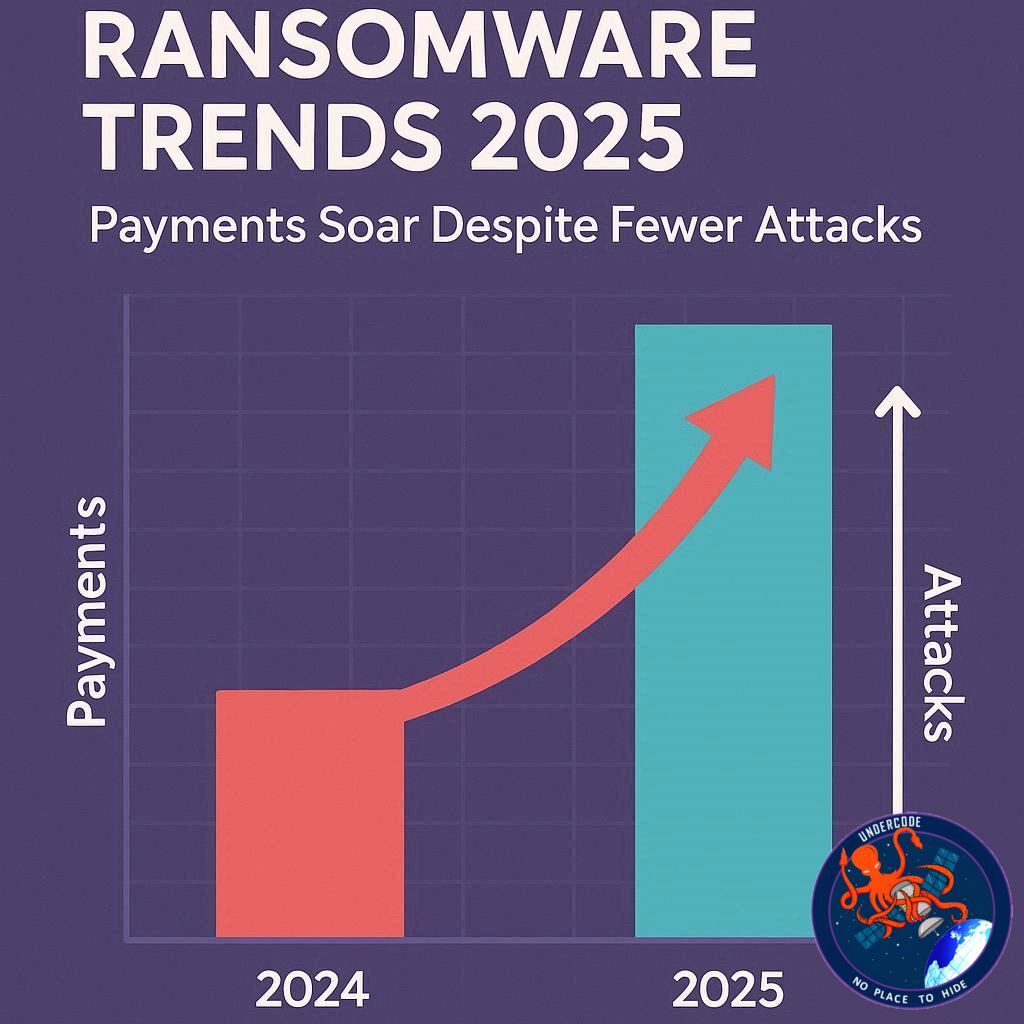
In an era where digital threats evolve faster than defenses, ransomware continues to be a pressing concern for organizations worldwide. While the frequency of attacks appears to be declining, the financial stakes have never been higher. Recent data reveals a startling trend: ransom payments have surged dramatically, reflecting both the increasing sophistication of attacks and the growing vulnerabilities within critical sectors such as healthcare and government. Understanding this paradox—fewer attacks but higher payouts—is crucial for cybersecurity professionals, policymakers, and organizations aiming to safeguard sensitive information and public trust.
Recent reports indicate that although the total number of ransomware attacks has decreased, the financial impact of each attack has intensified. Organizations are now paying an average of $3.6 million per ransom, a figure that represents a more than 40% increase from previous years. This spike in payments is particularly alarming for sectors that handle sensitive personal and societal data. Healthcare institutions and government agencies are shouldering the largest payouts, underscoring the high stakes involved when critical services are compromised. Attackers are leveraging more sophisticated techniques, targeting systemic weaknesses, and exploiting gaps in early detection and response. As ransomware operations become increasingly professionalized, the cost of inaction or delayed mitigation grows exponentially.
The underlying reasons for these rising payouts are multifaceted. For healthcare organizations, the urgent need to maintain patient care and protect confidential medical records creates immense pressure to resolve attacks quickly, often at steep costs. Government agencies face similar challenges, as attacks on infrastructure, law enforcement systems, or public services carry potentially severe societal consequences. In many cases, attackers carefully calibrate their demands based on an organization’s perceived ability to pay, exploiting the high-value data they seize. Additionally, the dark web marketplace has matured, with ransomware-as-a-service models enabling even small cybercriminal groups to execute attacks at a scale previously reserved for major hacking syndicates.
The shift toward fewer but more financially damaging attacks reflects a strategic pivot by cybercriminals. Instead of overwhelming systems with high volumes of attacks, hackers are focusing on high-value targets and crafting operations designed for maximum disruption and payment leverage. This approach coincides with the adoption of advanced evasion techniques, including data encryption, ransomware variants capable of bypassing traditional detection tools, and careful timing to exploit organizational weaknesses. As a result, organizations are increasingly finding themselves in a reactive posture, forced to negotiate and comply rather than preemptively neutralize threats.
Cybersecurity experts warn that this trend is likely to continue unless organizations implement proactive measures, including robust network segmentation, real-time monitoring, employee cybersecurity training, and comprehensive incident response planning. Partnerships between public and private sectors are also critical, as intelligence sharing and coordinated mitigation strategies can help reduce the success rate of ransomware operations. While regulatory frameworks are evolving, enforcement remains inconsistent, leaving significant gaps for cybercriminals to exploit.
The human cost of ransomware extends beyond financial loss. Operational downtime, reputational damage, and compromised trust in critical services amplify the ripple effects of an attack. For healthcare providers, delayed treatments or disrupted medical services can have life-threatening consequences. Government agencies, meanwhile, risk eroding public confidence if sensitive citizen data is exposed or critical services are interrupted. Each successful attack reinforces the incentive structure for criminals, making future threats even more dangerous.
What Undercode Say:
The recent ransomware landscape illustrates a complex and troubling shift in cybercriminal strategy. Attackers are moving away from volume-driven campaigns and embracing precision-targeted attacks that demand multi-million-dollar payouts. This pivot is indicative of a broader professionalization within cybercrime, including the use of ransomware-as-a-service and collaboration on dark web platforms. Organizations need to recognize that traditional defense strategies—firewalls, antivirus software, and reactive patching—are no longer sufficient. The increased payout amounts reflect not just the severity of attacks but also the perceived willingness and ability of targets to pay.
In particular, healthcare and government sectors are disproportionately affected due to their societal importance and the sensitive nature of their data. Attackers exploit these factors, leveraging urgency and regulatory pressures to extract maximum ransom. The rise in payment amounts also correlates with the increasing complexity of attacks, including double-extortion tactics where data is both encrypted and threatened with public release. Furthermore, many organizations lack robust backup and recovery systems, making negotiation appear to be the quickest path to operational continuity.
The strategic implications are clear: the cybersecurity ecosystem must evolve from reactive to anticipatory. Organizations should adopt predictive analytics, AI-driven threat detection, and comprehensive employee awareness programs. Investment in cybersecurity cannot be viewed as optional—it is a fundamental component of organizational resilience. Collaboration with industry peers, intelligence-sharing networks, and law enforcement can mitigate the scale and impact of attacks. However, even with such measures, the asymmetry between attackers and defenders remains challenging, highlighting the need for ongoing innovation and adaptation.
Moreover, the psychological and operational pressures of ransomware cannot be understated. Executives face high-stakes decisions under duress, often without clear guidance or sufficient resources. This environment favors attackers who are patient, sophisticated, and methodical. As ransomware operations continue to professionalize, the cost-benefit analysis for organizations becomes more complex: paying a ransom may resolve an immediate crisis but incentivizes further attacks, while resisting demands may result in prolonged operational disruptions. Strategic frameworks and crisis simulations must therefore become standard practice in high-risk sectors.
The trends suggest that ransomware is not just a technical issue but a strategic threat that intersects with governance, compliance, and organizational culture. The interplay of technical vulnerability, regulatory pressure, and operational urgency creates fertile ground for cybercriminals. Leaders must integrate cybersecurity into core operational strategy, ensuring resilience is baked into organizational processes rather than treated as an afterthought. Without this shift, the escalating ransom amounts are likely to continue, and the societal impact of ransomware will intensify.
Fact Checker Results:
✅ Ransomware payments increased by over 40%, averaging $3.6M.
✅ Healthcare and government sectors are facing the highest payouts.
❌ Total number of ransomware attacks has declined, not increased.
Prediction:
💰 Ransomware payouts are likely to continue rising as attacks become more targeted and sophisticated.
🛡️ High-value sectors like healthcare and government will face increased investment in proactive defense strategies.
🌐 Collaboration between private organizations and government agencies may grow, focusing on intelligence-sharing and crisis preparedness to mitigate future attacks.
🕵️📝✔️Let’s dive deep and fact‑check.
References:
Reported By: x.com
Extra Source Hub (Possible Sources for article):
https://www.github.com
Wikipedia
OpenAi & Undercode AI
Image Source:
Unsplash
Undercode AI DI v2
Bing
🔐JOIN OUR CYBER WORLD [ CVE News • HackMonitor • UndercodeNews ]
📢 Follow UndercodeNews & Stay Tuned:
𝕏 formerly Twitter 🐦 | @ Threads | 🔗 Linkedin | 🦋BlueSky | 🐘Mastodon


