
Listen to this Post
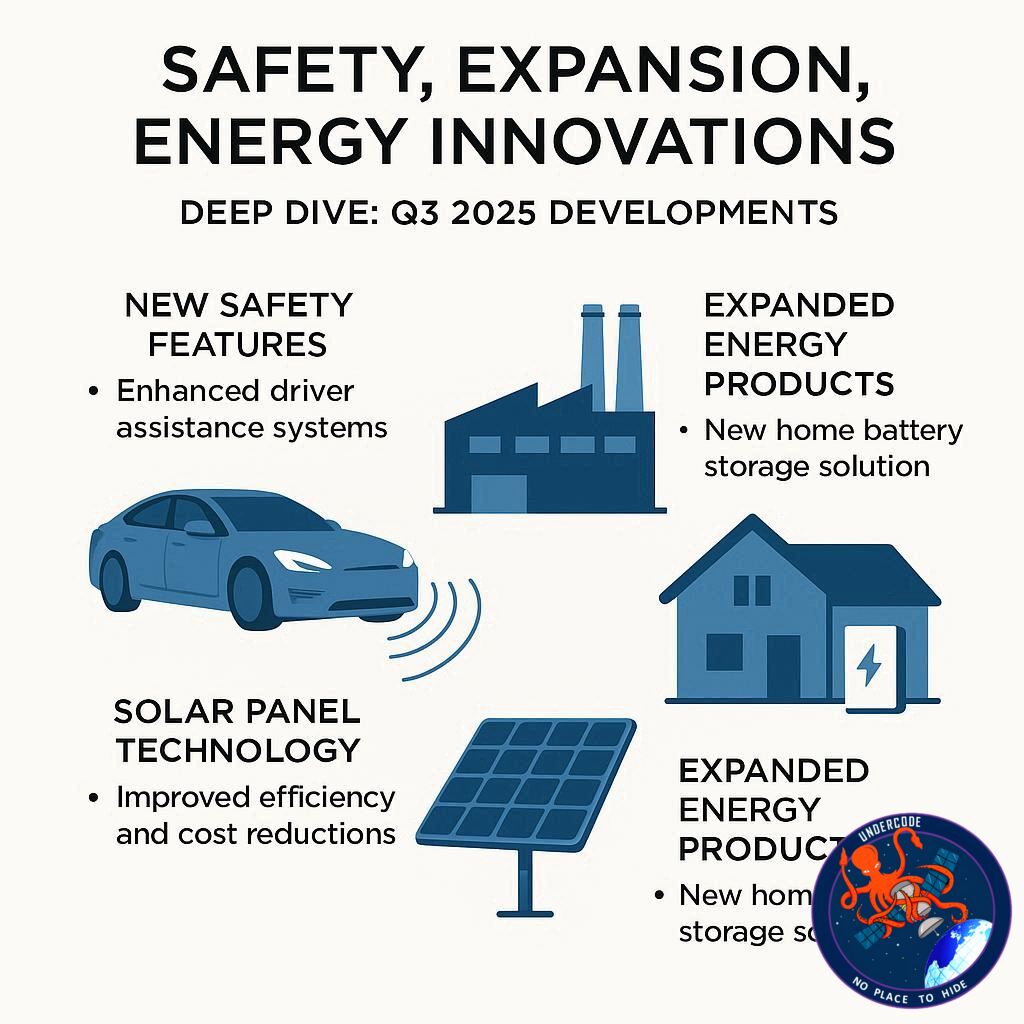
Tesla continues to dominate headlines, not just for its vehicles but for its technological advancements and strategic global expansion. The automaker’s latest Vehicle Safety Report for Q3 2025 highlights impressive safety metrics for Autopilot, showcasing how far autonomous driving technology has evolved. Beyond safety, Tesla is also signaling growth opportunities across new continents, with strategic moves into Africa and expanding energy operations through its Shanghai Megafactory. Investors and enthusiasts alike are keenly observing how these developments shape Tesla’s long-term trajectory.
Tesla Autopilot: A New Benchmark in Road Safety
Tesla’s Q3 2025 Vehicle Safety Report presents a striking statistic: drivers using Autopilot recorded one crash every 6.36 million miles. This figure stands in stark contrast to the national average reported by the NHTSA and FHWA, which records one crash approximately every 702,000 miles. Essentially, Tesla’s Autopilot technology is nine times safer than human driving.
While slightly lower than Q3 2024’s 7 million miles between crashes, this remains a remarkable achievement and continues a trend where Q1 typically shows the safest driving metrics, with Q4 slightly weaker due to adverse weather conditions. Tesla’s Full Self-Driving (FSD) suite, in supervised mode, continues to demonstrate reliability in navigating complex traffic scenarios, gaining efficiency and precision with each mile logged across its fleet. Tesla has teased the eventual possibility of unsupervised FSD, but regulatory and technical challenges remain before fully autonomous vehicles can hit the roads.
Expansion into Africa: Morocco as Tesla’s First Step
Tesla’s ambitions are not confined to safety and technology; global expansion is a key focus. With operations already spanning North America, Europe, Asia, South America, and Australia, the automaker is targeting Africa for the first time. A new job posting in Casablanca, Morocco, hints at a formal market entry strategy, with Tesla aiming to establish sales and delivery operations and build a high-performing team locally.
Morocco offers strategic advantages for Tesla: governmental support for renewable energy, a market primed for EV adoption, and proximity to local production infrastructure such as the Renault plant. The company’s initial capital investment of $2.75 million underscores a serious commitment to Africa, signaling potential growth not only in vehicles but also in energy solutions.
Investor Questions and Tesla’s Focus Areas
Tesla’s Q3 earnings call anticipates key investor questions around autonomy, energy, and product development. Questions likely to dominate include: updates on the Robotaxi fleet and its operational metrics, the backlog and demand for energy storage solutions like Megapack and Powerwall, and potential new vehicle releases. Investors are also curious about Optimus robotics deployment and demand stimulation strategies beyond affordability. Tesla is expected to provide selective insights, particularly around energy operations and Robotaxi metrics, while maintaining discretion on upcoming vehicle plans.
Tesla Shanghai Megafactory: Driving Energy Exports
Tesla’s Shanghai Megafactory has quickly become a powerhouse in the global battery market. Since its February 2025 opening, the factory has contributed to a 20.7% increase in Shanghai’s lithium battery exports, totaling $4.5 billion in the first three quarters. The facility’s rapid construction and operational ramp-up—achieving the production of its 1,000th Megapack unit within six months—highlight Tesla’s ability to accelerate energy production at scale. This has broader implications for the city’s “new three” industries: new energy vehicles, lithium batteries, and photovoltaic systems, all contributing to robust trade growth.
What Undercode Say: Analyzing Tesla’s 2025 Strategic Moves
Tesla’s Q3 2025 data and global strategy suggest a company that is simultaneously refining its core strengths and exploring new frontiers. The Autopilot safety metrics reinforce Tesla’s technological edge in autonomous driving, demonstrating that real-world application continues to outperform traditional driving safety standards. While minor quarterly fluctuations exist, the long-term trend is unmistakably positive, positioning Tesla as a leader in semi-autonomous driving safety.
The African expansion is particularly noteworthy. Entering Morocco could serve as a launchpad for broader operations across the continent, capitalizing on favorable policy environments and emerging EV demand. Tesla’s strategic choice aligns with long-term goals of market diversification and sustainability-driven growth. This also signals the company’s adaptability, leveraging both manufacturing and energy infrastructure to create localized advantages.
From an investor standpoint, Tesla’s energy portfolio is becoming increasingly important. The Shanghai Megafactory’s output not only strengthens Tesla’s international trade footprint but also positions the company as a major player in global energy storage—a market that will grow alongside AI, renewables, and electrification trends. Furthermore, investor questions around Robotaxi and Optimus indicate a focus on futuristic technology, emphasizing Tesla’s balance between immediate revenue streams and long-term innovation bets.
Tesla’s cautious yet steady approach to unsupervised FSD reflects a mature understanding of regulatory and technological realities. Unlike competitors who may rush to deploy autonomy, Tesla prioritizes safety metrics and real-world data, maintaining credibility and trust with both customers and regulators. The combination of vehicle innovation, energy production, and global expansion highlights Tesla’s multi-dimensional strategy, one that balances risk with measured growth.
Strategically, the company appears to be positioning itself as a leader not only in automotive markets but also in energy, AI integration, and robotic technologies. This multi-pronged approach could provide resilience against market fluctuations, political pressures, and technological disruptions. As Tesla continues to scale, its ability to integrate fleet data, energy production, and global distribution networks will be pivotal in maintaining its competitive advantage.
Fact Checker Results
✅ Tesla Autopilot shows one crash every 6.36 million miles for Q3 2025.
❌ National average crash rate is far higher, at one every 702,000 miles.
✅ Shanghai Megafactory contributed to a 20.7% rise in lithium battery exports.
Prediction
🚀 Tesla’s African market entry could expand EV adoption across Morocco and neighboring countries by 2026–2027, potentially setting a benchmark for sustainable growth in Africa.
⚡ Shanghai Megafactory output may position Tesla as a leading global energy storage supplier, driving exports and innovation in lithium battery technology.
🤖 Autopilot and FSD advancements indicate that Tesla may achieve incremental milestones toward unsupervised driving within the next 2–3 years, reinforcing its reputation as a safety and autonomy leader.
🕵️📝✔️Let’s dive deep and fact‑check.
References:
Reported By: www.teslarati.com
Extra Source Hub (Possible Sources for article):
https://www.quora.com
Wikipedia
OpenAi & Undercode AI
Image Source:
Unsplash
Undercode AI DI v2
Bing
🔐JOIN OUR CYBER WORLD [ CVE News • HackMonitor • UndercodeNews ]
📢 Follow UndercodeNews & Stay Tuned:
𝕏 formerly Twitter 🐦 | @ Threads | 🔗 Linkedin | 🦋BlueSky | 🐘Mastodon


