
Listen to this Post
A New Era for iPhone Freedom?
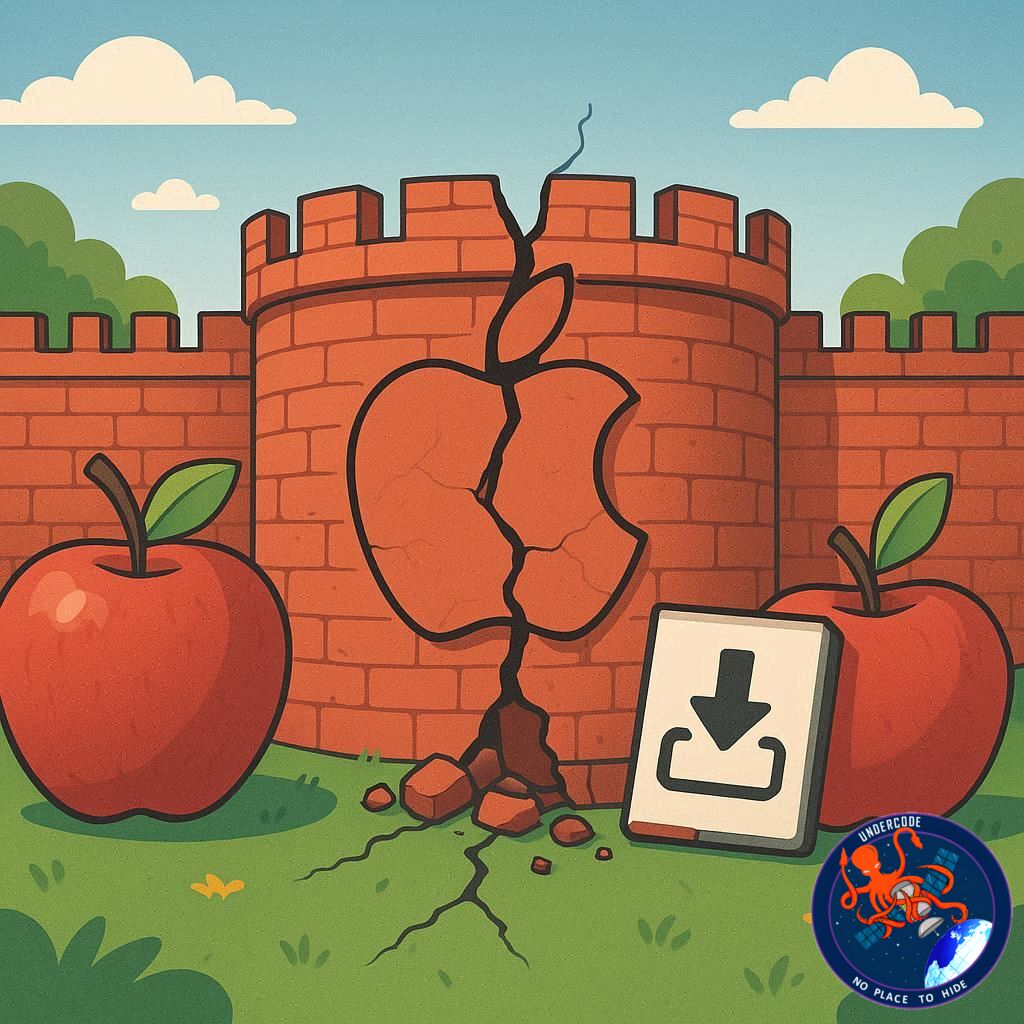
In one of the most defining regulatory challenges Apple has faced in recent years, the United Kingdom’s Competition and Markets Authority (CMA) is preparing to push the company into unfamiliar territory — allowing third-party app stores on iPhones. This potential shift, if implemented, could end over a decade of tight control under Apple’s “walled garden” model, fundamentally transforming the mobile app economy, developer freedom, and digital security landscape.
This move doesn’t exist in isolation. It forms part of a sweeping European trend to rein in tech giants — echoing the EU’s Digital Markets Act (DMA) — and reflects growing impatience with Apple’s dominance over app distribution and payments. With the CMA officially labeling both Apple and Google as holding “strategic market status,” the regulator is signaling that the duopoly has too much influence over how consumers and developers interact with mobile platforms.
The implications are enormous. If the UK’s ruling stands, Apple will be forced to permit competing app stores on iPhones — a move that could democratize app distribution, potentially lower fees, and encourage competition. But it also poses a major question: will more freedom mean more risk?
The Power Struggle Behind Apple’s App Store Monopoly
Apple’s current ecosystem thrives on exclusivity. Every app that reaches an iPhone user must pass through Apple’s App Store — a single gateway where the company collects commissions of up to 30% on sales and subscriptions. For years, Apple has defended this closed model by invoking user protection, arguing that strict curation shields customers from malware, scams, and privacy violations.
However, the CMA’s ruling marks a direct challenge to that philosophy. By declaring Apple and Google as “strategic market gatekeepers,” the regulator has positioned itself to enforce new competition rules — potentially altering how app stores, browsers, and operating systems operate across the UK. Observers believe this could serve as a test case for other countries seeking to curb monopolistic behaviors in the tech sector.
If implemented, Apple will have to open the door to alternative app marketplaces — spaces where developers could distribute apps without paying Apple’s commission or adhering to its stringent rules. For smaller developers, this could mean new opportunities and fairer economics. Yet, for users, it may also usher in an age of uncertainty.
The Security Dilemma: Freedom vs. Safety
Apple’s fiercest argument against third-party app stores centers on security. The company insists that loosening its grip would invite chaos — an influx of poorly vetted apps, increased malware threats, and user confusion. Apple’s App Store review process, though criticized for being opaque and overly strict, has historically maintained a reputation for quality and safety.
The introduction of alternative app stores could compromise that ecosystem. Open platforms — such as Android’s — have long struggled with rogue stores distributing harmful software. This makes the UK’s move a delicate balancing act: regulators want competition, but not at the expense of consumer safety.
Security experts warn that during the early transition, malicious actors could exploit user inexperience. Many users may download apps from unverified sources, unaware of the risks. Meanwhile, new app stores will have to work tirelessly to build trust — establishing robust review policies, privacy standards, and malware screening processes.
Still, the shift could also spur innovation. Specialized app stores may emerge with unique focuses: privacy-first models, curated collections for professionals, or marketplaces for niche communities. If executed responsibly, competition could lead to better, more transparent security practices across the industry.
Developers at a Crossroads
For developers, Apple’s forced openness represents both liberation and complexity. Many have long complained about Apple’s fees and restrictive rules that limit pricing, app functionality, and payment methods. Third-party app stores could allow developers to reach users on their own terms — setting flexible policies, using alternative payment systems, and keeping a greater share of revenue.
Yet, the advantages come with challenges. Developers would need to maintain apps across multiple distribution channels, adapt to varying security frameworks, and manage updates independently. Fragmentation — something Apple’s centralized model has historically avoided — could become a new headache.
Nonetheless, developer communities largely view the move as overdue. The ability to compete on user experience, not just on Apple’s approval, may foster a healthier creative ecosystem.
Global Ripple Effects
The UK’s decision could have far-reaching consequences. If Apple concedes to the CMA’s demands, it may trigger a domino effect — with regulators in the U.S., Canada, and Asia citing the UK and EU as precedents. The end result could be a global redefinition of what platform ownership means in the smartphone era.
As Apple prepares its defense, it faces a critical choice: evolve its business model to coexist with new marketplaces or double down on its legacy of control. Either way, the App Store’s days as an uncontested gatekeeper appear numbered.
What Undercode Say:
Apple’s battle with the UK’s CMA isn’t just about apps — it’s about power, trust, and the future of digital ecosystems. For years, Apple’s success has hinged on its ability to create a sense of safety through exclusivity. By tightly controlling every app that enters iOS, Apple has curated a seamless, secure experience. But that control also built a monopolistic structure that regulators now view as anti-competitive.
From an analytical standpoint, this confrontation mirrors the trajectory of antitrust history. We’ve seen similar battles in industries where innovation collided with monopoly — from telecoms to web browsers. Apple now faces the same crossroads Microsoft did in the late 1990s. The irony? Apple was once the rebel fighting against closed ecosystems; now, it has become the fortress.
If third-party app stores emerge successfully, the benefits could be significant. Developers would regain leverage, consumers could explore a richer variety of apps, and innovation might flourish in unexpected ways. Niche app stores focused on security, accessibility, or privacy could redefine digital trust — not diminish it.
But this will demand a new kind of digital literacy. Users must become more discerning, learning to evaluate sources, check security credentials, and understand app permissions. Cybersecurity companies, too, will likely play a larger role in helping users navigate this new landscape.
Apple’s next move will determine whether it remains a visionary leader or becomes a reluctant participant in a more open world. The company could take a proactive route — creating partnerships with vetted alternative stores, setting shared security baselines, and defining transparency standards. Or it could resist, framing openness as a danger rather than a direction.
In the long run, the most successful outcome would be hybrid: an ecosystem where users enjoy freedom and protection — where Apple evolves from gatekeeper to guardian.
This is not just a legal shift. It’s a philosophical one — about who truly owns technology: the company that builds it or the people who use it.
Fact Checker Results
✅ The CMA has officially designated Apple and Google as “strategic market status” entities.
✅ Apple currently restricts all app distribution to its own App Store, with exceptions only under EU mandates.
❌ No immediate date has been announced for mandatory third-party store implementation in the UK.
Prediction
📱 Within two years, iPhones will support at least one major third-party app store in the
🕵️📝✔️Let’s dive deep and fact‑check.
References:
Reported By: www.bitdefender.com
Extra Source Hub (Possible Sources for article):
https://www.reddit.com
Wikipedia
OpenAi & Undercode AI
Image Source:
Unsplash
Undercode AI DI v2
Bing
🔐JOIN OUR CYBER WORLD [ CVE News • HackMonitor • UndercodeNews ]
📢 Follow UndercodeNews & Stay Tuned:
𝕏 formerly Twitter 🐦 | @ Threads | 🔗 Linkedin | 🦋BlueSky | 🐘Mastodon


