
Listen to this Post
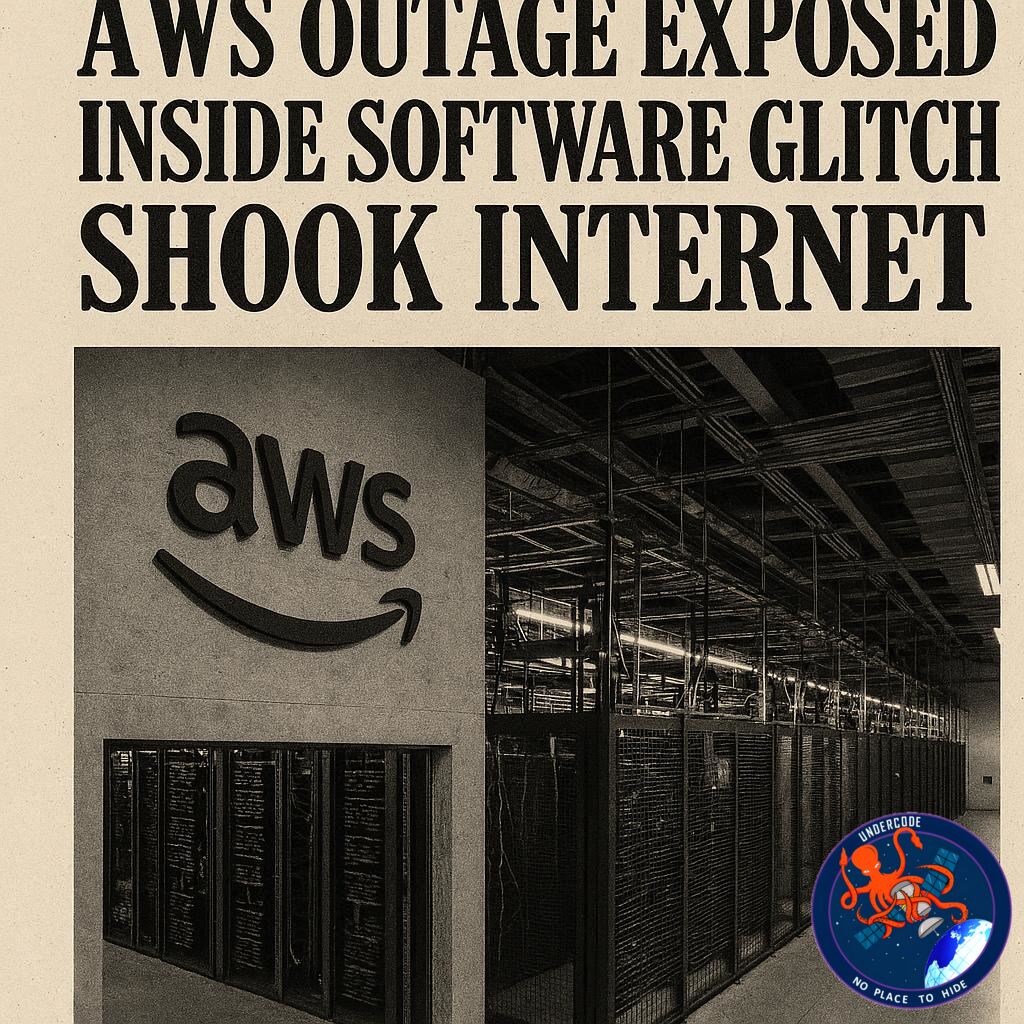
A Sudden Cloud Collapse That Echoed Across the Web
When Amazon Web Services (AWS) — the world’s largest cloud provider — stumbled this week, the internet felt it. Thousands of websites, apps, and enterprise systems went offline, from streaming platforms to e-commerce giants. For hours, the digital world seemed to pause. Now, AWS has revealed what went wrong: a subtle software flaw buried deep within its automation systems unleashed a chain reaction that brought even its most resilient infrastructure to its knees.
AWS confirmed that the hours-long disruption originated from its database service, DynamoDB, a critical pillar of its cloud ecosystem. The issue traced back to a “latent defect” within the service’s automated Domain Name System (DNS) management — a tool responsible for directing internet traffic to the correct servers. The result? A storm of cascading failures that lasted more than 15 hours and affected millions of users globally.
How a Tiny Bug Brought Down a Digital Giant
At the heart of the chaos was DynamoDB, AWS’s ultra-fast, highly scalable database service. Think of it as the heartbeat of countless apps and digital operations. DynamoDB depends on automation to manage hundreds of thousands of DNS records — essentially, the cloud’s address book that helps servers find one another and route traffic efficiently.
According to AWS engineers, the nightmare began when a critical DNS record for the US-East-1 (Virginia) data center region — one of Amazon’s largest and busiest — was mistakenly left empty. Without this key record, other systems couldn’t locate or communicate with DynamoDB servers. Imagine every phone number in a company’s directory suddenly disappearing — calls stop, connections break, and chaos follows.
Two automated systems, called Enactors, were responsible for updating these DNS records. But in this instance, timing betrayed them. One Enactor slowed down unexpectedly while another rushed ahead, applying updates and deleting what it thought were outdated plans. This overlap created a situation where important data simply vanished.
Once this occurred, the self-repair mechanism that should have caught the problem failed, forcing AWS engineers to step in manually. To prevent further instability, AWS disabled the DynamoDB automation systems, pausing the very feature designed to keep the system self-sustaining.
But that wasn’t the end of it.
Another problem appeared in the Network Load Balancer (NLB) — the “traffic cop” responsible for distributing network requests among servers. Some load balancers began wrongly assuming their servers were unhealthy, stopping all traffic to them. This led to millions of users facing connection errors, frozen apps, and unavailable websites.
In simple terms, the outage was a domino effect triggered by a single software bug. A timing conflict within DynamoDB’s automated DNS management system set off a wave of malfunctions that rippled through AWS’s ecosystem, showing just how fragile even the strongest digital architectures can be.
What Undercode Say:
The AWS incident is more than a technical glitch — it’s a cautionary tale about automation, complexity, and overconfidence in systems that seem too big to fail.
At its core, this outage reflects a paradox of modern cloud computing: automation both empowers and endangers. When everything works flawlessly, automation ensures speed, consistency, and scalability. But when it doesn’t, the same self-operating systems can amplify small errors into massive, far-reaching disruptions.
AWS’s dependence on automated DNS and network orchestration highlights a vulnerability that extends beyond its own walls. Thousands of companies — from startups to government institutions — rely on AWS for their daily operations. That dependency turns a single AWS bug into a global event. The internet, once envisioned as decentralized, now functions more like a fragile organism with critical organs — AWS being one of the largest.
The Enactor issue, where two automated processes conflicted, underlines a deeper engineering challenge: race conditions. These occur when systems designed to act independently overlap in unpredictable ways, often producing results that no single engineer can foresee. In traditional IT environments, such issues are rare and isolated. In the cloud, where millions of automated actions occur every second, the probability — and impact — are exponentially higher.
AWS’s quick move to disable automation and switch to manual intervention reveals another truth: human oversight remains irreplaceable. Despite machine learning, predictive monitoring, and failover mechanisms, there comes a point where human judgment must step in to untangle the web of cascading failures.
This outage also revives a conversation about resilience and diversification. Should major enterprises place all their critical infrastructure on one cloud provider? The answer, after this event, seems clear. Multi-cloud strategies — spreading services across AWS, Google Cloud, Azure, and others — might be the only real defense against such black-swan outages.
From a business standpoint, AWS handled the post-mortem responsibly by publishing a detailed explanation. Transparency helps maintain trust, but the incident may leave scars on its reputation for reliability. For competitors like Microsoft Azure and Google Cloud, this serves as both a warning and an opportunity — proof that even Amazon’s engineering empire has cracks.
Ultimately, this isn’t just about AWS. It’s about the digital ecosystem we’ve built — interconnected, automated, and perilously dependent. Every convenience of the modern internet rests on complex code that, when it falters, can bring the virtual world to a halt.
🔍 Fact Checker Results
✅ AWS confirmed a software bug in DynamoDB’s DNS automation system as the root cause.
✅ The outage lasted approximately 15 hours, affecting multiple AWS regions and services.
✅ AWS engineers intervened manually after automation failed to self-correct.
📊 Prediction
🌩️ As AWS strengthens its automation safeguards, future outages may shift from broad, cascading failures to localized disruptions.
🧠 Expect a surge in AI-driven predictive maintenance tools to detect timing and synchronization errors before they spread.
🌐 Enterprises will increasingly adopt multi-cloud resilience strategies to reduce single-provider dependency.
🕵️📝✔️Let’s dive deep and fact‑check.
References:
Reported By: timesofindia.indiatimes.com
Extra Source Hub (Possible Sources for article):
https://www.pinterest.com
Wikipedia
OpenAi & Undercode AI
Image Source:
Unsplash
Undercode AI DI v2
Bing
🔐JOIN OUR CYBER WORLD [ CVE News • HackMonitor • UndercodeNews ]
📢 Follow UndercodeNews & Stay Tuned:
𝕏 formerly Twitter 🐦 | @ Threads | 🔗 Linkedin | 🦋BlueSky | 🐘Mastodon


