
Listen to this Post
Introduction:
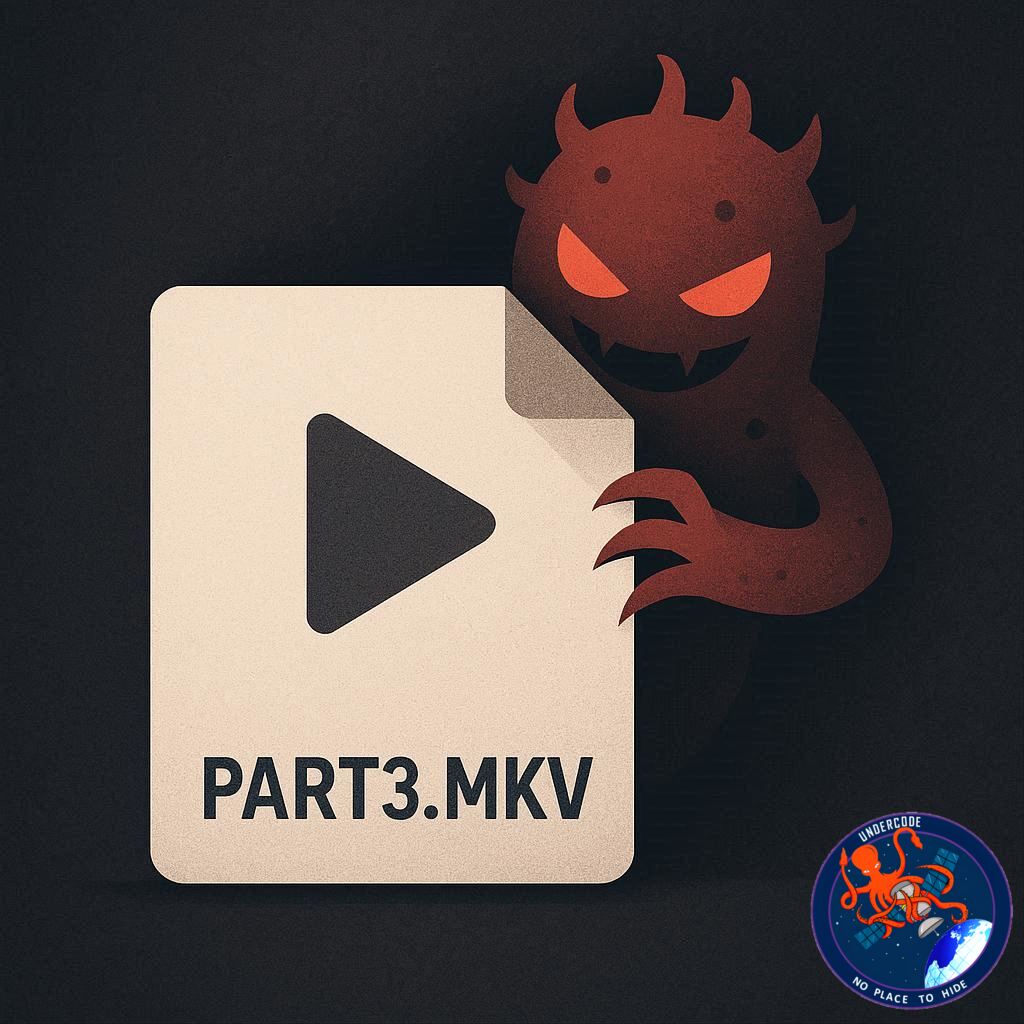
A new cybersecurity concern has emerged in the digital underground — a malicious file disguised as a harmless movie clip is silently making its rounds online. Security researchers from MalwareHunterTeam and Thor Scanner have uncovered a suspicious sample labeled “Part_3.mkv”, which astonishingly registers zero antivirus detections on VirusTotal (VT). The malware, hidden inside a renamed PostScript (PS) file within an archive named “Other_Parts.zip,” has already been spotted spreading from Belgium, raising concerns of a stealth campaign bypassing mainstream detection systems.
The Disguised Danger: How “Part_3.mkv” Slipped Past Defenses
In a digital era where every click can open a door to cyber threats, even experienced users can be tricked by familiar file formats. The latest example — “Part_3.mkv” — appears to be a simple video file, yet within its structure lies something far more sinister. MalwareHunterTeam, a well-known group of security researchers, discovered that the file is not a video at all, but rather a malicious PS (PostScript) file cleverly disguised to avoid suspicion.
What makes this case particularly alarming is that VirusTotal, a platform aggregating results from dozens of antivirus engines, showed zero detections for this sample at the time of discovery. Despite this clean slate, experts using Thor Scanner, a specialized detection tool, have raised six separate warnings about its suspicious nature.
The file was found in a compressed archive titled “Other_Parts.zip,” which was reported by researcher Szabolcs Schmidt and linked to activity originating from Belgium via the abuse.ch malware bazaar, a trusted platform for sharing malware samples among professionals. The discovery suggests that attackers are experimenting with new methods of payload concealment, exploiting weak spots in the traditional antivirus ecosystem.
The fact that such a potentially harmful file can slip through detection layers underscores a growing problem in the cybersecurity landscape — attackers are becoming smarter, stealthier, and more creative. They no longer rely on obvious trojans or ransomware; instead, they embed payloads in file formats that security systems often overlook.
This type of attack indicates a deeper trend in the threat environment: the evolution of “zero-detection” malware. Threat actors are leveraging encoding tricks, nested archives, and misleading file extensions to bypass scanning engines. By labeling a PostScript file as an MKV (a common multimedia format), they rely on human trust and technological blind spots simultaneously — a lethal combination that grants them access to systems without triggering alarms.
Security experts caution that this approach might be part of a broader testing phase. When malware authors upload samples to VirusTotal or public sharing platforms, they often do so to test the detection rate. If it returns zero detections, that version becomes the basis for a larger-scale attack, often weeks later. This strategy allows them to perfect their evasion techniques before launching the real campaign.
In this instance, the Belgian origin could simply represent the testing location, not necessarily the main target. However, the discovery’s timing and the absence of detection suggest that active campaigns might already be in development, silently preparing to spread through email attachments, torrent files, or compromised websites.
What Undercode Say:
This case is more than just another malware detection event — it’s a warning about the limits of modern antivirus intelligence. The fact that “Part_3.mkv” passed undetected through VirusTotal illustrates a significant gap between traditional signature-based detection and modern adaptive threats.
Malware authors today operate more like software engineers than criminals. They analyze defensive tools, monitor community discussions, and iterate on their code to beat the system. The “Part_3.mkv” incident reflects this shift — an experimental deployment crafted to test antivirus blind spots and measure visibility before executing at scale.
The six Thor Scanner alerts reveal that behavioral analysis tools are becoming more reliable than legacy detection systems. While VirusTotal engines rely heavily on static signatures — matching known malicious patterns — Thor’s dynamic scanning can identify behavioral anomalies, such as script execution or file manipulation attempts, even when signatures are missing. This distinction is crucial for understanding the next generation of cybersecurity defense.
From an analyst’s perspective, this discovery hints at an ongoing arms race between detection systems and malware authors. The malicious use of benign-looking formats like MKV files is part of a wider “disguise warfare” trend, where attackers merge social engineering with technical manipulation. They understand user psychology — people trust what looks familiar — and they exploit it masterfully.
The archive’s name, “Other_Parts.zip,” suggests an attempt to blend into casual communication, perhaps mimicking file-sharing among co-workers, video editors, or digital creators. In targeted campaigns, this could be used in spear-phishing emails, convincing the recipient that they’re simply receiving missing parts of a project or movie.
Undercode’s analysis indicates this could be a probe operation — the attackers might not yet be deploying ransomware or data stealers, but rather observing which systems detect and report the file. Once they understand the blind spots, they’ll upgrade the payload and relaunch it globally.
For defenders, the lesson is clear: detection alone is not protection. Relying purely on antivirus results, even from trusted aggregators like VirusTotal, gives a false sense of security. Security posture must evolve toward behavioral, AI-driven analysis, sandboxing, and continuous network monitoring.
This case also reminds us of a deeper truth: the most dangerous malware is often the one nobody sees — until it’s too late.
Fact Checker Results:
✅ The “Part_3.mkv” sample indeed shows zero detections on VirusTotal at time of report.
✅ Thor Scanner identified six suspicious indicators linked to the same file.
❌ No confirmed payload behavior (such as ransomware activity) has yet been observed publicly.
Prediction: 🔮
Expect to see repurposed versions of this sample reappear in the next few weeks, likely embedded in multimedia-sharing or phishing campaigns. Security researchers will likely uncover variant families with refined obfuscation techniques designed to continue evading static antivirus engines. The “Part_3.mkv” case may mark the beginning of a new wave of stealth malware — one that hides not in code complexity, but in the illusion of normalcy.
🕵️📝✔️Let’s dive deep and fact‑check.
References:
Reported By: x.com
Extra Source Hub (Possible Sources for article):
https://www.github.com
Wikipedia
OpenAi & Undercode AI
Image Source:
Unsplash
Undercode AI DI v2
Bing
🔐JOIN OUR CYBER WORLD [ CVE News • HackMonitor • UndercodeNews ]
📢 Follow UndercodeNews & Stay Tuned:
𝕏 formerly Twitter 🐦 | @ Threads | 🔗 Linkedin | 🦋BlueSky | 🐘Mastodon


