
Listen to this Post
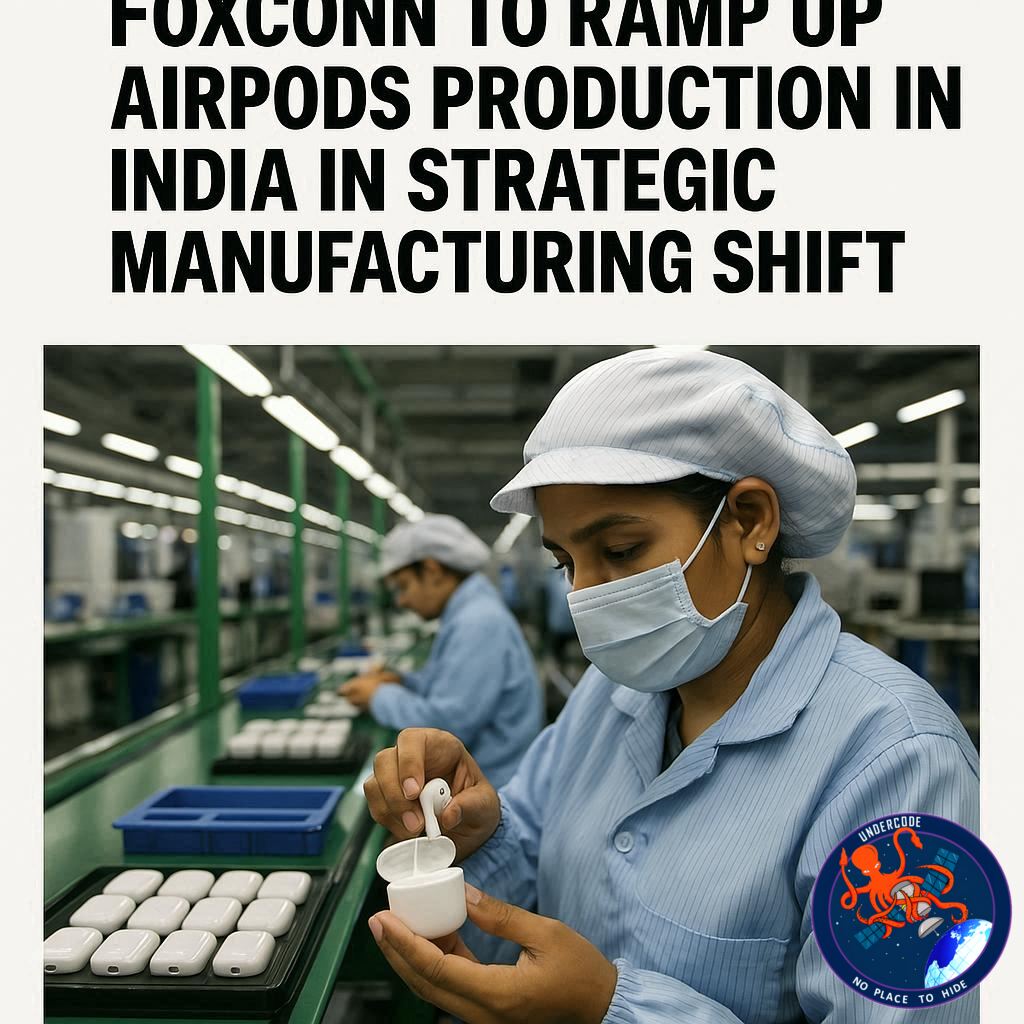
Apple’s global manufacturing strategy is undergoing a significant transformation, and its partnership with Foxconn is at the forefront. In a decisive move to expand production outside China, Foxconn is set to double its monthly output of the latest AirPods at its Hyderabad, India facility. This expansion marks not only a surge in manufacturing capacity but also a broader push by Apple to diversify its global supply chain and meet rising consumer demand in key markets.
Currently, Foxconn’s Hyderabad plant produces approximately 100,000 AirPods units each month. The company plans to increase this capacity to 200,000 units by overhauling five existing production lines to accommodate new AirPods models. The expansion will also see Foxconn’s workforce more than double, from around 2,000 employees to 5,000. Some of the new machinery will be transferred from Foxconn’s Vietnam facilities, highlighting a strategic redistribution of resources. In total, Foxconn is investing ₹48 billion, with ₹30 billion already committed to infrastructure and equipment upgrades.
This ramp-up in production is part of Apple’s broader effort to reduce dependence on China. Apple has been diversifying its manufacturing footprint globally, with recent production of the Apple Vision Pro shifting to Vietnam. The increased AirPods output from India is expected to serve markets in India, the United States, and Europe. Notably, electronics produced in India currently enjoy tariff exemptions in the US, a significant advantage for Apple. The company already manufactures most of its iPhones destined for the US in India, reinforcing the country’s growing importance in Apple’s supply chain.
Apple’s diversification strategy extends beyond India. The company is also ramping up production in the United States, committing $600 billion over the next four years and launching the American Manufacturing Program. This initiative moves production of key components, such as cover glass for iPhones and Apple Watches, to the US. Meanwhile, Apple continues to shift production away from China, leveraging manufacturing hubs in Vietnam, Malaysia, and Thailand to maintain supply chain resilience and cost efficiency.
The Hyderabad expansion is a clear signal of Apple’s long-term strategy to create a multi-national, flexible manufacturing network. By investing heavily in India, Apple is positioning itself to meet growing consumer demand while reducing exposure to geopolitical and trade risks associated with China. For India, this development represents a major boost to local employment, technology transfer, and the country’s profile as a global manufacturing hub.
What Undercode Say:
Apple’s decision to double AirPods production in Hyderabad is a strategic masterstroke that blends risk mitigation with market opportunity. By expanding outside China, Apple hedges against geopolitical tensions and trade restrictions that could disrupt its supply chain. The choice of India is particularly insightful: it offers tariff advantages for the US market, a rapidly growing consumer base, and a skilled workforce that can scale efficiently with proper investment. Foxconn’s use of existing machinery from Vietnam also indicates a nimble approach, leveraging current assets rather than building entirely from scratch.
Beyond logistics, this expansion has broader implications for global electronics manufacturing. Apple’s pivot signals a larger trend among multinational corporations to diversify production geographically. Countries like India and Vietnam are becoming central nodes in tech supply chains, attracting billions in foreign direct investment and fostering local technological ecosystems. This could accelerate the development of specialized talent, infrastructure, and ancillary industries in these regions, creating long-term economic benefits.
Moreover, the shift underscores Apple’s nuanced understanding of global market dynamics. By serving India, the US, and Europe from a single facility, Apple optimizes distribution channels while maintaining quality control. The doubling of the workforce reflects confidence in labor availability and operational scalability. This approach may encourage other global tech giants to consider India as a production hub, further boosting the nation’s reputation in advanced electronics manufacturing.
From a consumer perspective, the increased production ensures timely availability of AirPods and likely positions Apple to respond more effectively to fluctuations in demand. It may also enable Apple to introduce region-specific models or features, leveraging India’s growing role not only as a manufacturing base but also as a market with unique preferences.
Strategically, Apple’s India investment complements its US expansion, balancing cost efficiency, geopolitical risk, and innovation capability. While China remains a major player, Apple’s diversification signals a shift toward resilience and flexibility. Companies observing Apple’s model may adopt similar strategies, potentially reshaping global supply chain patterns in the coming decade.
In essence, Apple’s expansion in Hyderabad reflects a forward-looking approach that integrates production efficiency, market access, and geopolitical foresight. It demonstrates a careful orchestration of workforce scaling, capital investment, and cross-country resource allocation to achieve strategic objectives. As the global tech landscape evolves, Apple’s moves today could define the manufacturing and market patterns of tomorrow.
Fact Checker Results:
✅ Foxconn Hyderabad’s AirPods capacity is increasing from 100,000 to 200,000 units per month.
✅ Workforce expansion planned from 2,000 to 5,000 employees.
✅ Apple’s India-made electronics benefit from US tariff exemptions.
Prediction:
📈 With this expansion, Apple is likely to dominate not only AirPods supply in India but also increase its competitive edge globally. This move may lead to faster product launches, more localized features, and potentially lower costs in key markets, while signaling India as a long-term strategic hub for Apple manufacturing.
🕵️📝✔️Let’s dive deep and fact‑check.
References:
Reported By: 9to5mac.com
Extra Source Hub (Possible Sources for article):
https://www.reddit.com
Wikipedia
OpenAi & Undercode AI
Image Source:
Unsplash
Undercode AI DI v2
Bing
🔐JOIN OUR CYBER WORLD [ CVE News • HackMonitor • UndercodeNews ]
📢 Follow UndercodeNews & Stay Tuned:
𝕏 formerly Twitter 🐦 | @ Threads | 🔗 Linkedin | 🦋BlueSky | 🐘Mastodon


