
Listen to this Post
The Silent Cyberwar No One Saw Coming
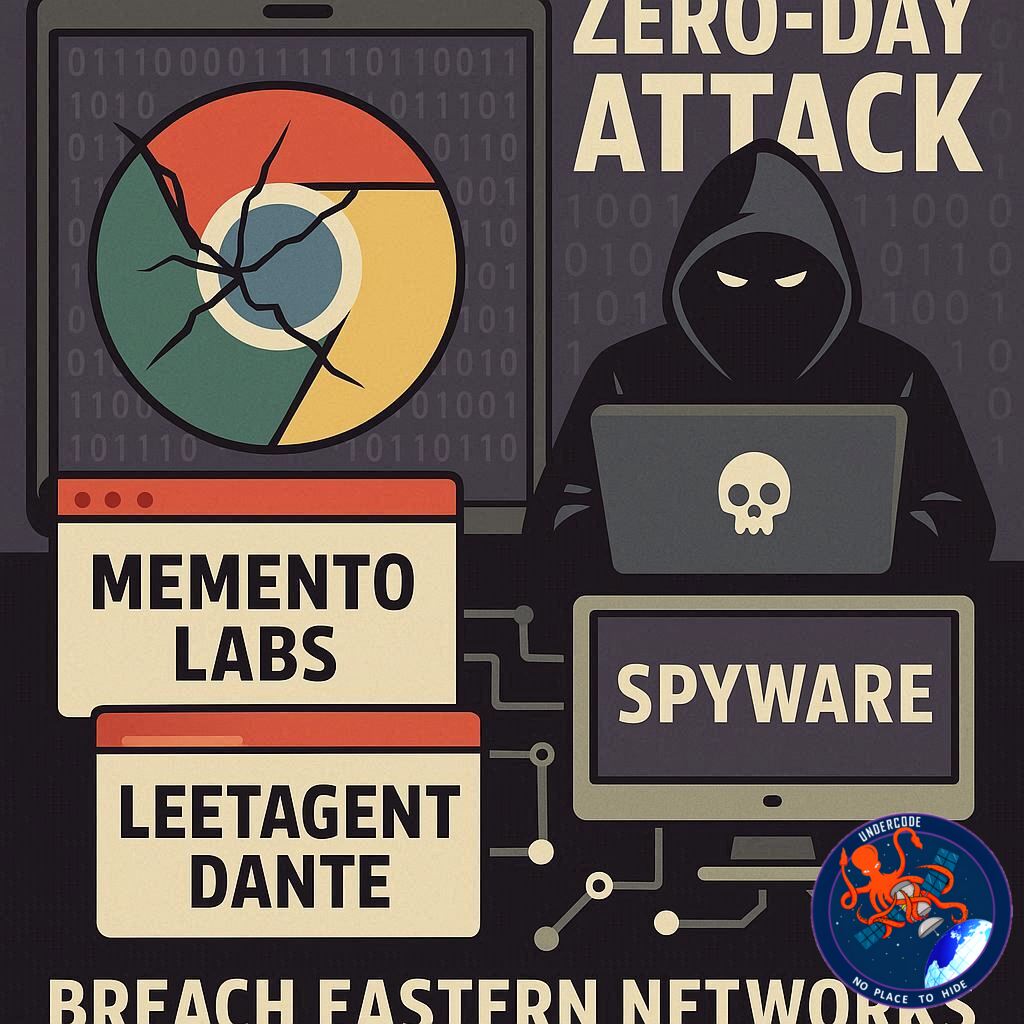
In a chilling escalation of cyber espionage, a newly discovered Chrome zero-day vulnerability (CVE-2025-2783) has been exploited by the infamous Memento Labs to deploy two sophisticated spyware strains — LeetAgent and Dante. The attacks, carried out via spear-phishing campaigns, have specifically targeted Russian and Belarusian organizations allegedly connected to covert information networks known as Operation ForumTroll and TaxOff.
This revelation, first reported by TweetThreatNews and analyzed by hendryadrian.com, underscores how even the most routine browsing software can become a weapon in state-aligned cyber conflicts. Behind the scenes of this seemingly isolated breach lies a broader story of digital espionage, deception, and the fragile state of global cybersecurity resilience.
The Anatomy of the Chrome Zero-Day Attack
The vulnerability CVE-2025-2783 exploited a previously unknown flaw in Google Chrome’s rendering engine. By embedding malicious payloads within phishing emails disguised as tax reports and business memos, attackers tricked victims into opening weaponized web pages that silently installed the LeetAgent spyware. Once the infection took hold, Dante, a secondary payload, was deployed for persistence and deeper network penetration.
Cyber investigators have linked the attack infrastructure to Memento Labs — a cybercrime entity known for selling customized surveillance tools to both criminal groups and intelligence clients. Unlike ordinary malware distributors, Memento Labs operates in the gray zone between private hacking firms and state-sponsored espionage contractors.
The operation’s scale appears limited but strategic. Rather than pursuing mass infection, the attackers used surgical precision to infiltrate entities associated with financial data, social engineering analysis, and online propaganda systems. Sources indicate that Operation ForumTroll, a Russian-linked online influence initiative, and TaxOff, a Belarusian financial monitoring project, were prime targets.
Researchers say that both LeetAgent and Dante are modular spyware platforms designed for long-term surveillance, featuring advanced command-and-control (C2) systems, network traffic obfuscation, and anti-forensic mechanisms that allow them to evade detection for months.
Security experts believe this zero-day breach represents part of a growing pattern where commercial spyware labs exploit browser vulnerabilities to maintain access to high-value political and economic data. Chrome, being the world’s most used browser, naturally becomes an attractive vector for exploitation.
What Undercode Say:
This incident is not just another entry in the cybersecurity threat feed — it’s a symptom of a deeper structural weakness in how modern states and private firms intersect in cyberspace. The Chrome zero-day exploited by Memento Labs shows the alarming maturity of “cyber mercenary” ecosystems. These entities are no longer fringe hacker collectives; they’re corporatized intelligence vendors, offering espionage-as-a-service to whoever can afford it.
The LeetAgent–Dante combo is particularly interesting. Unlike generic malware, it demonstrates a tiered deployment model — a hallmark of nation-grade tooling. LeetAgent acts as an initial reconnaissance agent, quietly mapping system configurations, browser sessions, and VPN usage. Dante then moves in to exploit network architecture, escalate privileges, and siphon off communication metadata. This layered attack strategy mirrors APT-level sophistication, yet with the agility of private sector coding.
If confirmed, this attack blurs the lines between cybercrime and state espionage. Russia and Belarus, often seen as aggressive actors in cyber warfare, now find themselves on the receiving end of an espionage campaign that mirrors their own tactics. It’s an ironic but telling reversal. The geopolitical message? No one is immune — not even the players who once dominated the offensive space.
Furthermore, the fact that Memento Labs continues to operate despite previous sanctions and takedown attempts speaks to the ineffectiveness of current international cyber law enforcement. Traditional legal frameworks can’t keep pace with the borderless nature of digital weapons.
From a technical perspective, Chrome’s vulnerability once again exposes how zero-day markets incentivize secrecy over safety. Researchers who find exploits are often outbid by private firms seeking to weaponize them before disclosure. This “black bounty” economy ensures that by the time a patch exists, the exploit has already done its damage.
As the digital world becomes a chessboard for intelligence agencies and private mercenaries, we must ask: how much control do we actually have over our data, our systems, and even our browsers? The answer, judging by incidents like CVE-2025-2783, is — not much.
The cyber threat landscape has evolved into a layered theater where corporate espionage, political manipulation, and criminal economics intertwine. The Chrome zero-day isn’t just a hack — it’s a signal flare, warning us that surveillance has gone decentralized, commercialized, and dangerously normalized.
Fact Checker Results
✅ CVE-2025-2783 has been confirmed as a real Chrome zero-day vulnerability.
✅ Memento Labs has been previously linked to similar surveillance toolkits like LeetAgent.
❌ No direct public attribution yet ties a specific government to this current campaign.
Prediction 🔮
Expect a rapid Chrome security patch and emergency browser updates in the coming days, followed by broader coverage from cybersecurity firms dissecting the LeetAgent–Dante toolkit.
Within months, this event will likely fuel renewed debates over commercial spyware regulation, pushing for stricter global export controls.
The deeper concern? We’re entering an era where every major browser exploit could be a geopolitical weapon, silently rewriting the rules of cyber warfare.
🕵️📝✔️Let’s dive deep and fact‑check.
References:
Reported By: x.com
Extra Source Hub (Possible Sources for article):
https://www.discord.com
Wikipedia
OpenAi & Undercode AI
Image Source:
Unsplash
Undercode AI DI v2
Bing
🔐JOIN OUR CYBER WORLD [ CVE News • HackMonitor • UndercodeNews ]
📢 Follow UndercodeNews & Stay Tuned:
𝕏 formerly Twitter 🐦 | @ Threads | 🔗 Linkedin | 🦋BlueSky | 🐘Mastodon


