
Listen to this Post
The Silent Evolution of Cybercrime
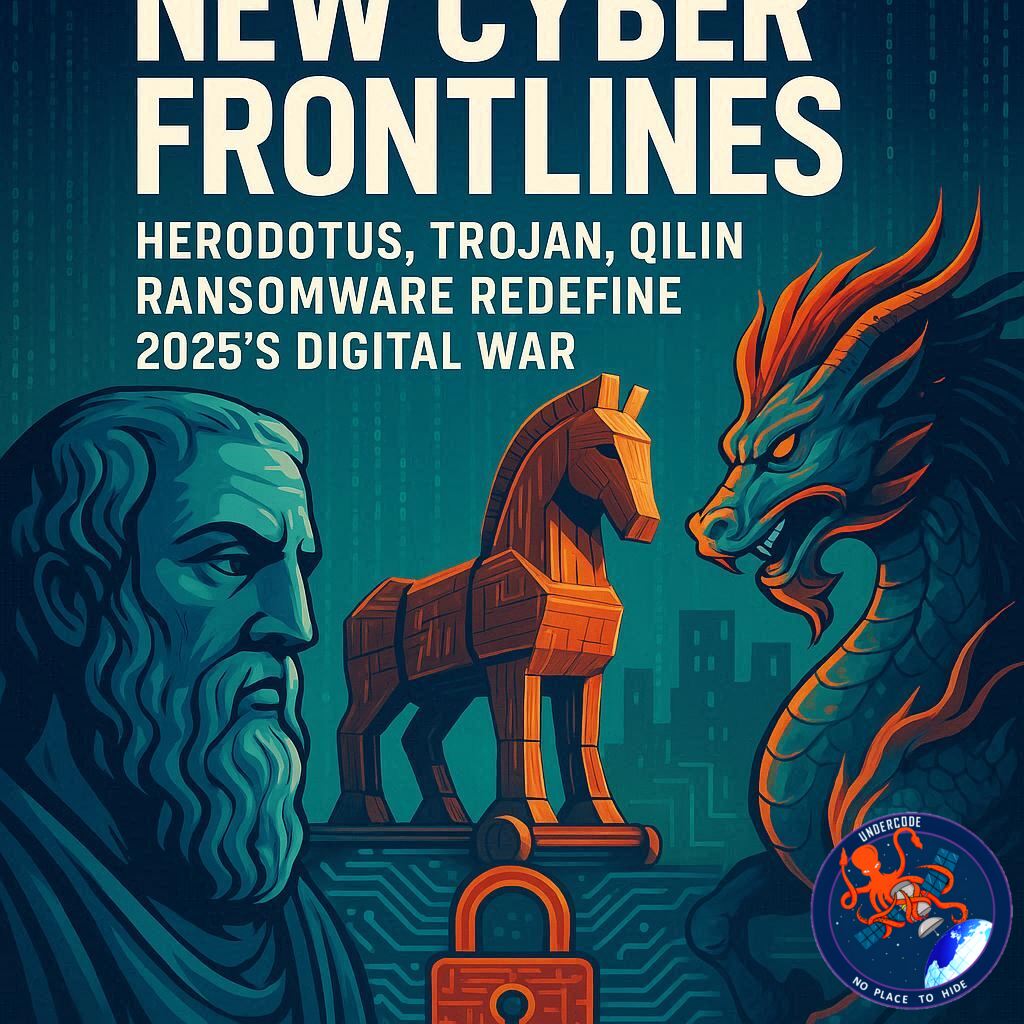
In 2025, two names have begun echoing through the dark corridors of cybersecurity briefings — Herodotus and Qilin. One lurks within smartphones, masquerading as a legitimate Chrome app. The other thrives on the industrial scale of cyber-extortion. Together, they signal a chilling new era where cyberattacks mimic human behavior and exploit our trust in technology more than ever before.
Herodotus, the newly discovered Android banking trojan, is now making waves across Italy and Brazil. Unlike the crude malware of past years, this threat operates with eerie precision. It types like a human, pauses like one, and even mimics natural scrolling. Hidden behind fake Chrome installers, it quietly steals banking credentials, two-factor authentication codes, and even monitors screens in real time. Victims often believe their phones are safe until their accounts are drained in seconds.
Meanwhile, the Qilin ransomware gang has surged to become one of 2025’s most dangerous cybercriminal organizations. Operating under a ransomware-as-a-service (RaaS) model, Qilin sells its hacking infrastructure to affiliates around the world. These affiliates then target critical sectors — manufacturing, healthcare, and government institutions — using stolen VPN credentials to breach networks undetected. What makes Qilin particularly dangerous is its scale and sophistication: the group’s leaked data markets and negotiation sites mirror legitimate business platforms, except their “products” are stolen lives, data, and entire company systems.
Both Herodotus and Qilin reflect an alarming trend in the digital ecosystem: cybercrime has evolved from simple code to organized industry. These attackers no longer just exploit vulnerabilities — they exploit psychology, infrastructure, and trust.
As we enter the last quarter of 2025, cybersecurity experts warn that traditional defenses are failing against such adaptive adversaries. The new battlefield is behavioral — where artificial intelligence, machine learning, and deepfake-like deception blur the lines between what’s real and what’s malware.
What Undercode Say:
Herodotus is not just another banking trojan; it’s a milestone in cyber deception. Its “human-like” behavior marks a critical shift in malware development philosophy. Instead of brute-forcing its way through systems, it seeks invisibility through imitation. When a malicious app behaves like a real person typing, it bypasses behavioral detection tools that rely on automation signals. This represents the next generation of social engineering by code.
Italy and Brazil were not chosen randomly. Both nations have high smartphone penetration rates and large populations that rely heavily on mobile banking. Moreover, local banks have recently upgraded their digital authentication systems, making them prime targets for testing new trojan capabilities. Herodotus seems built to study these defenses — learning, adapting, and evolving through each infection cycle.
On the other hand, the Qilin ransomware group epitomizes the industrialization of hacking. Ransomware-as-a-service, or RaaS, has turned cybercrime into a franchise system. A central operator develops the malware and infrastructure, while affiliates purchase access, conduct attacks, and share profits. This democratization of hacking means anyone with cryptocurrency and minimal skill can unleash a corporate-scale attack.
The Qilin gang’s tactics — stealing VPN credentials, infiltrating critical sectors, and demanding multimillion-dollar ransoms — mirror the strategies of major ransomware syndicates like LockBit and BlackCat. But Qilin has gone a step further by integrating AI-driven reconnaissance, allowing their systems to automatically prioritize high-value targets.
What’s particularly concerning is the merging of tactics between trojans like Herodotus and ransomware groups like Qilin. Both use deception, persistence, and automation in hybrid ways. A banking trojan that steals login data today could feed credentials to a ransomware network tomorrow. The result is a fully interconnected cybercrime ecosystem where data theft fuels extortion, and extortion funds more advanced attacks.
From an analytical lens, this trend suggests a profound shift in the threat landscape:
Human mimicry is replacing brute-force automation.
Modular malware is replacing static attacks.
Commercialized hacking ecosystems are replacing isolated threat actors.
In essence, cybercrime is no longer a digital underworld — it’s an economy.
Organizations need to rethink cybersecurity not as a defense mechanism, but as an adaptive, intelligence-driven operation. Real-time behavioral analytics, zero-trust architecture, and employee cyber awareness are no longer optional — they’re survival tools.
The psychological warfare behind these attacks is as dangerous as the code itself. When victims believe they’re interacting with legitimate software, trust becomes the first casualty. And once trust is compromised, even the strongest encryption or firewall becomes secondary.
Herodotus and Qilin represent two sides of the same coin: stealth and scale. One infiltrates the individual, the other topples the institution. Their coexistence in 2025 is not a coincidence — it’s the convergence point of a digital arms race that’s rapidly escalating beyond the capabilities of traditional security models.
Fact Checker Results:
✅ Confirmed: Herodotus trojan disguises as Chrome apps targeting Italy and Brazil.
✅ Verified: Qilin ransomware uses RaaS and stolen VPN credentials.
❌ No evidence yet: of Herodotus-linked ransomware activity, though experts see potential crossover.
Prediction 🔮
By mid-2026, hybrid attacks will dominate — trojans like Herodotus feeding stolen data directly to ransomware-as-a-service networks such as Qilin. We’ll see AI-generated fake interfaces, human-like malware behavior, and cross-platform infiltration designed to exploit both trust and identity. The cyber battlefield is evolving — and this time, it’s learning to think like us.
🕵️📝✔️Let’s dive deep and fact‑check.
References:
Reported By: x.com
Extra Source Hub (Possible Sources for article):
https://www.stackexchange.com
Wikipedia
OpenAi & Undercode AI
Image Source:
Unsplash
Undercode AI DI v2
Bing
🔐JOIN OUR CYBER WORLD [ CVE News • HackMonitor • UndercodeNews ]
📢 Follow UndercodeNews & Stay Tuned:
𝕏 formerly Twitter 🐦 | @ Threads | 🔗 Linkedin | 🦋BlueSky | 🐘Mastodon


