
Listen to this Post
The Rise of AI in Software Development
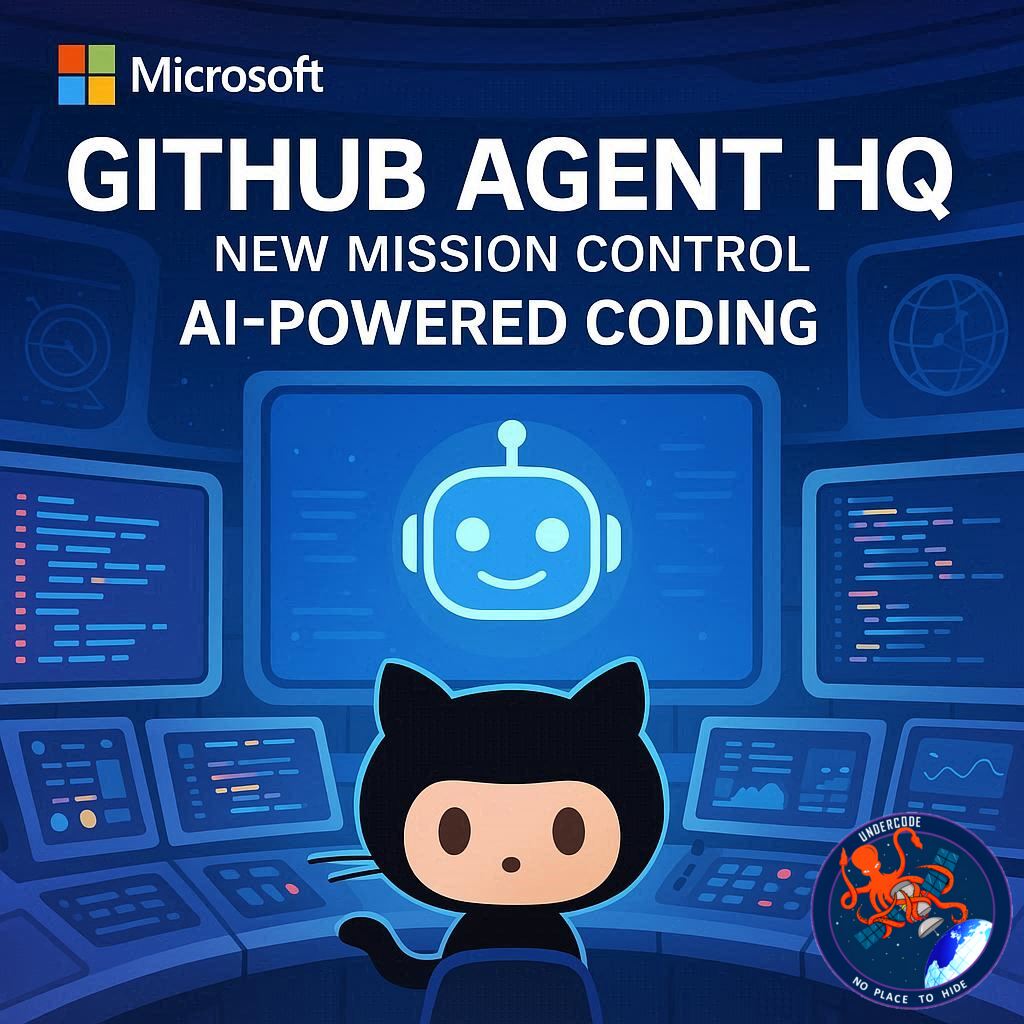
In a world where artificial intelligence is transforming every layer of software creation, Microsoft’s GitHub has stepped forward with Agent HQ, a unified “mission control” platform that could redefine how developers collaborate with AI. This new interface is designed to simplify the growing complexity of managing multiple autonomous coding tools—agents capable of writing, debugging, and deploying code independently.
For years, developers have juggled an expanding suite of AI assistants from different vendors—GitHub’s Copilot, OpenAI’s Codex, Google’s Gemini, Anthropic’s Claude, and xAI’s emerging systems. Each operates in its own environment, with distinct commands, workflows, and data handling. GitHub’s new Agent HQ seeks to bring all these moving parts together under one roof.
Kyle Daigle, GitHub’s COO, summed it up perfectly in an interview with CNBC: “We want to bring a little bit of order to the chaos of innovation.” He pointed out that while the abundance of AI agents represents progress, it also creates fragmentation. GitHub’s opportunity lies in orchestrating this ecosystem, giving developers a single place to command, observe, and adjust how their AI partners operate.
A Central Command for AI Coders
Agent HQ functions like a control tower for AI-driven programming. Developers can now coordinate agents from OpenAI, Google, Anthropic, xAI, and Cognition all within GitHub’s familiar environment. The platform enables users to:
Centralize management: assign tasks to multiple AI agents from one dashboard.
Maintain real-time control: watch the progress of each agent, intervene when necessary, and correct errors before they cascade into production code.
This move isn’t just about convenience—it’s about trust and transparency. In a landscape flooded with automation, developers need visibility. They need to know what their AI is doing, why it’s doing it, and how it can be improved.
Daigle called this transition the beginning of an “era of abundance for AI,” but he cautioned that without structure, abundance can easily become disorder. Agent HQ, then, is GitHub’s attempt to turn a chaotic swarm of AI tools into an intelligent orchestra.
The rollout will begin soon, with third-party agent integration arriving for GitHub Copilot subscribers in the coming months. However, Copilot Pro+ users will get early access to OpenAI’s Codex via VS Code Insiders immediately.
Since being acquired by Microsoft in 2018, GitHub has grown exponentially, now supporting more than 180 million developers worldwide. The company claims it is experiencing the fastest growth in its history, driven largely by AI-powered tools and a renewed focus on collaborative development.
What Undercode Say:
GitHub’s Agent HQ could mark one of the most significant turning points in modern software engineering. For the past decade, the biggest challenge in AI-assisted coding hasn’t been capability—it’s been coordination. Developers are often trapped between tools that promise efficiency but deliver fragmentation. One AI writes Python scripts brilliantly but struggles with deployment pipelines. Another generates documentation but can’t understand system architecture.
By introducing Agent HQ, GitHub is positioning itself not just as a code repository, but as a governing layer over the entire AI development stack. It’s a bold move that aligns perfectly with Microsoft’s strategy: to centralize AI workflows within a unified ecosystem, anchored by GitHub, Azure, and Copilot.
From a strategic standpoint, this could shift how teams design software. Instead of managing people who write code, project leads may soon manage swarms of AI agents—each specialized in a distinct domain, from backend optimization to interface design. Agent HQ, therefore, becomes the interface for the AI workforce.
But there are deeper implications. As AI takes on more autonomous tasks, issues of accountability, debugging, and security become critical. If an AI agent introduces a vulnerability into production code, who is responsible—the developer, the company, or the AI vendor? GitHub’s interface might offer transparency, but it also highlights the need for governance frameworks that can track and audit AI decisions.
Technically, this move also signals a new interoperability era. GitHub isn’t locking developers into a single AI model. By allowing integrations with OpenAI, Google, Anthropic, and others, it’s embracing an open marketplace of agents. This pluralism benefits developers and accelerates innovation by reducing friction between proprietary ecosystems.
Economically, Microsoft is also setting the stage for the next monetization phase of GitHub Copilot. With Agent HQ, paid tiers like Copilot Pro+ will likely evolve into premium AI operations suites—bundling multi-agent management, analytics, and enterprise-level control into one product.
From a developer’s lens, Agent HQ feels like a natural progression of the AI evolution:
Copilot assisted the individual.
Agents collaborate autonomously.
Agent HQ governs the collaboration.
It’s a pyramid of automation that leads to one outcome: code written, tested, and shipped with minimal human touch—but maximum human oversight.
Still, the biggest question remains: can GitHub maintain transparency and trust as AI becomes more autonomous? Developers will demand clarity on data usage, agent decision-making, and model performance. The challenge will not just be to unify tools—but to unify trust across ecosystems.
If successful, Agent HQ could become the backbone of a new kind of development environment, where AI agents operate like digital colleagues—each with their role, accountability, and measurable performance.
🔍 Fact Checker Results
✅ GitHub has officially announced Agent HQ as a multi-agent management platform.
✅ The platform supports integration with OpenAI, Google, Anthropic, xAI, and Cognition.
✅ Rollout to GitHub Copilot subscribers is planned, with Pro+ users receiving early access via VS Code Insiders.
📊 Prediction
👾 Within the next two years, AI agents will become as essential to coding as Git itself.
💼 GitHub’s Agent HQ will likely evolve into a standard operating layer for enterprise AI workflows.
🌐 Expect rapid competition, as Google, Anthropic, and xAI launch their own “control towers” to rival Microsoft’s ecosystem.
🕵️📝✔️Let’s dive deep and fact‑check.
References:
Reported By: timesofindia.indiatimes.com
Extra Source Hub (Possible Sources for article):
https://www.digitaltrends.com
Wikipedia
OpenAi & Undercode AI
Image Source:
Unsplash
Undercode AI DI v2
Bing
🔐JOIN OUR CYBER WORLD [ CVE News • HackMonitor • UndercodeNews ]
📢 Follow UndercodeNews & Stay Tuned:
𝕏 formerly Twitter 🐦 | @ Threads | 🔗 Linkedin | 🦋BlueSky | 🐘Mastodon


