
Listen to this Post
🔥 Introduction
In the silent corridors of the digital world, a new kind of warfare unfolds every second. Hackers move like shadows, security experts counter them with intelligence and automation, and artificial intelligence accelerates both sides of the conflict. The cybersecurity industry, once a niche profession, has become a global battleground of minds, machines, and motives. As technology deepens its grip on human life, the demand for those who can protect or ethically penetrate digital fortresses has never been greater.
The Dual Nature of Cybersecurity
The cybersecurity industry is expanding at lightning speed as automation, data, and digitalization dominate every aspect of life. This growth, however, comes with a paradox: the same technologies that protect us also create new vulnerabilities. According to experts, artificial intelligence has now become the main catalyst on both fronts of cyber warfare—offence and defence.
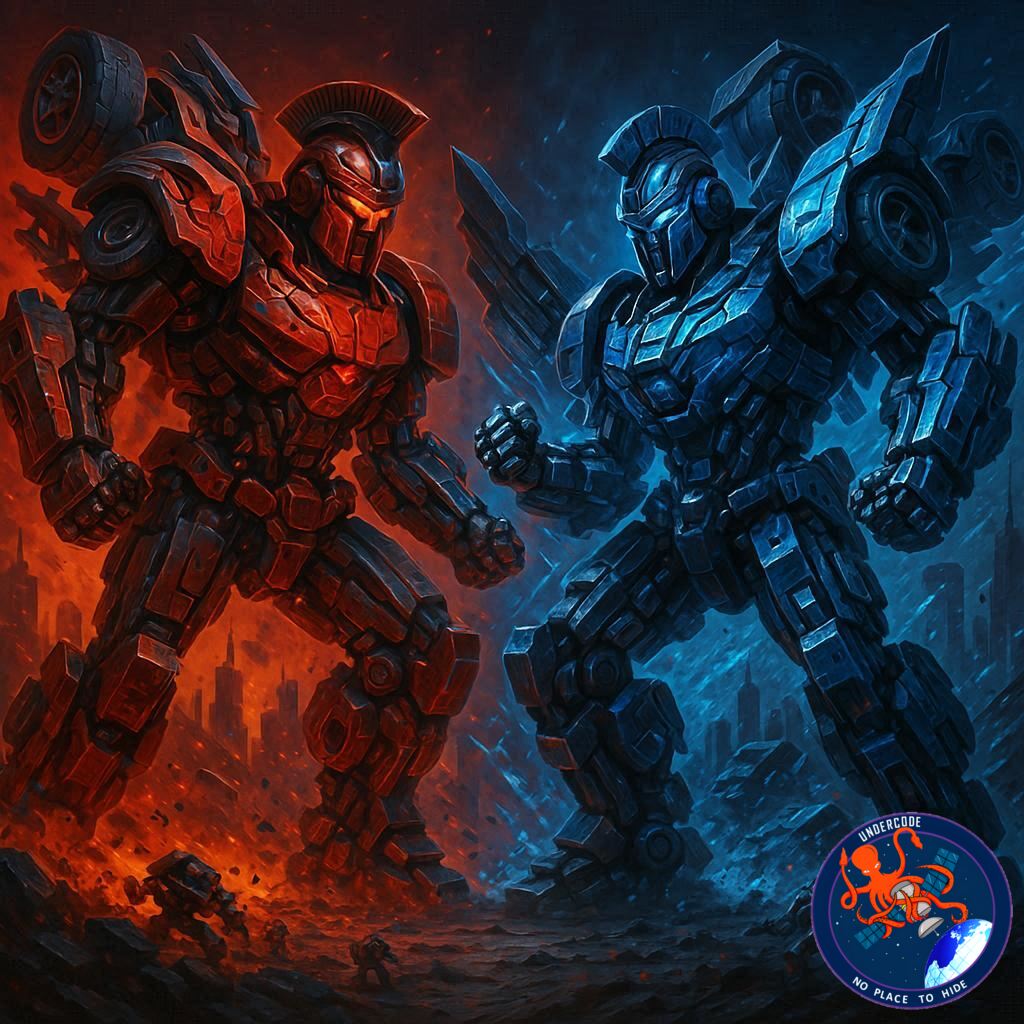
AI allows attackers to locate weak points faster while empowering defenders to detect anomalies before they turn into full-blown crises. This technological tug-of-war has crystallized into two distinct roles: Red Teams and Blue Teams.
Red teams simulate real-world cyberattacks. They operate as ethical hackers, testing an organization’s defences to find gaps before malicious actors do. Zubair Chowgale from Securonix explains that red team professionals attack systems under authorization, document their findings, and share actionable insights with blue teams.
Blue teams, on the other hand, represent the digital guardians. Their mission is to monitor networks, detect suspicious behaviour, contain threats, and strengthen the system’s resilience. They turn chaos into order, translating every attack into a lesson.
Collaboration Over Competition: The Rise of Purple Teams
Chetan Jain of Inspira Enterprise highlights how these two forces—attack and defence—can work better together. Through “Purple Team” exercises, red and blue specialists share intelligence in real-time, creating a continuous learning cycle. These drills break silos, accelerate improvement, and foster collaboration where both teams fine-tune detection rules and build stronger defensive playbooks. The goal is not rivalry, but synergy.
The Power and Peril of Artificial Intelligence
Artificial intelligence has amplified this game of cat and mouse. Pranay Manek from Barracuda Networks reveals that AI helps attackers craft convincing phishing campaigns and automate reconnaissance, while defenders are now “fighting AI with AI.”
Modern defensive systems can now cross-examine emails, links, documents, and even QR codes simultaneously, identifying suspicious patterns at speeds no human could match. Yet, experts agree that AI is not a replacement for human expertise. As Chowgale warns, “Effective outcomes still depend on human oversight.”
Human judgment remains the moral compass and strategic brain of cybersecurity. AI can enhance visibility, but people still make the final call.
Real-World Simulations: The Cyber War Games
These theories are not confined to classrooms. Exercises like NATO’s Locked Shields, the world’s largest live-fire cyber-defence event, put these concepts into motion. Red teams launch advanced simulated attacks while blue teams defend under immense pressure. Vivek Srivastava from Fortinet notes that these tests reveal the real detection speed and resilience of organizations.
AI’s integration into such exercises has already shown results: blue teams now detect lateral movement—the stealthy internal spread of an attack—within minutes. That’s a dramatic improvement over traditional detection methods, shrinking the time intruders can remain undetected.
The Skills That Build Cyber Warriors
In the midst of this AI-fueled revolution, career paths in cybersecurity are flourishing. For aspiring red teamers, Chowgale recommends certifications like OSCP (Offensive Security Certified Professional) or CRTP (Certified Red Team Professional), which test practical hacking and full-chain attack simulations. These professionals must master social engineering, scripting, and open-source research—skills that help them think like real attackers.
Blue teamers, meanwhile, are expected to specialize in SIEM (Security Information and Event Management) tools, firewall management, and incident response. Key credentials such as GCIH (GIAC Certified Incident Handler) or CTH (Certified Threat Hunter) strengthen credibility.
Manek adds that real-world tool fluency matters just as much as certificates. Employers look for proof of capability with systems like extended detection platforms, not just theoretical knowledge.
Sathish Murthy from Rubrik adds another crucial perspective: designing systems for a low Cyber Recovery Time Objective—the ability to restore operations fast after an incident. His advice echoes across the industry: certifications matter, but so does communication. Cyber professionals who can clearly explain what happened, why it happened, and how to prevent it will always stand apart.
What Undercode Say:
The evolution of cybersecurity mirrors the evolution of warfare itself—moving from brute force to precision, from manual defence to intelligent automation. What’s fascinating is not just how AI has transformed the landscape, but how it’s forced a philosophical shift: machines can act, but humans must interpret.
Red and blue teams represent two halves of a single brain—the instinct to attack and the instinct to protect. When these teams collaborate through purple drills, organizations develop a kind of digital immune system. Each simulated strike becomes an antibody, each analysis a reinforced cell.
From an industry standpoint, this collaboration signals a maturity that traditional IT never achieved. Companies no longer see cybersecurity as a department; it’s now a living organism that learns, adapts, and reacts dynamically.
AI is both the sword and the shield here. Offensive teams now automate reconnaissance, social engineering, and payload generation, reducing weeks of manual work to minutes. Meanwhile, defensive AI tools detect zero-day exploits, behavioral anomalies, and insider threats before they escalate.
However, the human factor remains irreplaceable. The best AI detection model still relies on human intuition to judge context. It can flag a phishing email, but it cannot understand motive. It can see a breach, but it cannot comprehend the geopolitics behind it.
From an employment lens, cybersecurity is not just a career—it’s an identity. The best professionals combine technical acumen with psychological insight and communication clarity. They understand that cybersecurity is 20% tools and 80% mindset.
Undercode’s analysis suggests that the future will favor hybrid specialists—those fluent in both red and blue logic. As AI takes over routine detection, human experts will focus on strategy, ethics, and high-level incident coordination. The next generation of cybersecurity leaders won’t just defend systems; they will predict attacks before they happen.
In essence, the new battlefield of the digital world belongs not to machines alone, but to those who know how to think with them and against them at the same time.
🔍 Fact Checker Results
✅ AI tools are increasingly being used by both attackers and defenders in cybersecurity.
✅ Red, Blue, and Purple team collaboration models are widely recognized across major firms and military simulations.
✅ Career demand for certified cybersecurity professionals (OSCP, GCIH, CISSP) continues to rise globally.
📊 Prediction
⚙️ Within the next five years, hybrid “AI-augmented analysts” will dominate cybersecurity operations.
🤖 Automated threat intelligence sharing between red and blue systems will become industry standard.
💼 Certifications will evolve to include AI ethics, deepfake detection, and adversarial machine learning as core modules.
🕵️📝✔️Let’s dive deep and fact‑check.
References:
Reported By: timesofindia.indiatimes.com
Extra Source Hub (Possible Sources for article):
https://www.reddit.com/r/AskReddit
Wikipedia
OpenAi & Undercode AI
Image Source:
Unsplash
Undercode AI DI v2
Bing
🔐JOIN OUR CYBER WORLD [ CVE News • HackMonitor • UndercodeNews ]
📢 Follow UndercodeNews & Stay Tuned:
𝕏 formerly Twitter 🐦 | @ Threads | 🔗 Linkedin | 🦋BlueSky | 🐘Mastodon


