
Listen to this Post
Introduction:
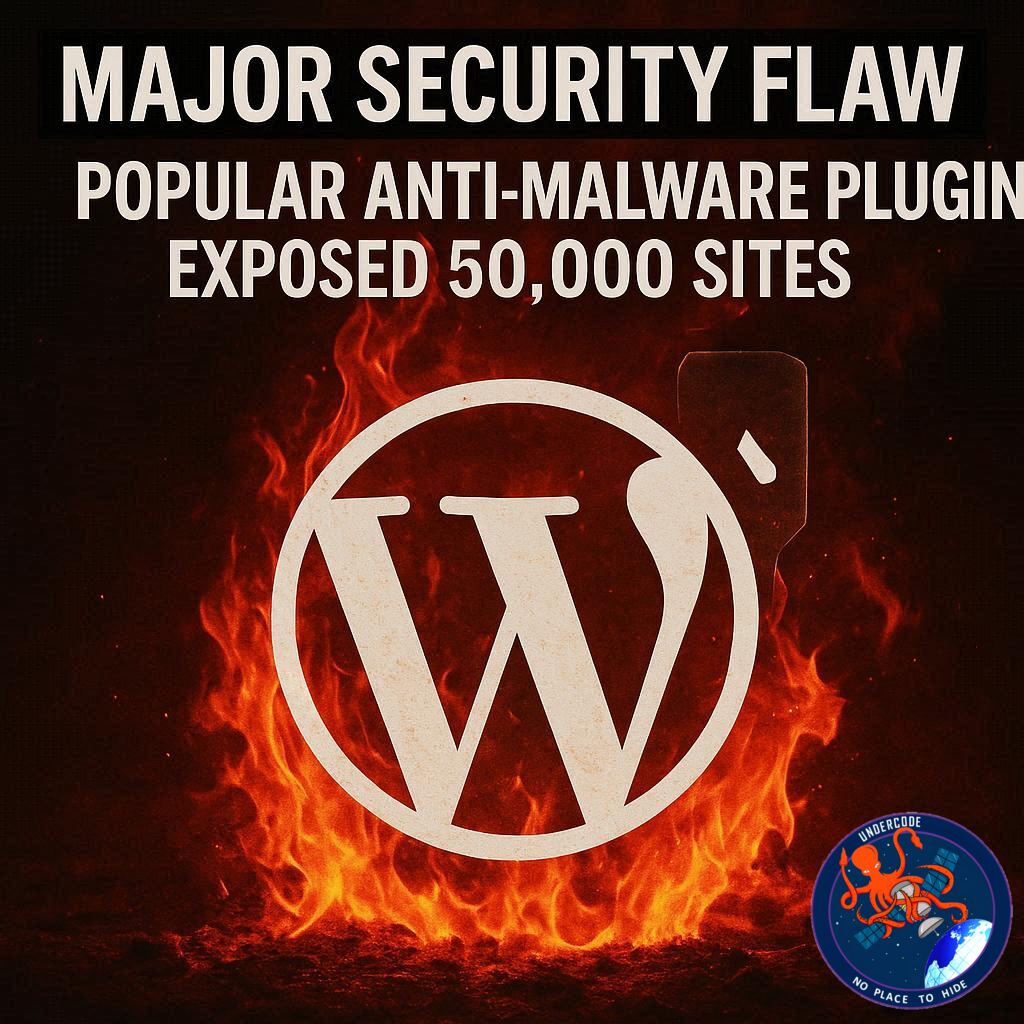
For millions of website owners, WordPress stands as a digital fortress — until the walls start to crack from within. A new revelation has sent shockwaves across the cybersecurity landscape: a critical flaw in one of WordPress’s most widely used defense plugins has left tens of thousands of websites vulnerable. The plugin, designed to protect against malware, ironically became the very source of exposure. Security researchers recently disclosed that the WordPress Anti-Malware Security plugin, installed on more than 50,000 websites, suffered from a severe capability check failure, opening doors for unauthorized users to access sensitive data. Though a patch has been issued, the incident once again highlights the fragile line between digital safety and digital disaster.
The Flaw That Shook 50,000 Websites
The vulnerability, officially tracked as CVE-2025-11705, allowed low-privileged users — such as contributors or subscribers — to exploit insecure AJAX requests to gain access to private data. These are users who typically should have limited permissions, yet the missing security validation within the plugin’s code essentially gave them a skeleton key.
This flaw represents a classic yet catastrophic oversight: missing capability checks. In WordPress, every function that interacts with sensitive data should verify whether a user has the required permissions. Skipping this step means even a basic user could send a crafted request through the plugin’s AJAX interface and retrieve information that should remain off-limits.
According to security experts, the issue affected over 50,000 installations before the vendor rolled out an emergency patch. Developers quickly corrected the vulnerability by enforcing proper capability checks within all AJAX endpoints — but not before it triggered widespread alarm among site administrators and cybersecurity professionals.
This particular case has reignited discussions about plugin trustworthiness in the WordPress ecosystem. While WordPress powers over 40% of the web, its open plugin environment often serves as both a blessing and a curse. The vast library of third-party plugins enables flexibility and innovation, but also expands the attack surface dramatically. Even a single weak link — especially in a security-related plugin — can undermine the defenses of thousands of websites in a single stroke.
The researchers who reported the flaw warned that even after patching, administrators should review logs for unusual activities, particularly unauthorized data access attempts that might have occurred before the update. This breach serves as a harsh reminder that updates are not just optional maintenance — they are critical shields in an ever-evolving cyber battlefield.
What Undercode Say:
The irony here is as striking as it is unsettling: a security plugin designed to defend websites became an open gate for attackers. It reflects a deep-rooted problem in modern web security — blind trust in protective tools. Too often, site owners assume that installing a security plugin equates to invincibility. In reality, every line of code carries risk, and every update delay magnifies exposure.
Analyzing CVE-2025-11705 reveals several lessons. First, security begins with process, not product. Developers must adopt strict internal testing, vulnerability scanning, and peer review before releasing code updates. The absence of capability checks in this plugin suggests gaps in quality assurance — a flaw that should have been caught in even basic testing environments.
Second, the WordPress plugin marketplace suffers from overreliance on reputation rather than transparent auditing. Popularity often overshadows precision. A plugin boasting thousands of installs can still harbor silent vulnerabilities that go unnoticed until exploited. This creates a dangerous illusion of safety.
Third, the scale of the exposure — 50,000+ sites — reminds us that security incidents today spread faster than ever before. A single vulnerability can ripple across multiple industries, from e-commerce platforms to nonprofit organizations, because the underlying software stack is shared.
From a cybersecurity perspective, this breach emphasizes the importance of least privilege principles. No user — not even an internal team member — should have access to data beyond their operational need. The missing capability checks in this plugin effectively violated that principle, turning benign users into potential insiders.
For website owners, the key takeaway is vigilance.
Regularly audit installed plugins.
Remove outdated or abandoned software.
Enable automatic updates for security-critical extensions.
Use external monitoring tools to detect unusual API calls or data access patterns.
Finally, there’s a philosophical dimension: security is never static. Every patch creates a new potential weakness elsewhere. The cycle of discovery, exploitation, and remediation is endless — and that’s precisely why cyber resilience matters more than pure prevention.
If WordPress wants to maintain trust as the web’s backbone, it must rethink how it curates and verifies third-party plugins. Developers, too, must accept that security isn’t just a feature — it’s a continuous discipline.
Fact Checker Results:
✅ CVE-2025-11705 is confirmed and patched in the latest update.
✅ The flaw involved missing capability checks in AJAX functions.
❌ No evidence (so far) of mass exploitation in the wild before patch release.
Prediction 🔮
Expect tighter scrutiny across the WordPress plugin ecosystem in the coming months. Cybersecurity researchers will likely turn their focus toward auditing other “protective” plugins, revealing more paradoxical vulnerabilities. Plugin developers may soon face mandatory code audits before public release — a necessary step toward rebuilding trust. For users, this event will serve as a wake-up call: update or be exposed.
🕵️📝✔️Let’s dive deep and fact‑check.
References:
Reported By: x.com
Extra Source Hub (Possible Sources for article):
https://www.pinterest.com
Wikipedia
OpenAi & Undercode AI
Image Source:
Unsplash
Undercode AI DI v2
Bing
🔐JOIN OUR CYBER WORLD [ CVE News • HackMonitor • UndercodeNews ]
📢 Follow UndercodeNews & Stay Tuned:
𝕏 formerly Twitter 🐦 | @ Threads | 🔗 Linkedin | 🦋BlueSky | 🐘Mastodon


