
Listen to this Post
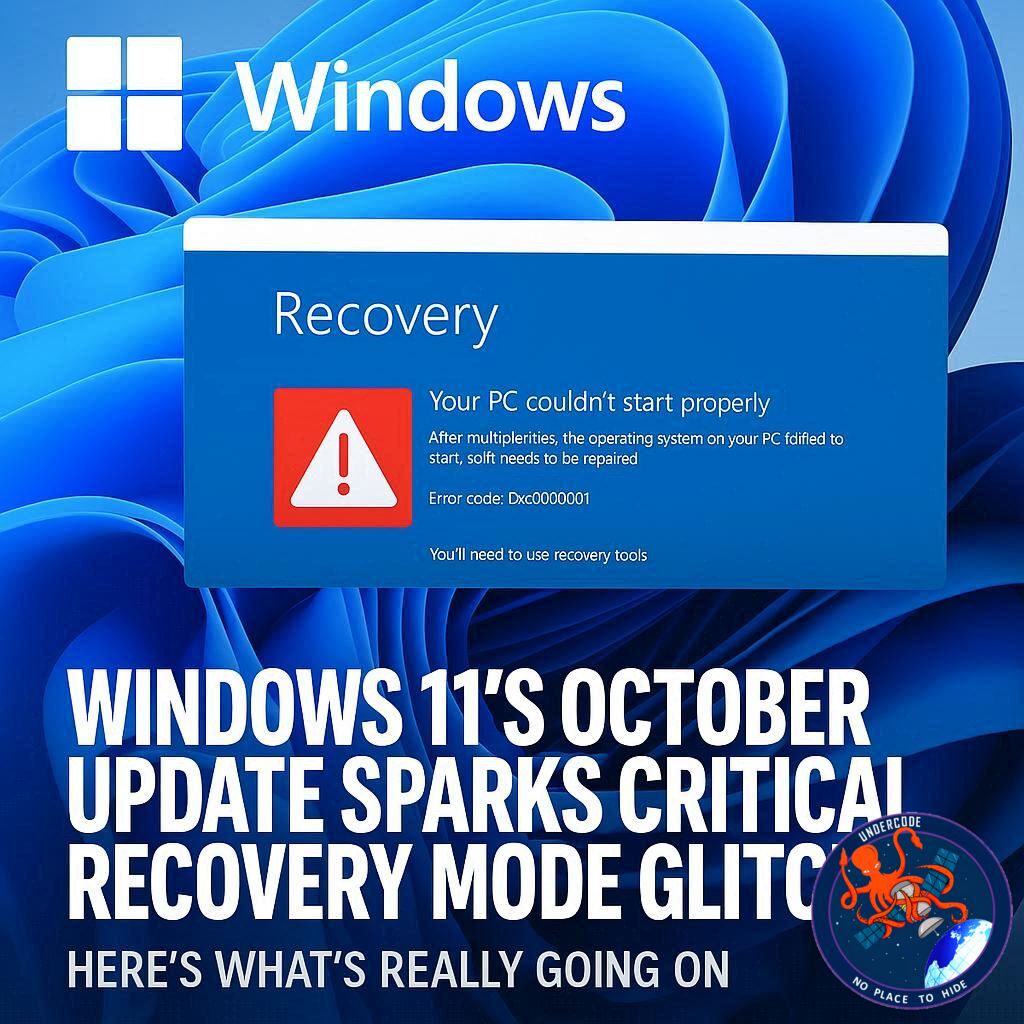
🎯 Introduction: The Update That Broke the Lifeline
Every Windows update promises security, stability, and a smoother user experience. But for some Windows 11 users, the October update has done the opposite — breaking one of the most essential lifelines in the system: the Windows Recovery Environment. Imagine being locked out of your PC during a critical error, only to find that your keyboard and mouse don’t respond. That’s the nightmare scenario playing out for thousands of users right now, thanks to update KB5066835.
This glitch, while temporary, exposes a larger problem with Microsoft’s aggressive update strategy — where speed often trumps stability. Yet amid the frustration, a few clever workarounds and an official fix on the horizon are helping users survive the chaos.
💻 The Glitch That Paralyzed Recovery Mode
A bug in the October 2025 Patch Tuesday update has disabled USB functionality inside the Windows Recovery Environment (WinRE). That means users can’t use their USB-connected mouse or keyboard to navigate recovery screens, effectively trapping them if Windows fails to boot.
Microsoft confirmed the issue, stating: “After installing the Windows security update released on October 14, 2025 (KB5066835), USB devices such as keyboards and mice do not function in the Windows Recovery Environment.”
Ironically, these devices still work perfectly inside Windows itself — the issue is confined to the recovery tool. The bug currently affects Windows 11 25H2, 24H2, and Windows Server 2025.
🧩 How the Glitch Impacts Users
For ordinary users, the Windows Recovery Environment is the last line of defense when something goes wrong. It’s where you can access tools like System Restore, Safe Mode, and Startup Repair. But if USB input is gone, these tools become useless.
The problem isn’t just technical — it’s psychological. Users rely on the reassurance that WinRE will save them when Windows fails. This glitch removes that safety net, leaving users anxious about even restarting their computers.
⚙️ Workarounds and Temporary Fixes
While Microsoft works on a fix, there’s one key workaround. If you have an old PS/2 keyboard or mouse — and your PC still has the compatible port — you can regain control of WinRE. The glitch affects only USB devices, so PS/2 hardware bypasses the issue entirely.
Another option is to uninstall the October update, though this is only possible if your PC still boots properly. To do this:
Go to Windows Update > Update History.
Scroll down and click Uninstall Updates.
Find KB5066835 and remove it.
This should restore normal recovery mode functionality until Microsoft rolls out an official fix.
🐞 Other Hidden Bugs in the October Update
The WinRE glitch isn’t the only issue causing headaches. The same update has introduced several smaller, yet significant bugs:
IIS Website Failures: For users running Internet Information Services (IIS) locally, hosted sites may refuse to load entirely.
File Explorer Preview Error: When previewing files downloaded from the cloud or local network, Windows may falsely flag them as harmful.
Performance Lags and Crashes: Some users report slow startups and file access issues following the update.
Microsoft has acknowledged the IIS problem but hasn’t commented on the File Explorer bug yet.
🧠 What Undercode Say:
This issue underscores a long-standing tension between Microsoft’s rapid update cadence and system stability. Windows 11’s evolution is deeply tied to its update pipeline, where security patches, AI features, and system optimizations arrive monthly. Yet, each new update seems to gamble with the reliability of critical system tools.
The irony is painful. WinRE exists precisely to help users recover from bad updates or corrupted system files. When the recovery tool itself breaks because of an update, it reveals a deeper fragility in Microsoft’s quality assurance process.
Historically, Microsoft has struggled with post-update regressions — think back to the printer driver fiascos, sound driver crashes, or File Explorer slowdowns that followed “security” updates. Each time, the company promises a quick fix, but the recurring nature of these bugs suggests a structural problem in the testing and deployment workflow.
In this case, the USB malfunction likely stems from a driver-level conflict introduced by the update’s low-level security changes. Since WinRE operates in a minimal pre-boot environment, it loads only basic drivers. If a USB input driver was modified or restricted for security reasons, that would easily explain why the devices fail to initialize.
From a broader perspective, this incident reveals something crucial: Microsoft is prioritizing AI integration and feature expansion over system resilience. The same update that broke WinRE also includes early foundations for AI agent behavior in Windows — an ambitious step, but one that may have overshadowed the importance of basic recovery reliability.
There’s also a trust issue forming. Users are starting to hesitate before installing updates — something that’s supposed to enhance security. When patches themselves become unpredictable, users feel trapped between two risks: staying vulnerable or risking system failure.
For enterprise environments, where uptime and recovery tools are critical, this kind of bug can translate into real operational losses. IT teams may need to delay patch rollouts or re-enable PS/2 support temporarily, something that feels like a step backward in 2025.
Ultimately, the WinRE glitch is not just a small bug. It’s a symptom of a development philosophy that moves too fast and tests too little. If Microsoft wants to rebuild user confidence, it must slow down, reinforce testing, and treat the recovery system as sacred — not expendable.
🔍 Fact Checker Results
✅ The bug was officially confirmed by Microsoft in its Windows 11 known issues documentation.
✅ The issue affects only USB input devices within the Windows Recovery Environment.
✅ A PS/2 input workaround is functional and verified by multiple users.
📊 Prediction
💡 Microsoft will issue a cumulative patch within two weeks to address the USB failure.
🔮 Expect the company to include deeper driver validation steps in future updates to prevent similar issues.
⚙️ Long-term, WinRE will likely evolve to become modular — allowing hotfixes to deploy independently of full system updates.
🕵️📝✔️Let’s dive deep and fact‑check.
References:
Reported By: www.zdnet.com
Extra Source Hub (Possible Sources for article):
https://stackoverflow.com
Wikipedia
OpenAi & Undercode AI
Image Source:
Unsplash
Undercode AI DI v2
Bing
🔐JOIN OUR CYBER WORLD [ CVE News • HackMonitor • UndercodeNews ]
📢 Follow UndercodeNews & Stay Tuned:
𝕏 formerly Twitter 🐦 | @ Threads | 🔗 Linkedin | 🦋BlueSky | 🐘Mastodon


