
Listen to this Post
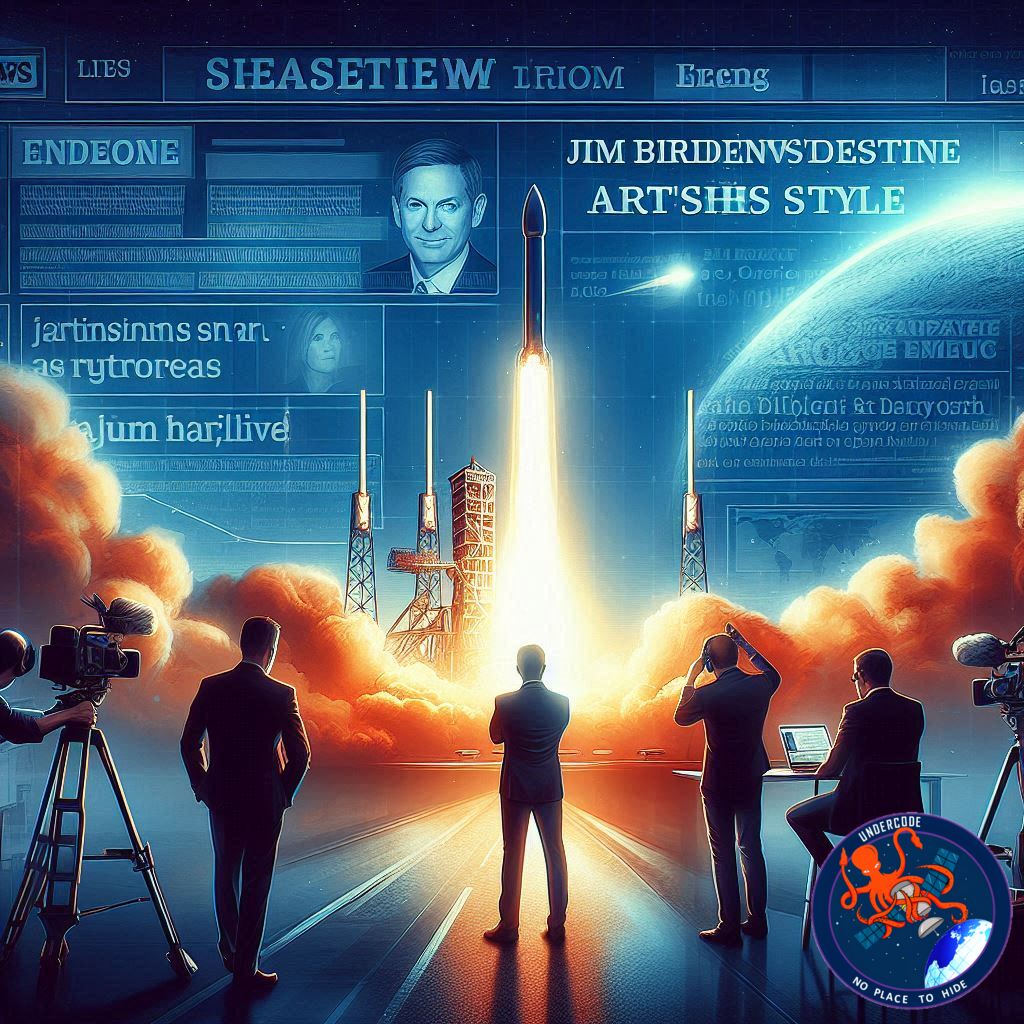
How the battle for NASA’s Moon mission reveals the deeper fight for America’s space future.
The Clash Between SpaceX and a Former NASA Chief
In the latest twist in the race to the Moon, SpaceX has publicly pushed back against comments made by former NASA Administrator Jim Bridenstine, who questioned the agency’s reliance on SpaceX’s Starship for the upcoming Artemis 3 mission. The company didn’t just respond—it called out Bridenstine’s motives, pointing out that he now works as a paid lobbyist for aerospace competitors seeking the same NASA contracts SpaceX already holds.
Bridenstine, along with another former NASA head, Charlie Bolden, suggested that the Artemis Program—NASA’s effort to return astronauts to the lunar surface—has a “near-zero chance” of beating China’s timeline for a Moon landing. His skepticism focused on whether Starship, SpaceX’s next-generation rocket system, can be ready in time to safely deliver astronauts to the Moon and back.
“Starship is a tremendously important vehicle for the future,” Bridenstine said at a recent symposium. “But if you need a Moon lander, it’s going to take time.”
SpaceX, however, quickly took to X (formerly Twitter) to challenge that narrative. In a detailed thread, the company praised Bridenstine for his past contributions—he was instrumental in helping start the Artemis Program—but firmly reminded the public of his new role as head of The Artemis Group, a lobbying firm that represents companies competing directly against SpaceX.
The company stated bluntly:
“Mr. Bridenstine’s current campaign against Starship is either misguided or intentionally misleading. He is representing his clients’ interests, and his comments should be seen for what they are—a paid lobbyist’s effort to secure billions more in government funding for his clients who are already years late and billions of dollars over budget.”
SpaceX emphasized that Starship was selected for the Artemis 3 mission through an open and competitive process, where it beat out rivals such as Blue Origin and Dynetics based on technical strength, lower risk, and a dramatically lower cost. The company reminded readers that these selections were confirmed even after formal protests and litigation from losing bidders.
What makes this feud significant is not just the personal clash—it’s what it says about the power struggle in America’s space race. On one side, you have the old aerospace establishment, leaning on government contracts and cautious engineering. On the other, SpaceX represents the new frontier—fast-moving, risk-tolerant, and determined to make space exploration cheaper and more ambitious than ever before.
As SpaceX pushes ahead with its massive Starship test program, it’s clear the company isn’t just defending its Moon mission—it’s defending its reputation as the driving force of 21st-century space innovation.
What Undercode Say:
This confrontation is more than a PR skirmish—it’s an ideological battle over the future of space exploration and the role of private enterprise in government-led missions.
Bridenstine’s skepticism isn’t entirely baseless. SpaceX’s Starship program, while groundbreaking, has faced its share of delays, fiery test explosions, and shifting timelines. Critics argue that the company’s rapid iteration model—a process of testing, failing, and improving—may not align with NASA’s strict human-rating safety protocols. That concern is legitimate. But what Bridenstine neglects to mention is how this same process has driven SpaceX’s historic successes—from reusable Falcon 9 rockets to Crew Dragon’s flawless record delivering astronauts to the ISS.
When Bridenstine questions whether Starship will be ready for Artemis 3, it’s fair to ask—ready by whose standards? The traditional contractors he now represents, like Boeing and Lockheed Martin, have spent decades and billions of dollars developing slower, heavier, less efficient systems. SpaceX’s model, in contrast, thrives on speed and iteration. It’s a startup mindset in an industry used to government complacency.
Moreover, the political subtext cannot be ignored. As competition with China’s Chang’e lunar program heats up, the U.S. can’t afford to let bureaucracy and lobbying wars slow progress. Bridenstine’s remarks, viewed through that lens, seem less about safety and more about control—a way for legacy players to claw back relevance and funding in a rapidly changing ecosystem.
SpaceX’s response is bold because it calls out something rarely said in public: that former officials often use their influence not to guide innovation, but to protect old revenue streams. It’s a delicate accusation, but one that resonates deeply in Washington’s revolving-door culture.
Artemis 3 isn’t just about planting another flag—it’s about proving that a private company can carry humanity beyond Earth faster and cheaper than any government program ever could. For SpaceX, that’s not arrogance—it’s the mission statement.
Looking forward, Starship’s readiness will depend on both technical success and political patience. The hardware will evolve—engines will explode, prototypes will fail, and breakthroughs will follow. But what could truly derail progress is not engineering—it’s institutional resistance from those unwilling to let go of the old order.
As long as that battle continues, Artemis 3 stands as a symbol of a larger story: America deciding whether its future in space will be driven by innovation or nostalgia.
Fact Checker Results:
✅ Starship was officially chosen by NASA for Artemis 3 through a competitive selection process.
✅ Bridenstine currently runs a lobbying firm representing aerospace contractors.
❌ Claims that NASA’s Artemis strategy has “zero chance” against China are not supported by NASA’s official timelines or data.
Prediction 🌙
The tension between SpaceX and the traditional aerospace establishment will intensify as Starship moves closer to operational status. Expect more political pressure, more public skepticism, and more dramatic test milestones in 2026. But once Starship proves itself with successful orbital refueling and lunar demonstrations, the narrative will flip overnight—and SpaceX will cement its place not just as a NASA contractor, but as the primary driver of humanity’s return to the Moon and beyond.
🕵️📝✔️Let’s dive deep and fact‑check.
References:
Reported By: www.teslarati.com
Extra Source Hub (Possible Sources for article):
https://www.reddit.com
Wikipedia
OpenAi & Undercode AI
Image Source:
Unsplash
Undercode AI DI v2
Bing
🔐JOIN OUR CYBER WORLD [ CVE News • HackMonitor • UndercodeNews ]
📢 Follow UndercodeNews & Stay Tuned:
𝕏 formerly Twitter 🐦 | @ Threads | 🔗 Linkedin | 🦋BlueSky | 🐘Mastodon


