
Listen to this Post
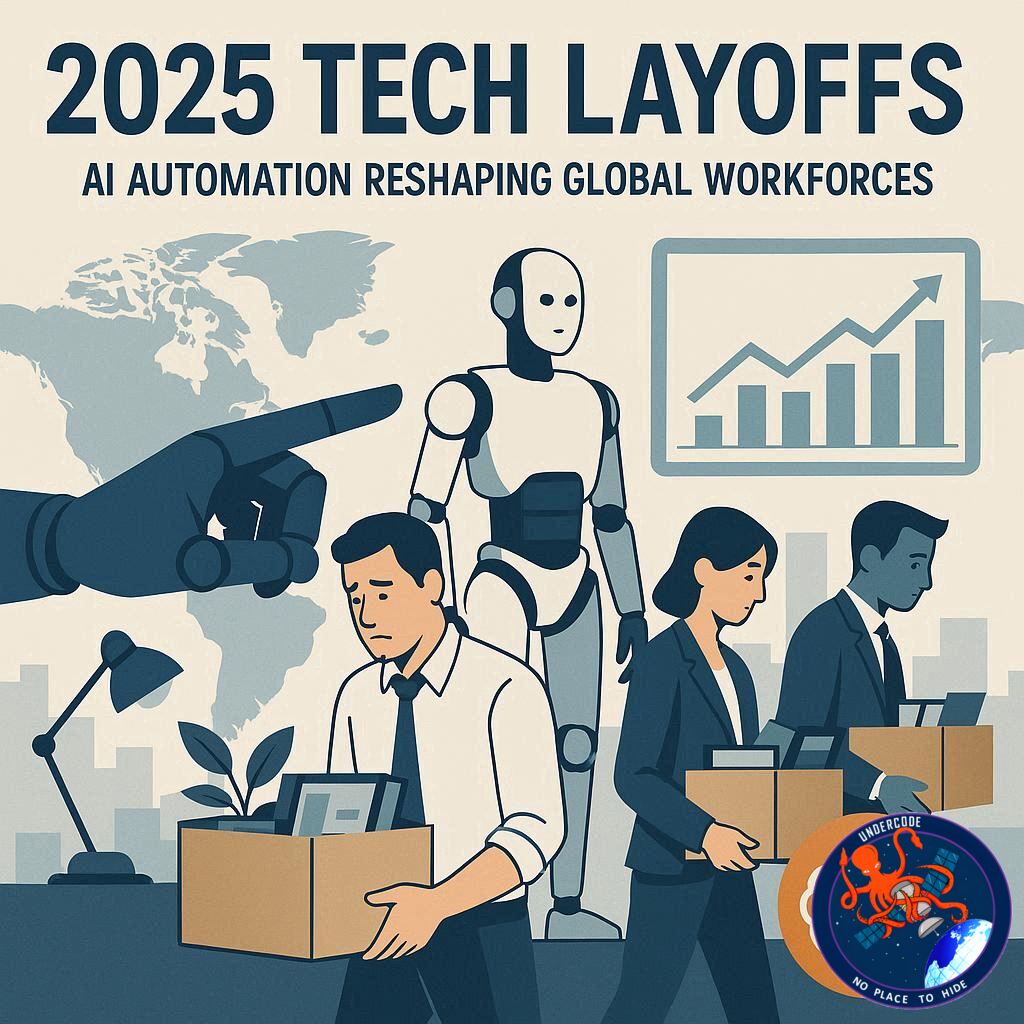
The technology sector has entered a period of unprecedented transformation in 2025. Across the globe, companies are restructuring at a scale rarely seen before, driven by the rapid adoption of artificial intelligence, automation, and mounting economic uncertainty. From Silicon Valley to India, major tech and professional services firms have cut tens of thousands of jobs, fundamentally redefining what the modern workforce looks like in an AI-driven world. These layoffs are not just numbers—they reflect the shifting landscape of technology, the erosion of traditional roles, and the growing demand for a new set of skills.
A Wave of Layoffs Across the Tech Industry
The first nine months of 2025 saw 112,732 tech employees lose their jobs across 218 companies, according to Layoffs.fyi. February and April were particularly brutal, with over 16,000 and 24,500 layoffs, respectively. Amazon led the charge, eliminating up to 14,000 corporate positions—its largest layoff in history—citing AI adoption, overexpansion, and the need to streamline management. CEO Andy Jassy emphasized the company’s goal to operate “like the world’s largest startup,” betting heavily on automation to improve efficiency and profitability. Intel followed with a reduction of 24,000 positions, roughly 22% of its workforce, under CEO Lip-Bu Tan, focusing on operational efficiency amid growing competition in semiconductors.
In India, Tata Consultancy Services (TCS) cut nearly 20,000 jobs as AI and trade pressures reshaped its IT services model. Similarly, Accenture laid off thousands while simultaneously hiring for AI-centric roles, reflecting the sector’s pivot toward automation. Microsoft, Salesforce, Cisco, Google, Meta, Oracle, UPS, Ford, PwC, and Paramount also made significant cuts, highlighting that AI-driven restructuring is not confined to a single niche but is impacting software, consulting, logistics, automotive, and media sectors alike. Companies cited AI’s ability to automate tasks, economic pressures, and the need to reallocate resources toward growth areas such as cloud computing, AI consulting, and generative AI.
These workforce reductions are more than a financial adjustment—they represent a profound cultural and operational shift. Job cuts are concentrated not only in traditional tech hubs but also in global operations, including India, Germany, Costa Rica, and multiple U.S. states. Roles in software engineering, customer support, human resources, and administrative functions have been disproportionately affected, while positions aligned with AI, automation, and cloud technologies are prioritized. The layoffs underscore a stark reality: AI is no longer a tool to augment human labor—it is rapidly redefining the very structure of employment across industries.
What Undercode Say:
The 2025 tech layoffs reveal a systemic realignment of global labor driven by AI and automation. Companies are no longer restructuring solely to cut costs; they are strategically recalibrating their workforces to match the demands of an AI-driven economy. Amazon, for instance, is trimming its corporate layers to operate more like a nimble startup, while Intel is aggressively optimizing efficiency amid semiconductor competition. These moves illustrate that AI is transforming job functions from routine and repetitive tasks toward high-skill, knowledge-intensive roles, demanding reskilling and adaptability.
Professional services firms, traditionally insulated from technological disruption, are now grappling with AI’s reach into auditing, consulting, and administrative functions. PwC’s 5,600 layoffs are a stark example of how automation can replace conventional accounting workflows. Similarly, Salesforce’s reduction of 4,000 customer support roles shows that AI’s influence extends beyond software engineering into frontline operations, with generative AI taking over repetitive communication tasks.
The impact is global. India’s TCS is navigating not only AI adoption but also trade and regulatory pressures, highlighting that tech workforce transformations are intertwined with geopolitical and economic factors. Meanwhile, UPS and Ford illustrate that the automation wave extends beyond pure tech, affecting logistics and automotive sectors, where efficiency and cost control become critical amid evolving market dynamics. These layoffs, although disruptive, signal a broader shift: the modern workforce is increasingly defined by digital literacy, AI competency, and agility in responding to technological evolution.
Importantly, these layoffs challenge traditional corporate narratives. Leaders now publicly cite AI as a primary factor in restructuring, moving away from vague cost-cutting explanations. This transparency emphasizes the strategic priority of technology adoption over workforce preservation. Companies are aggressively reallocating resources toward high-growth areas—AI, cloud computing, cybersecurity—while scaling back legacy functions, reflecting a paradigm shift in how value is generated and measured in the digital economy.
Furthermore, the speed and scale of these cuts suggest that workforce agility is no longer optional; it is essential for survival. Organizations are incentivized to continually assess skill gaps, invest in reskilling programs, and adopt flexible talent models that integrate human and AI capabilities. In essence, the 2025 tech layoffs are a case study in disruption management: they underscore the delicate balance between innovation, efficiency, and human capital in a rapidly changing industrial landscape.
The trend also has societal implications. Large-scale layoffs can exacerbate inequality and create talent mismatches, as displaced workers struggle to acquire the skills demanded by emerging AI-focused roles. Governments and educational institutions will need to adapt rapidly, offering retraining programs and incentivizing lifelong learning. For employees, adaptability, AI fluency, and continuous skill development are no longer optional—they are prerequisites for career resilience in a transformed labor market.
Ultimately, the layoffs of 2025 are both a cautionary tale and an opportunity. They highlight the necessity for companies to evolve, but they also signal a critical moment for workers and policymakers to engage proactively with technological change. AI and automation are not merely future trends—they are reshaping the present, redefining career trajectories, corporate strategies, and economic ecosystems worldwide. Understanding this shift and responding strategically will determine which companies thrive and which individuals succeed in the new era of work.
Fact Checker Results:
✅ Layoffs.fyi confirms 112,732 tech employees lost jobs across 218 companies in 2025.
✅ Major tech companies explicitly cite AI and automation as drivers of workforce reductions.
❌ Reports suggesting layoffs are solely due to economic downturn ignore the strategic AI restructuring component.
Prediction:
📊 As AI adoption accelerates, 2026 may see further workforce optimization across tech and adjacent industries, with increased investment in AI skill development. Companies will likely continue reducing legacy roles while expanding AI, cloud, and automation-focused positions, emphasizing agility and reskilling. Employee adaptability will become the most critical factor in career sustainability.
🕵️📝✔️Let’s dive deep and fact‑check.
References:
Reported By: timesofindia.indiatimes.com
Extra Source Hub (Possible Sources for article):
https://www.medium.com
Wikipedia
OpenAi & Undercode AI
Image Source:
Unsplash
Undercode AI DI v2
Bing
🔐JOIN OUR CYBER WORLD [ CVE News • HackMonitor • UndercodeNews ]
📢 Follow UndercodeNews & Stay Tuned:
𝕏 formerly Twitter 🐦 | @ Threads | 🔗 Linkedin | 🦋BlueSky | 🐘Mastodon


