
Listen to this Post
🎯 Introduction
In a world that thrives on contactless payments and instant transactions, the same convenience that fuels modern life is quietly turning into a digital weapon. Since April 2024, cybersecurity experts have uncovered a disturbing trend sweeping across Android devices: a wave of malicious apps weaponizing Near-Field Communication (NFC) and Host Card Emulation (HCE) to infiltrate payment systems, harvest financial data, and orchestrate fraud at a scale never seen before. What began as isolated incidents has now evolved into a global operation—one that blurs the line between technological innovation and criminal sophistication.
The Global NFC Fraud Epidemic
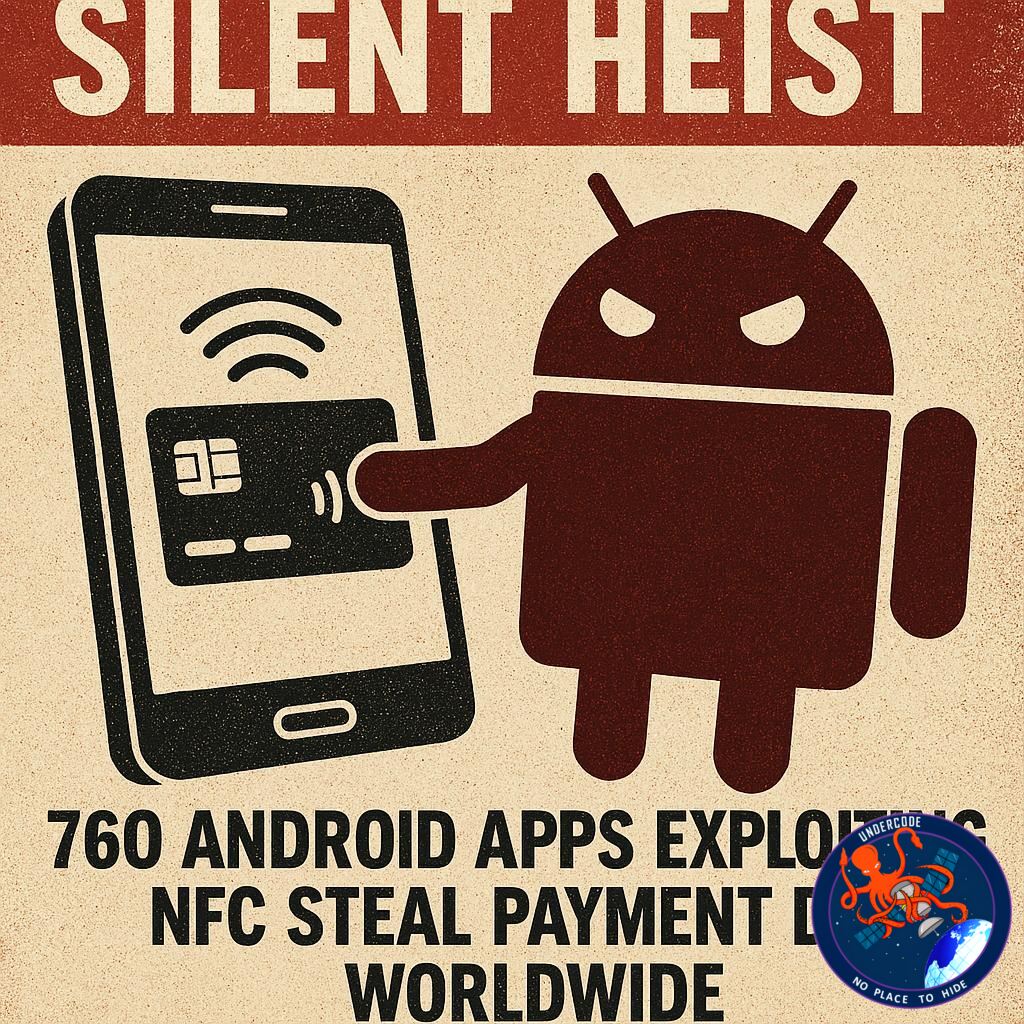
Zimperium’s zLabs researchers have sounded the alarm after identifying more than 760 Android apps exploiting NFC and HCE technologies to commit payment fraud. The scale of these attacks represents a turning point for digital security, exposing how everyday mobile features can become instruments of theft.
These rogue apps are targeting an expansive list of entities—banks, financial institutions, government portals, and payment services worldwide. Victims include Russian financial regulators, European banks such as PKO, ČSOB, and NBS, Brazilian banking networks, and even major digital payment platforms like Google Pay.
The deception begins with malicious apps disguised as legitimate banking or financial tools. Once installed, they manipulate users into granting dangerous permissions, particularly the ability to handle NFC payments. Underneath this seemingly benign process, hidden background services silently initiate Application Protocol Data Unit (APDU) exchanges, allowing the malware to act like a fake payment terminal.
Inside the Malware’s Mechanics
Each malicious application operates with a chilling level of coordination. Some work in pairs—one acting as a “scanner,” the other as a “tapper”—while others run as independent agents designed to extract EMV (Europay, Mastercard, Visa) data from unsuspecting victims. These stolen credentials, including card numbers, expiry dates, and device identifiers, are exfiltrated to Telegram channels where cybercriminals can remotely control and monetize them.
The real-time control comes from command-and-control (C2) servers, which serve as the nervous system of these operations. Through these servers, attackers can register devices, execute remote commands, relay payment terminal requests, validate PINs, and even trigger fake transactions—all without the user’s knowledge.
Continuous registration cycles and dynamic command flows make these attacks incredibly hard to detect. Each infected device becomes a tool in a constantly evolving fraud network, masking its activities through legitimate Android system behavior.
The Scale of the Operation
Since April 2024, analysts have traced over 70 C2 servers and numerous Telegram bots coordinating attacks across at least 20 major financial institutions. The majority of targets appear to be Russian banks, yet the infiltration has spread across continents, proving that no digital ecosystem is immune.
Zimperium’s findings highlight how this threat has flourished alongside the global rise of “Tap-to-Pay” transactions. As consumers lean into speed and convenience, cybercriminals are leveraging the same innovation to turn mobile devices into gateways of financial compromise.
Expert Warnings
In their report, Zimperium researchers emphasize the urgency of the situation:
“With the rapid growth of ‘Tap-to-Pay’ transactions, NFC has become an increasingly attractive target for cybercriminals.”
They caution users, mobile vendors, and financial institutions to treat any unfamiliar app requesting NFC privileges as inherently dangerous. Security teams are urged to monitor app permissions more closely and strengthen real-time behavioral analytics to flag unauthorized payment handlers.
Indicators of Compromise (IOCs) for this campaign have been publicly shared by Zimperium, allowing institutions to detect and neutralize these malicious variants before they spread further.
🧩 What Undercode Say:
The findings expose a deeper truth about the fragility of mobile payment ecosystems. NFC technology, celebrated for its convenience, has always balanced on a thin line between accessibility and exploitation. These recent revelations confirm that while financial innovation races ahead, cybersecurity standards often lag behind.
At its core, the NFC relay attack trend reveals a structural weakness: trust-based design. Android’s open architecture allows apps to request advanced privileges that mimic legitimate functions. Cybercriminals are simply leveraging that trust—using the operating system’s flexibility as their camouflage.
From an analytical standpoint, this marks a shift in cybercrime strategy. Instead of brute-force hacking, attackers are moving toward socially engineered infiltration, blending software manipulation with psychological deception. They don’t need to “break in” when users willingly open the door.
The global reach of these campaigns suggests a well-funded and organized network, likely involving multiple criminal syndicates that share resources and infrastructure. The use of Telegram bots as command interfaces adds another layer of anonymity and scalability, turning mobile devices into extensions of a shadow economy.
Moreover, the focus on banks in Russia, Europe, and Brazil indicates attackers are testing regions with varying cybersecurity maturity levels. These operations serve as both exploitation and experimentation grounds, refining techniques for future global attacks.
Zimperium’s discovery underscores a growing truth: the mobile device has become the new frontline of cyberwarfare. As traditional banking systems strengthen their defenses, criminals are migrating to the weakest link—the consumer’s phone. Every tap, every payment, every “allow permission” click can become an entry point for exploitation.
If left unchecked, NFC abuse could evolve into the next ransomware-scale epidemic, silently siphoning money without triggering alarms. This isn’t just a technical issue; it’s a psychological war over trust in digital payments. The moment users begin doubting the safety of their phones, the entire fintech ecosystem trembles.
The industry must react decisively. Google, payment providers, and financial regulators need to collaborate to enforce stricter NFC access policies, integrate AI-driven fraud detection, and require hardware-level validation for any payment-related app.
Ultimately, the battle isn’t just about code. It’s about the balance between convenience and control, and whether the modern world is willing to sacrifice a bit of ease to regain a sense of security.
🔍 Fact Checker Results
✅ Verified: Zimperium zLabs confirmed over 760 NFC-abusing Android apps active since April 2024.
✅ Verified: Campaigns used C2 servers and Telegram bots to steal EMV data from financial institutions.
❌ False: There’s no evidence suggesting Google Pay itself was directly breached, only impersonated.
📊 Prediction
💳 Expect an exponential rise in NFC-based fraud as mobile payment adoption grows globally.
📱 Security vendors will pivot toward behavioral threat detection and real-time permission monitoring.
🌐 Governments may soon enforce digital identity and payment security regulations targeting NFC misuse.
🕵️📝✔️Let’s dive deep and fact‑check.
References:
Reported By: securityaffairs.com
Extra Source Hub (Possible Sources for article):
https://www.twitter.com
Wikipedia
OpenAi & Undercode AI
Image Source:
Unsplash
Undercode AI DI v2
Bing
🔐JOIN OUR CYBER WORLD [ CVE News • HackMonitor • UndercodeNews ]
📢 Follow UndercodeNews & Stay Tuned:
𝕏 formerly Twitter 🐦 | @ Threads | 🔗 Linkedin | 🦋BlueSky | 🐘Mastodon


