
Listen to this Post
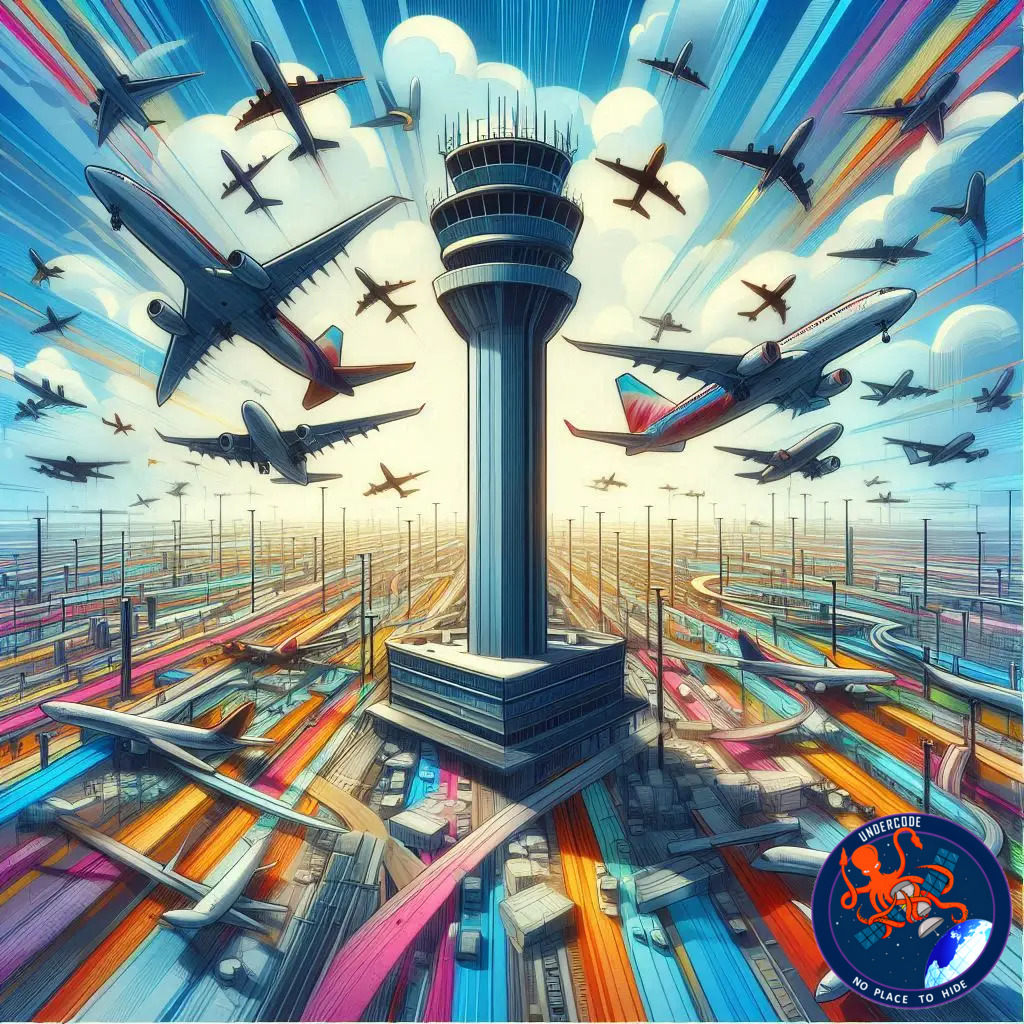
The skies above America are busier—and more chaotic—than ever before. From endless delays to flight cancellations and exhausted controllers working without pay, the U.S. air traffic control (ATC) system stands at the breaking point. What was once a symbol of precision and reliability has become a case study in bureaucratic stagnation, political tug-of-war, and crumbling infrastructure.
For decades, aviation experts have warned that the system is running on borrowed time. Now, amid a government shutdown, those warnings have turned into a nationwide crisis. Controllers are clocking six-day weeks with no pay, airports are struggling to keep control towers staffed, and the Federal Aviation Administration (FAA) is forced to cap flights at the country’s 40 busiest airports. Hundreds of cancellations ripple through the system daily, frustrating travelers and shaking public confidence in the safety and efficiency of the nation’s airspace.
The System in Turmoil
At the heart of the issue lies a trifecta of problems: severe staffing shortages, outdated technology, and political inertia. While aviation remains a marvel of modern coordination, the people and systems guiding it from below are running on fumes. With no immediate fix in sight, experts are urging a fundamental rethinking of how the system is managed — and who should control it.
Some propose privatization. Others call for a semi-autonomous government corporation to replace the current FAA-run model. Advocates argue that separating ATC operations from the FAA’s bureaucratic structure could allow for independent funding, faster modernization, and long-term planning — something impossible under annual congressional budget cycles.
Robert Poole of the Reason Foundation, a libertarian think tank, sees the crisis as an opportunity. “It opens a window to have this looked at seriously,” he said, noting that a similar reform in Canada in 1995 transformed their air navigation system into a world leader. The U.S. Postal Service offers another example of a government-controlled corporation that, while imperfect, continues to operate even during shutdowns.
The Case for Privatization
Supporters of privatization envision a not-for-profit corporation funded by user fees, not taxpayer dollars. They argue that this structure would ensure financial stability, free the system from political gridlock, and provide the resources needed to modernize technology and train new controllers.
Michael McCormick, professor of air traffic management at Embry-Riddle Aeronautical University, explained that under the current model, ATC funding depends on congressional appropriations. That makes long-term investments difficult. “You can’t really engage in active planning for capital investments,” he said. Privatization, by contrast, would allow for stable funding and strategic infrastructure planning.
Importantly, advocates clarify that this wouldn’t be a “for-profit” model. Safety would remain paramount, and no investor could pressure the system to prioritize profit over public safety. Instead, it would operate similarly to Canada’s Nav Canada or the U.K.’s NATS — both renowned for their efficiency and innovation.
The Pushback
Still, privatization faces formidable political and economic resistance. Transportation Secretary Sean Duffy has called the idea “a distraction,” insisting that reform efforts should focus on modernization within the FAA, not tearing it apart.
In 2017 and 2018, a bipartisan push to privatize ATC briefly gained traction — with support from both the airline industry and the National Air Traffic Controllers Association (NATCA). But the effort collapsed under pressure from private plane owners and business jet operators, who feared higher costs at smaller airports. These groups, supported by a powerful “general aviation caucus” in Congress, succeeded in derailing the bill.
Their argument: privatization could favor big-city hubs like New York, Los Angeles, and Atlanta — while rural airports, lifelines for small-town America, might be left behind. Jim Coon of the Aircraft Owners and Pilots Association warned that a market-driven model could neglect the smaller airports that connect remote communities to the rest of the country. “That’s where the investment will go,” he said, referring to the major airports.
Critics also point out that even privatized systems abroad face challenges similar to those in the U.S., including staffing shortages and budget constraints. “We do have the largest, most complex, and safest system in the world,” Coon argued. “A privatized model doesn’t guarantee perfection.”
The Middle Ground
Some experts believe a hybrid model could work — one that retains government oversight but grants ATC financial independence. This would mirror entities like the U.S. Postal Service, ensuring accountability while giving the system room to innovate.
Trump’s domestic policy bill, passed in July, includes $12.5 billion earmarked for modernization — a potential lifeline for the ATC network. Whether that funding is enough to fix systemic issues remains unclear, but it marks a rare bipartisan acknowledgment that the system cannot continue as it is.
As Coons put it, “We have a rare chance here to get everyone together and get our system modernized as fast as possible.”
What Undercode Say:
The crisis in U.S. air traffic control isn’t just about money — it’s about vision. America’s aviation infrastructure has become a hostage of political gridlock, unable to evolve despite being the backbone of the global air travel economy.
The debate between privatization and government control misses a deeper question: Who should be accountable for the skies? Right now, accountability is diluted between agencies, unions, and politicians. The FAA’s dual role as both regulator and operator creates inherent conflicts of interest. A separate, independent entity could introduce much-needed clarity and efficiency.
However, the idea of privatization shouldn’t be romanticized. Canada’s Nav Canada model works because it balances autonomy with strict regulatory oversight. The U.S. could emulate that — but only if it ensures rural equity, technological investment, and transparent governance.
Modern airspace management requires agility. Technologies like AI-assisted routing, satellite-based navigation, and real-time traffic modeling are advancing rapidly — but the FAA’s outdated funding and bureaucratic structure slow their adoption. The system cannot thrive in a 21st-century world with 20th-century rules.
Privatization might provide a fix for funding instability, but it must come with guardrails to prevent monopolization or inequality. What the nation truly needs is a resilient hybrid system — public accountability with private-style efficiency.
The ATC issue reflects a broader American pattern: waiting for crises before acting. The current shutdown may be painful, but it could also serve as the catalyst for change — much like the 1981 PATCO strike that reshaped aviation labor. The U.S. has the talent, technology, and experience to lead the world in air navigation again; what it lacks is structural courage.
If America can depoliticize the ATC and commit to a modern, self-sustaining model, it can transform its skies from chaos to control — from crisis to opportunity.
Fact Checker Results
✅ The U.S. ATC system faces a confirmed staffing shortage and technological lag.
✅ Canada’s privatized Nav Canada model remains a global benchmark for efficiency.
❌ No current legislation is moving forward to privatize U.S. air traffic control.
Prediction ✈️
Within the next decade, the U.S. is likely to adopt a semi-privatized or hybrid ATC model, driven by increasing public pressure and economic necessity. Expect reforms to focus first on financial independence and digital modernization before full privatization ever takes flight.
🕵️📝✔️Let’s dive deep and fact‑check.
References:
Reported By: edition.cnn.com
Extra Source Hub (Possible Sources for article):
https://www.facebook.com
Wikipedia
OpenAi & Undercode AI
Image Source:
Unsplash
Undercode AI DI v2
Bing
🔐JOIN OUR CYBER WORLD [ CVE News • HackMonitor • UndercodeNews ]
📢 Follow UndercodeNews & Stay Tuned:
𝕏 formerly Twitter 🐦 | @ Threads | 🔗 Linkedin | 🦋BlueSky | 🐘Mastodon


