
Listen to this Post
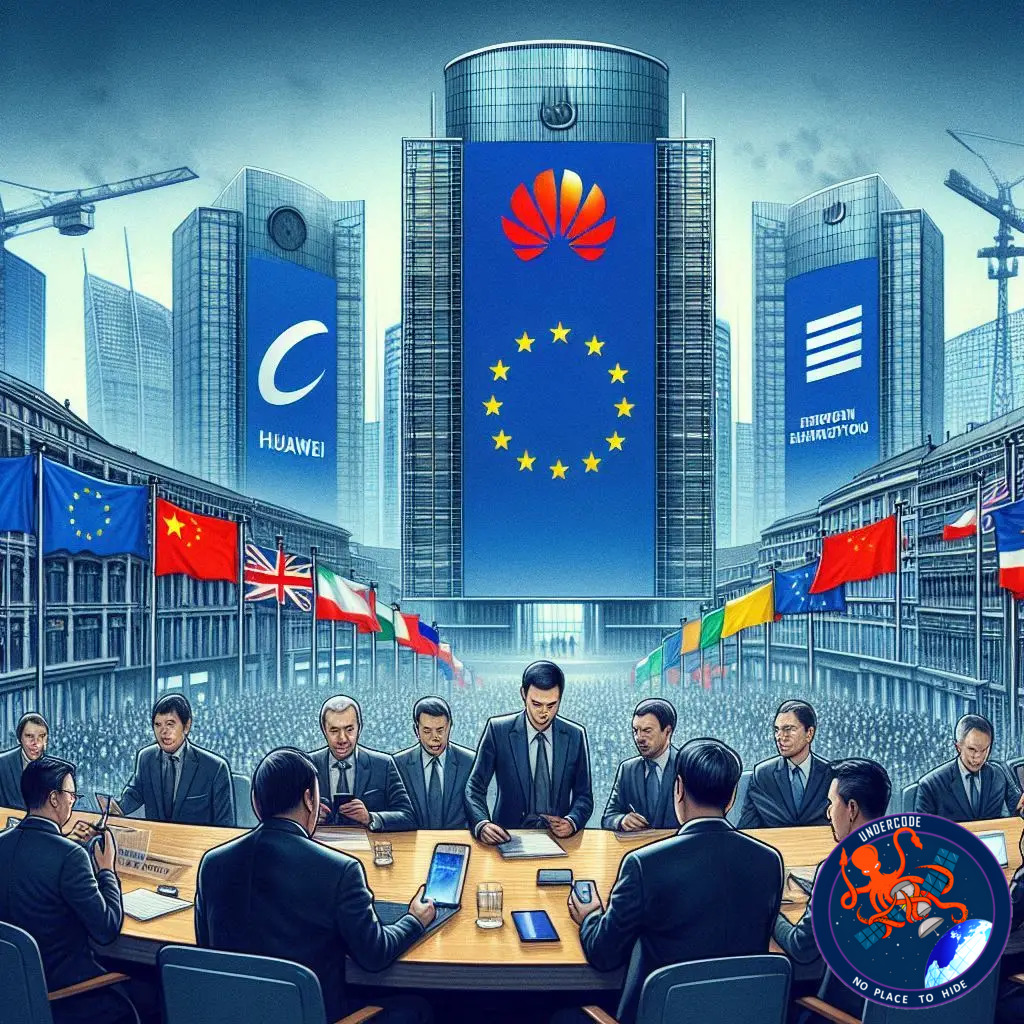
Rising Tensions Over 5G Security in Europe
The European Commission is weighing a bold move that could reshape the continent’s digital infrastructure: forcing EU countries to remove Huawei and ZTE equipment from their telecommunications networks. According to a Bloomberg report citing insiders, the Commission, led by Vice President Henna Virkkunen, is exploring how to turn its 2020 advisory against “high-risk vendors” in 5G networks into a binding legal requirement.
If enacted, this shift would compel all EU member states to align with the bloc’s collective security stance, overriding national discretion in telecom decisions. This initiative signals a growing sense of urgency in Brussels, as fears of Chinese espionage and cyber manipulation continue to grow.
At the heart of the debate lies the United States’ earlier stance: both Huawei and ZTE remain banned across America, branded as national security threats. Europe has been slower to follow, with countries such as Spain and Greece still allowing Huawei’s presence in their networks, while Sweden, Germany, and Finland push toward tighter restrictions.
The Commission’s new proposal could extend beyond mobile networks. Officials are reportedly considering curbs on Chinese technology even in fixed-line broadband systems, as the EU accelerates its high-speed fiber rollout. Moreover, the Commission might suspend Global Gateway funding—its major international investment program—for countries that integrate Huawei components into EU-backed projects.
This tightening stance traces back to former Commissioner Thierry Breton, who called for Huawei and ZTE to be explicitly labeled as security threats. While he vowed to cleanse EU institutions’ networks of Chinese equipment, national governments resisted, citing sovereignty and economic pragmatism. The split reveals Europe’s broader dilemma: how to balance security with technological dependence and cost efficiency.
As trade relations with Beijing worsen, the debate reignites questions about whether Europe can afford—or even achieve—a clean break from Chinese telecom providers. Critics warn that removing Huawei could inflate costs, slow down 5G deployment, and disrupt existing supply chains. On the other hand, security hawks argue that no price is too high for safeguarding Europe’s critical communications backbone.
China, for its part, has vehemently rejected the EU’s characterization of Huawei and ZTE as “high-risk” suppliers, labeling the move politically motivated and devoid of factual grounding. For Beijing, such measures represent another front in the West’s broader technological containment strategy.
Ultimately, Europe stands at a digital crossroads. The choice before Brussels is not just about telecom vendors—it’s about sovereignty, trust, and the kind of world Europe wants to connect to.
What Undercode Say:
The Strategic Core of the Huawei Question
Europe’s Huawei debate isn’t merely about telecom infrastructure. It’s about power—who holds it, who controls the data, and who sets the rules for the next generation of digital governance. The European Commission’s potential legal directive marks a turning point from suggestion to enforcement, signaling that cybersecurity has evolved into geopolitics in real time.
When Henna Virkkunen’s office explores a binding framework, it effectively challenges the notion of national autonomy within the EU. For years, telecom decisions were considered domestic affairs. Now, Brussels seeks to create a unified shield against perceived Chinese threats. This move aligns with the EU’s growing ambition to act as a geopolitical entity rather than just an economic union.
The Economics Behind the Fear
Yet, economics complicate the moral clarity of the decision. Huawei’s technology is cheaper, efficient, and proven. Many European carriers, particularly in Southern and Eastern Europe, rely heavily on it to maintain cost-effective network rollouts. Removing it would mean billions in replacement costs, delayed 5G launches, and logistical chaos. This is why countries like Spain and Greece resist a complete ban—they prioritize economic competitiveness over political symbolism.
Lessons from Sweden’s Bold Move
Sweden remains the only EU nation to have fully banned Huawei, and the consequences were immediate. Beijing retaliated with trade pressure, and Sweden’s exporters faced restrictions in China. This sent a warning ripple across the continent: punishing Huawei could carry a heavy diplomatic price. Many governments thus walk a fine line—appeasing Brussels without angering Beijing.
The Geopolitical Undercurrent
The Huawei issue also reveals Europe’s strategic vulnerability. Unlike the U.S., the EU lacks its own telecom giants capable of rivaling Chinese or American firms. This technological dependency makes security policy a matter of procurement as much as principle. The European Commission’s push may accelerate investment in domestic players like Nokia and Ericsson, but catching up will take time and money.
The New Cold War of Connectivity
What’s unfolding is not merely a trade dispute—it’s a battle for digital dominance. The networks carrying Europe’s data will determine who can access, influence, or disrupt them. The U.S. has already made its stance clear; it sees Huawei as an extension of Beijing’s intelligence apparatus. Europe, torn between economic pragmatism and transatlantic solidarity, must now pick a side.
Why Brussels Might Push Harder This Time
Unlike previous years, the current climate favors stricter alignment with Washington. The Russia-Ukraine war, rising cyberattacks, and deteriorating trust in global supply chains have shifted Europe’s mood toward strategic caution. If Brussels enforces this ban, it won’t just be about Huawei—it will be about asserting European sovereignty through security unity.
The Silent Risk: Digital Fragmentation
If countries continue to diverge in their telecom choices, the EU could face an uneven security landscape. That would undermine collective resilience against potential cyber threats and foreign manipulation. A fragmented infrastructure is a vulnerable one, and Brussels knows it.
Beyond Huawei: The Future of European Tech Autonomy
Europe’s long-term answer cannot rely solely on bans. It must foster innovation, build its own 6G ecosystem, and ensure that no external power—American or Chinese—can monopolize its data arteries. The Huawei debate, therefore, is the symptom of a larger ailment: Europe’s struggle for technological independence.
🔍 Fact Checker Results
✅ Bloomberg and official EU sources confirm discussions to tighten restrictions on Huawei and ZTE.
✅ Henna Virkkunen’s team is exploring a binding framework to phase out “high-risk vendors.”
❌ No EU-wide legal enforcement has yet been implemented; it remains under review.
📊 Prediction
Europe will likely adopt a gradual, hybrid approach rather than a total ban. 🔮
Expect stronger pressure from Brussels, but national flexibility for key countries like Spain and Greece. 🌍
By 2030, the EU could shift from Chinese suppliers to homegrown telecom infrastructure, driven by digital sovereignty ambitions. ⚙️
🕵️📝✔️Let’s dive deep and fact‑check.
References:
Reported By: timesofindia.indiatimes.com
Extra Source Hub (Possible Sources for article):
https://www.quora.com/topic/Technology
Wikipedia
OpenAi & Undercode AI
Image Source:
Unsplash
Undercode AI DI v2
Bing
🔐JOIN OUR CYBER WORLD [ CVE News • HackMonitor • UndercodeNews ]
📢 Follow UndercodeNews & Stay Tuned:
𝕏 formerly Twitter 🐦 | @ Threads | 🔗 Linkedin | 🦋BlueSky | 🐘Mastodon


