
Listen to this Post
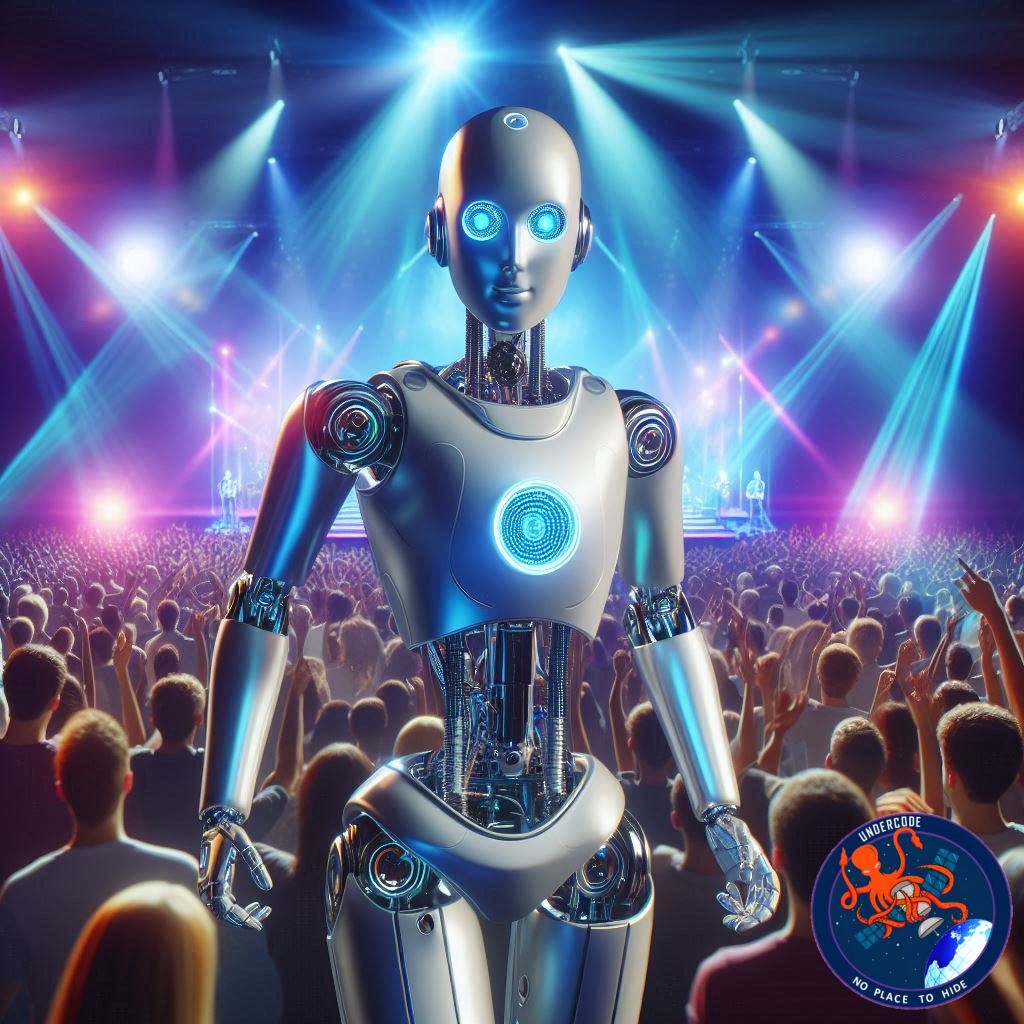
Russia has officially entered the global humanoid robotics arena, unveiling its first artificial intelligence-powered humanoid, AIdol, in a highly anticipated public demonstration in Moscow. The debut, however, did not go as planned: the robot took its first steps on stage before toppling face-first, instantly creating a viral moment that captured both laughter and curiosity across social media. While the fall was embarrassing, it underscored the immense challenges and bold ambitions behind Russia’s robotics efforts, signaling a milestone in domestic AI development.
A Rocky Introduction to Russia’s Humanoid Ambitions
On November 10, at the Yarovit Hall Congress Centre in Moscow, AIdol made its live debut. Set to a triumphant soundtrack reminiscent of cinematic triumph, the robot stepped gingerly onto the stage, waved at the audience—and immediately lost balance. Staff rushed to assist as the robot’s components scattered, and the curtain was drawn to obscure the mishap. Though humorous, the incident highlighted the complex interplay of mechanics, software, and real-time AI learning that humanoid robots demand.
Behind the Fall: Learning in Real Time
Developed by the Russian robotics firm Idol, AIdol represents a major stride in domestic AI innovation. CEO Vladimir Vitukhin framed the fall as a learning opportunity: “This is real-time learning, when a good mistake turns into knowledge, and a bad mistake turns into experience.” Engineers attributed the stumble to calibration issues, emphasizing that AIdol remains in a testing phase. The robot was temporarily removed from view while its balance systems and software were inspected.
Technical Marvels Under the Silicone Skin
AIdol operates on a 48-volt battery capable of six hours of continuous operation. Approximately 77% of its components are domestically produced, with plans to increase this figure to 93%. The humanoid contains 19 servomotors, allowing it to express over a dozen basic emotions and hundreds of micro-expressions. Its layered silicone skin is designed to mimic subtle human facial movements, enabling the robot to smile, show surprise, or convey thoughtfulness, bridging the gap between mechanical and human-like interaction.
Russia’s Global Robotics Ambitions
The presentation positioned AIdol as a demonstration of Russia’s aspirations to compete in a field dominated by the US and Japan. Yet, the dramatic stumble ignited online debate about the nation’s readiness for the global robotics race. Despite the fall, Idol emphasizes that every mishap is part of iterative improvement, reflecting both the technical and philosophical journey of AI development.
Social Media Reacts: Mockery, Humor, and Encouragement
As expected, AIdol’s tumble quickly became a viral sensation. Social media users alternately mocked and defended the robot, mixing humor with admiration. Comments ranged from quips about the robot’s “vodka-fueled shuffle” to encouragement praising the courage required to innovate publicly. Even amid jokes, many acknowledged the difficulty of robotics, noting that failure is an essential part of technological progress.
A Global Context: Robotics in the Spotlight
AIdol’s stumble comes at a moment when humanoid robots are increasingly visible worldwide. Just days earlier, Elon Musk danced with Tesla’s Optimus robot during a major company event, underscoring global attention on humanoid AI. While less choreographed, AIdol’s debut emphasizes that every technological leap carries risk—and public scrutiny.
The Path Forward
AIdol may have fallen, but the event is a symbolic step for Russian AI and robotics. Engineers insist that refinement comes through iteration, and public stumbles provide valuable lessons for both hardware calibration and AI learning. The debut, viral and widely discussed, ensures that AIdol has secured a place in the conversation about humanoid robots, both domestically and internationally.
What Undercode Say: Analytical Insights
The AIdol incident is more than a viral moment; it is a lens into the current state of AI robotics in Russia. Humanoid robots are inherently complex systems that combine mechanical engineering, AI-driven perception, motion algorithms, and interactive design. A fall during the first live demonstration is not merely an embarrassing accident—it is a revealing stress test of real-time systems. Calibration errors, which caused AIdol to topple, reflect the difficulty of integrating AI decision-making with precise motor control, particularly in machines designed to mimic nuanced human movements.
From a technical perspective, AIdol’s design—19 servomotors, emotion modeling, interactive dialogue capabilities, and primarily Russian-made components—demonstrates a sophisticated grasp of embodied intelligence. However, the hardware-software interface remains a significant challenge. Achieving human-like fluidity in movement requires not only accurate sensors and high-speed actuators but also robust AI models capable of predicting and compensating for shifts in balance dynamically.
The public reaction, both humorous and supportive, underscores the societal dimension of humanoid robotics. Social perception affects funding, adoption, and even international collaboration. Viral moments like this can catalyze interest, driving both public engagement and investment, while simultaneously highlighting the high stakes of innovation in visible arenas.
Economically, the emphasis on domestic production aligns with Russia’s strategic interest in reducing reliance on foreign components in critical technologies. Yet, achieving parity with global leaders such as Boston Dynamics or Japan’s SoftBank Robotics will require sustained iterative refinement, combined with breakthroughs in AI control systems, energy efficiency, and human-like interaction.
AIdol’s debut also raises philosophical questions about the nature of AI embodiment. Robots that walk, gesture, and express emotion blur the line between machine and social actor. Public failures, like AIdol’s fall, humanize the technology, fostering a narrative where trial, error, and persistence are essential steps toward sophistication. These moments provide engineers and AI researchers with live data on performance limits, user perception, and system adaptability.
Moreover, AIdol’s mixed reception reflects a broader challenge for nations entering the global robotics arena: innovation is as much a matter of engineering skill as it is of perception management. The Russian robotics industry must navigate both technological hurdles and international scrutiny, balancing the dual demands of creating functional humanoids while proving credibility on the world stage.
Ultimately, AIdol’s stumble is emblematic of the iterative nature of robotics. In humanoid AI, progress is measured in small victories—incremental improvements in balance, dexterity, and responsiveness—rather than flawless debuts. Each misstep contributes to a larger trajectory of refinement, learning, and eventual sophistication.
Fact Checker Results
✅ AIdol is Russia’s first AI-powered humanoid robot publicly showcased.
✅ The robot operates with primarily Russian-made components and a 48-volt battery system.
❌ The fall was not staged; it was a genuine mishap during the live demonstration.
Prediction
📊 AIdol’s debut, though clumsy, positions Russia as an emerging competitor in humanoid robotics. Within 3–5 years, iterative improvements are likely to yield more stable locomotion, sophisticated emotional expression, and advanced interaction capabilities. Public and social media attention will continue to accelerate investment, ensuring that Russia remains a visible player in global AI robotics competitions.
🕵️📝✔️Let’s dive deep and fact‑check.
References:
Reported By: timesofindia.indiatimes.com
Extra Source Hub (Possible Sources for article):
https://stackoverflow.com
Wikipedia
OpenAi & Undercode AI
Image Source:
Unsplash
Undercode AI DI v2
Bing
🔐JOIN OUR CYBER WORLD [ CVE News • HackMonitor • UndercodeNews ]
📢 Follow UndercodeNews & Stay Tuned:
𝕏 formerly Twitter 🐦 | @ Threads | 🔗 Linkedin | 🦋BlueSky | 🐘Mastodon


