
Listen to this Post
A New Dawn in Space Ambition
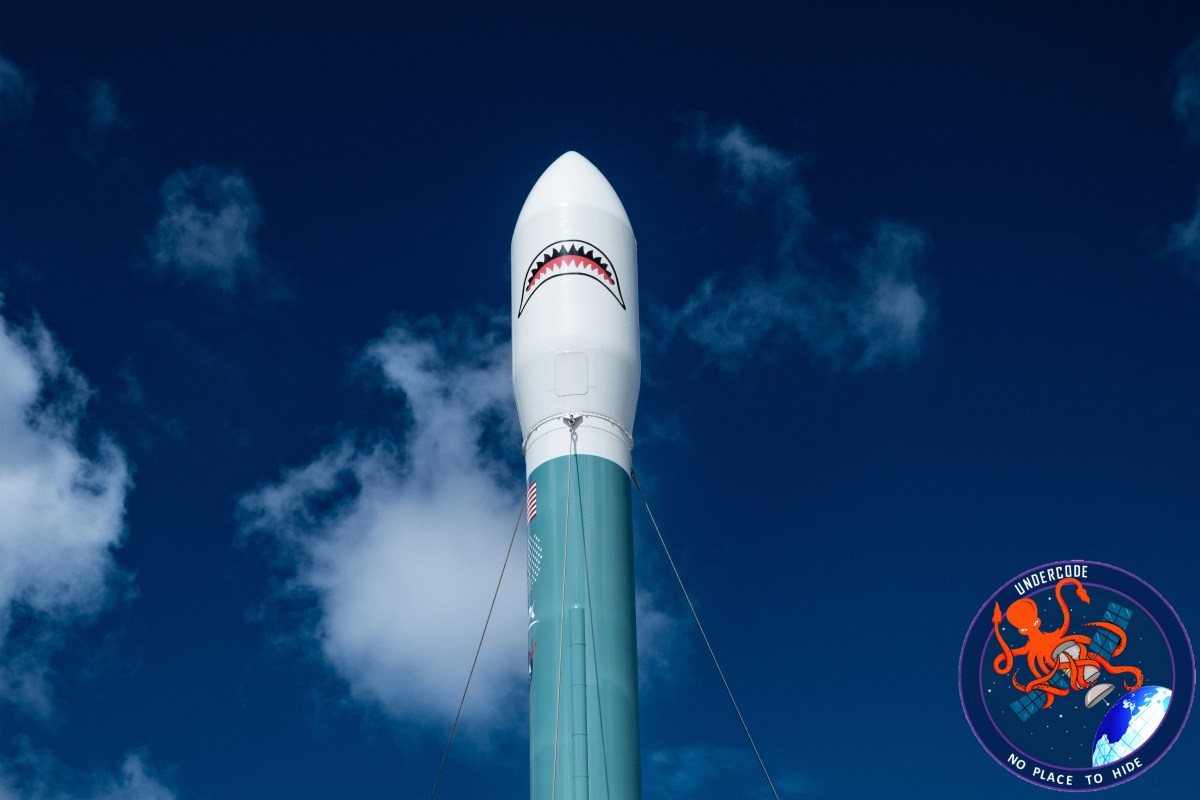
Blue Origin, the aerospace company founded by Jeff Bezos, is once again preparing for a crucial test of its massive New Glenn rocket—a towering 322-foot spacecraft designed to carry humanity’s dreams deeper into the cosmos. After multiple delays caused by both earthly and cosmic weather, the company will make another attempt on Thursday to launch from Florida’s Space Coast. The mission, commissioned by NASA, aims to send the twin ESCAPADE spacecraft toward Mars to study the planet’s magnetic environment and climate history.
The launch window opens at 2:57 p.m. (1957 GMT) and will last 88 minutes. If successful, this mission will not only mark a key scientific milestone for NASA but could redefine Blue Origin’s place in the global space race, challenging the dominance of Elon Musk’s SpaceX.
The Long Road to Mars: A Week of Delays and Challenges
Over the past week, Blue Origin’s launch schedule has faced two major setbacks. On Sunday, poor weather conditions on Earth forced the first postponement. Then, on Wednesday, the company delayed again due to an unexpected cosmic factor: a surge in solar activity.
NASA expressed concerns that highly charged particles from the Sun could interfere with the spacecraft’s delicate electronics as it journeys through space. The Space Weather Prediction Center reported that a geomagnetic storm—responsible for dazzling aurora displays across North America—was subsiding, but the risk was still significant enough to warrant caution.
This rare scenario highlights the unpredictable nature of spaceflight. Even the most advanced rockets and well-funded missions remain vulnerable to the capricious forces of nature, both on Earth and beyond it.
A High-Stakes Rivalry: Bezos vs. Musk in the Space Race
Blue Origin’s second attempt comes amid fierce competition between Bezos and his long-time rival, Elon Musk. The two billionaires have been at the forefront of private space innovation, yet their companies approach the challenge very differently. Musk’s SpaceX has already mastered reusable rocket technology, consistently landing boosters and drastically cutting costs. Blue Origin, however, is still chasing that benchmark.
New Glenn’s inaugural flight earlier this year succeeded in placing its payload into orbit and performing several in-space tests. However, its reusable first-stage booster—designed to land on an ocean platform for recovery—failed during descent and was lost. Thursday’s mission represents more than another test launch; it is Blue Origin’s second chance to prove that it can compete technically and operationally with SpaceX’s Falcon 9 and Starship systems.
If Blue Origin can demonstrate reliable booster recovery, it could signal a turning point for Bezos’ company, unlocking commercial contracts and strengthening its credibility within NASA’s future lunar and Mars missions.
NASA’s Ambitious Mars Mission: ESCAPADE Explained
The ESCAPADE mission—short for “Escape and Plasma Acceleration and Dynamics Explorers”—is a twin-spacecraft project designed to orbit Mars and analyze how the solar wind interacts with the planet’s magnetic field. By understanding this process, scientists hope to reconstruct Mars’ climate history and learn how it lost its atmosphere over time.
The findings could help prepare for eventual human exploration of the Red Planet, one of NASA’s long-term objectives. Each spacecraft will orbit Mars in slightly different paths, providing a dual perspective on the planet’s dynamic magnetic system.
The Science and Symbolism Behind the Launch
Beyond its scientific purpose, the New Glenn launch carries symbolic weight. It represents a transition point for Blue Origin—a company often criticized for slow progress compared to SpaceX. Bezos’ philosophy of “gradatim ferociter” (step by step, ferociously) has guided the company since its inception, emphasizing methodical advancement over flashy breakthroughs.
However, the pressure has intensified. With SpaceX leading NASA’s Artemis lunar program and building interplanetary transport systems, Blue Origin must now deliver tangible results to maintain relevance. Thursday’s launch will serve as both a technical trial and a public statement: Blue Origin is not backing down.
What Undercode Say:
Blue Origin’s persistence reveals a critical truth about modern space economics—innovation is no longer optional; it’s survival.
From a strategic standpoint, this launch serves multiple layers of purpose. First, it validates Blue Origin’s capability to serve NASA’s deep-space logistics needs, a domain previously dominated by SpaceX. Second, the reusability factor is key. Every successful booster recovery reduces mission costs by millions and improves turnaround speed, something SpaceX has mastered and monetized through a decade of iteration.
Bezos is now entering that stage of iterative learning. Losing a booster on the first attempt wasn’t failure—it was data. If this second launch achieves full recovery, it will dramatically change Blue Origin’s market perception. Investors, defense contractors, and NASA will view the company as a mature contender rather than a lagging challenger.
Furthermore, the ESCAPADE mission’s focus on Mars’ magnetic environment fits perfectly into the broader human exploration roadmap. Understanding solar radiation’s effect on Mars directly informs how future astronauts might survive long-term exposure beyond Earth’s magnetic shield.
On a competitive level, Musk and Bezos are engaged in an ideological duel as much as a technological one. Musk’s aggressive, open-testing model contrasts sharply with Bezos’ cautious and calculated style. Yet, both are necessary archetypes in space innovation. One pushes boundaries recklessly; the other stabilizes and refines.
If Blue Origin succeeds this time, it could shift public perception from “the slower company” to “the patient innovator.” In the long view, Bezos’ incremental progress may prove more sustainable, especially if New Glenn’s design achieves higher payload efficiency and lower reentry wear than Falcon 9.
Technically, the challenge of reusability lies in precision landing and heat management. Every microsecond in trajectory calculation determines whether the booster touches down intact or vanishes into the Atlantic. If Blue Origin’s engineers have fine-tuned guidance systems and thermal shielding after January’s failure, this mission could finally validate years of silent development.
Ultimately, the launch encapsulates humanity’s broader quest: balancing risk and patience in pursuit of the unknown. Blue Origin’s story, often overshadowed by Musk’s flamboyance, may soon become one of quiet vindication.
🔍 Fact Checker Results
✅ NASA’s ESCAPADE mission is confirmed as a dual-spacecraft project to study Mars’ magnetosphere.
✅ The launch delays were caused by terrestrial weather and solar storm activity, as reported by NASA and the Space Weather Prediction Center.
✅ Blue Origin’s first New Glenn booster was lost during its January descent, verified by AFP and official statements.
📊 Prediction
🚀 If Thursday’s launch succeeds, Blue Origin’s reputation in commercial spaceflight could surge, narrowing the gap with SpaceX.
🌌 A successful booster recovery may lead to renewed NASA partnerships and increased investor confidence.
🔥 Expect a new chapter in the Bezos–Musk rivalry, with both billionaires steering humanity closer to Mars.
🕵️📝✔️Let’s dive deep and fact‑check.
References:
Reported By: www.channelstv.com
Extra Source Hub (Possible Sources for article):
https://www.reddit.com/r/AskReddit
Wikipedia
OpenAi & Undercode AI
Image Source:
Unsplash
Undercode AI DI v2
Bing
🔐JOIN OUR CYBER WORLD [ CVE News • HackMonitor • UndercodeNews ]
📢 Follow UndercodeNews & Stay Tuned:
𝕏 formerly Twitter 🐦 | @ Threads | 🔗 Linkedin | 🦋BlueSky | 🐘Mastodon


