
Listen to this Post
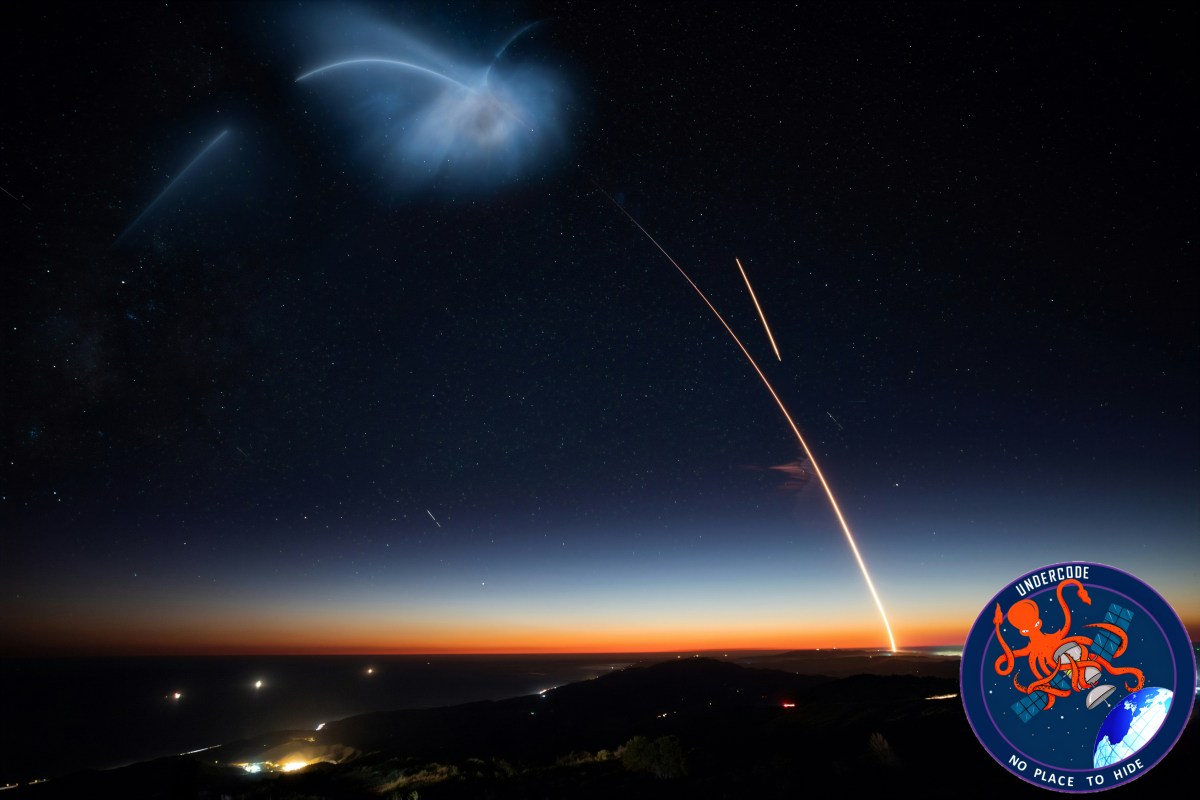
NASA’s ambitious ESCAPADE mission is back on track with a new liftoff time, marking another step toward exploring the dynamics of Mars’ magnetic environment. Originally scheduled earlier, Blue Origin has now reset the countdown clock, setting the new launch for 3:55 p.m. EST. This adjustment ensures all systems are fully optimized, bringing the twin ESCAPADE spacecraft closer to their journey into mid-Earth orbit and eventually toward Mars. The mission aims to study how plasma and charged particles interact with the Martian atmosphere—a critical step in understanding the Red Planet’s environment and its space weather patterns.
Mission Overview: ESCAPADE Launch Update
Blue Origin’s New Glenn rocket is preparing for its second-ever flight, carrying NASA’s ESCAPADE (Escape and Plasma Acceleration and Dynamics Explorers) twin spacecraft. The live broadcast of the launch captures the final terminal count, now scheduled at 3:55 p.m. EST. The mission will deploy the twin spacecraft into mid-Earth orbit before they continue their trajectory toward Mars, where they will study plasma interactions, atmospheric escape processes, and the magnetic dynamics that influence Martian space weather.
The ESCAPADE mission represents a significant milestone in NASA’s ongoing efforts to understand planetary atmospheres and their interactions with solar winds. By examining how charged particles behave around Mars, scientists hope to improve models for atmospheric loss and gain insights into the planet’s evolutionary history. This information will be crucial not only for scientific research but also for future human missions to Mars.
Mission Goals and Scientific Importance
ESCAPADE’s twin spacecraft are designed to map how Mars’ magnetic fields interact with the solar wind. Understanding these interactions will provide critical insights into the planet’s atmosphere, including how it has evolved over billions of years. The mission’s data will complement previous Mars studies and contribute to a broader understanding of planetary magnetospheres across the solar system.
NASA and Blue Origin’s collaboration emphasizes innovation in space launch technology. The New Glenn rocket, a reusable heavy-lift vehicle, reflects the growing shift toward cost-effective and sustainable space exploration. The ESCAPADE mission demonstrates how private-public partnerships can accelerate science missions while testing new technologies in real-world conditions.
What Undercode Say: Analytical Insights
The ESCAPADE mission is a pivotal test of both scientific ambition and technological execution. Blue Origin’s reset of the launch clock underscores the inherent complexities of space operations, where even minor adjustments can significantly impact mission timing and trajectory accuracy. The choice of mid-Earth orbit as the initial staging point is strategic, providing the spacecraft with the energy efficiency needed to reach Mars while allowing for extensive system checks.
Scientifically, the mission will address key unknowns about Mars’ magnetosphere. ESCAPADE’s twin spacecraft will measure plasma density, magnetic field fluctuations, and particle acceleration processes that occur when solar wind interacts with the planet’s magnetic regions. Such data could redefine our understanding of atmospheric loss—a factor that has shaped Mars’ transformation from a wetter, warmer environment to the arid planet observed today.
From a technological perspective, New Glenn’s successful deployment of ESCAPADE will solidify Blue Origin’s reputation as a reliable launch provider for complex scientific missions. The emphasis on reusability and rapid turnaround of heavy-lift rockets represents a paradigm shift in reducing launch costs while maintaining high precision. This also opens doors for more frequent, high-value planetary missions that were previously constrained by budget and launch availability.
The twin spacecraft design ensures redundancy and data validation, allowing NASA to cross-verify measurements in real-time. This approach reduces scientific risk and enhances the reliability of the collected data. The ESCAPADE mission also serves as a testing ground for future Martian atmospheric studies and could inform the development of next-generation space weather forecasting tools—crucial for both robotic and human explorers.
The mission’s broader implications extend beyond Mars. Insights gained from ESCAPADE could be applied to Earth’s own magnetosphere studies, offering comparative planetary science data that helps refine models of solar wind interactions. Additionally, ESCAPADE’s journey emphasizes the growing trend of public-private collaboration in space exploration, highlighting how private aerospace companies like Blue Origin are increasingly integral to advancing scientific frontiers.
With the reset countdown, all eyes are on Blue Origin’s live coverage, highlighting the growing public interest in planetary missions. ESCAPADE’s twin spacecraft not only symbolize scientific discovery but also the evolving infrastructure of modern spaceflight. As NASA and Blue Origin continue to push boundaries, each launch provides invaluable lessons for both spacecraft design and interplanetary navigation.
Fact Checker Results
✅ Blue Origin’s New Glenn rocket is scheduled for the ESCAPADE mission.
✅ The mission carries twin spacecraft to study Mars’ magnetosphere and plasma dynamics.
❌ The launch has not yet occurred; the liftoff is pending at 3:55 p.m. EST.
📊 Prediction
ESCAPADE’s successful deployment could pave the way for more sophisticated Mars atmospheric missions within the next five years. Expect increased reliance on reusable heavy-lift rockets like New Glenn for cost-effective interplanetary science. Data from the twin spacecraft may lead to new models of Martian atmospheric loss, improving predictions for future human missions to the Red Planet. 🌌🚀
🕵️📝✔️Let’s dive deep and fact‑check.
References:
Reported By: science.nasa.gov
Extra Source Hub (Possible Sources for article):
https://www.quora.com
Wikipedia
OpenAi & Undercode AI
Image Source:
Unsplash
Undercode AI DI v2
Bing
🔐JOIN OUR CYBER WORLD [ CVE News • HackMonitor • UndercodeNews ]
📢 Follow UndercodeNews & Stay Tuned:
𝕏 formerly Twitter 🐦 | @ Threads | 🔗 Linkedin | 🦋BlueSky | 🐘Mastodon


