
Listen to this Post
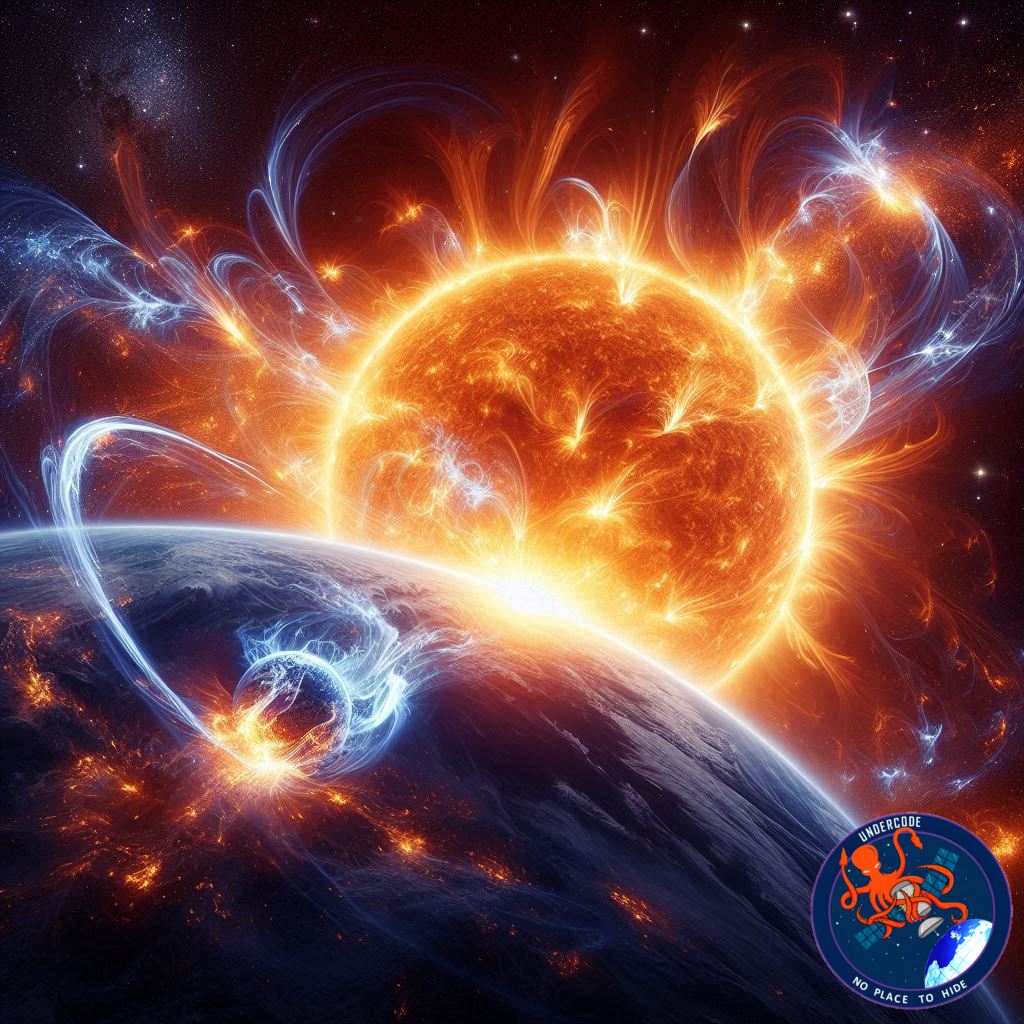
The Sun unleashed a powerful solar flare early on November 14, sending a surge of energy hurtling through space and capturing the attention of scientists worldwide. Peaking at 3:30 a.m. ET, this flare was recorded by NASA’s Solar Dynamics Observatory, which monitors the Sun around the clock. As the most intense class of solar flares, this event serves as a reminder of how closely our planet is connected to the activity of its nearest star.
Solar flares are sudden, intense bursts of radiation caused by magnetic energy released from the Sun’s atmosphere. While they occur frequently, only the strongest flares can have noticeable effects on Earth. The recent flare was classified as an X4.0, placing it among the most extreme solar events. X-class flares are capable of disrupting radio communications, navigation systems, and even electrical power grids. In addition, they pose potential hazards to spacecraft and astronauts operating beyond Earth’s protective magnetic field.
The observation of this flare highlights the critical work of NASA and other agencies in monitoring space weather. NASA’s Solar Dynamics Observatory captured detailed imagery, helping scientists track the flare’s evolution and predict its potential impact. Meanwhile, the NOAA Space Weather Prediction Center provides official warnings and forecasts to prepare for these energetic solar events. Such collaborations between research and operational agencies are essential to minimizing risks from solar activity.
Solar flares like the X4.0 event originate from active regions on the Sun, where magnetic fields become twisted and unstable. When these fields snap or realign, they release enormous amounts of energy, often accompanied by coronal mass ejections—massive bursts of solar plasma that can intensify the effects on Earth. While this flare’s direct impact on our planet may be limited to increased geomagnetic activity, satellite operators, power grid managers, and aviation authorities closely monitor these phenomena to prevent disruptions.
Historically, intense solar flares have caused both technological and natural phenomena. Radio blackouts, GPS signal degradation, and minor power grid disturbances are common during major solar events. In extreme cases, such as the Carrington Event of 1859, flares can induce geomagnetic storms capable of knocking out telegraph systems, sparking fires, and creating spectacular auroras at lower latitudes. Although modern technology is more resilient, a flare of this magnitude serves as a test of our preparedness.
The X4.0 flare reinforces the importance of continuous observation and predictive modeling. NASA’s fleet of spacecraft, including those monitoring the solar atmosphere, particles, and magnetic fields, provides invaluable data to understand not just the flare itself but also the broader space environment. This allows scientists to issue timely alerts, giving governments, industries, and individuals the information needed to respond effectively.
What Undercode Say:
The occurrence of an X4.0 solar flare is both a spectacular scientific event and a tangible reminder of Earth’s vulnerability to space weather. While media coverage often focuses on the immediate imagery or dramatic nature of flares, the real significance lies in the cascading effects such an event can trigger. Radio communications, GPS networks, and power infrastructure are all susceptible to disruption. This particular flare, occurring during early morning hours in U.S. time zones, minimizes immediate public impact, but its implications for aviation, satellites, and astronauts are more pronounced.
From a scientific perspective, X-class flares like this are critical opportunities to study solar dynamics. The data collected helps refine models predicting flare intensity, trajectory, and potential geomagnetic consequences. By comparing imagery from the Solar Dynamics Observatory with magnetosphere monitoring satellites, researchers can better estimate the likelihood of coronal mass ejections interacting with Earth. This enhances predictive accuracy and informs mitigation strategies for infrastructure vulnerabilities.
Another angle to consider is the growing reliance on technology that is sensitive to space weather. Navigation systems, financial networks, and communication satellites operate in an environment that is increasingly exposed to solar radiation. A flare of this strength can induce geomagnetic currents in power grids, potentially leading to short-term outages or damage to transformers. Consequently, proactive measures, including grid hardening and satellite shielding, are more critical than ever.
Moreover, the flare provides insights into solar cycles and the Sun’s long-term behavior. Scientists can use events like this to track patterns in solar activity, which may help forecast future periods of heightened space weather risk. Understanding these cycles is vital for long-term planning in sectors ranging from aerospace engineering to global communications.
While the flare may not directly impact daily life for most individuals, its scientific and operational implications are profound. By studying X-class events, space weather researchers can develop more accurate early warning systems, optimize satellite trajectories, and safeguard astronauts on missions beyond Earth’s magnetosphere. These insights also emphasize the broader theme of interconnectivity: our technological society exists within a dynamic cosmic environment that cannot be ignored.
In summary, the X4.0 flare is a vivid demonstration of the Sun’s immense power. Beyond the dazzling imagery, the event underscores the need for vigilance, research, and proactive mitigation in an era where solar activity can have real-world consequences for technology and human activity. For experts and policymakers, every flare is a data point that strengthens the resilience of our systems against the unpredictable nature of space weather.
Fact Checker Results:
✅ The flare occurred on November 14 at 3:30 a.m. ET, captured by NASA’s Solar Dynamics Observatory.
✅ X-class flares are the most intense solar flares, with X4.0 being particularly strong.
❌ There is no immediate catastrophic impact on Earth, but technological systems can be affected.
Prediction:
📊 With the Sun entering a period of heightened activity, more X-class flares are likely over the coming months. Expect sporadic disruptions to radio communications, satellite operations, and power grids, with auroras visible at unusual latitudes. Vigilance and preparedness will be key as space weather continues to challenge our technologically dependent society.
🕵️📝✔️Let’s dive deep and fact‑check.
References:
Reported By: science.nasa.gov
Extra Source Hub (Possible Sources for article):
https://www.medium.com
Wikipedia
OpenAi & Undercode AI
Image Source:
Unsplash
Undercode AI DI v2
Bing
🔐JOIN OUR CYBER WORLD [ CVE News • HackMonitor • UndercodeNews ]
📢 Follow UndercodeNews & Stay Tuned:
𝕏 formerly Twitter 🐦 | @ Threads | 🔗 Linkedin | 🦋BlueSky | 🐘Mastodon


