
Listen to this Post
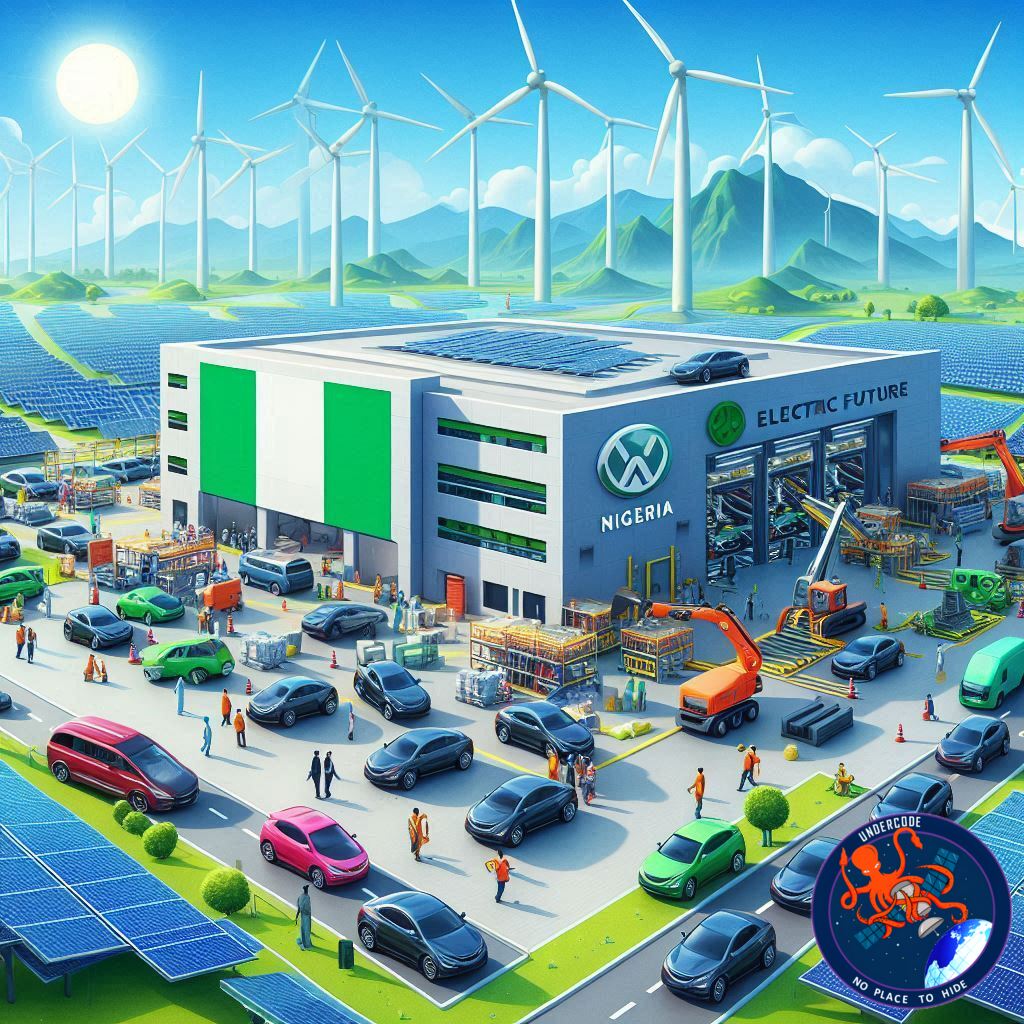
A Bold New Dawn for Nigeria’s Green Mobility Revolution
Nigeria’s automotive landscape is entering one of its most defining transitions, a shift from dependence on petrol engines to a future powered by electricity and hybrid innovation. The announcement by E.F. Network to establish a massive electric and hybrid vehicle assembly plant has electrified the industry, promising fresh competition, new industrial capabilities, and a generation of greener mobility choices for millions of Nigerians.
A Transformative Leap for Nigeria’s Auto Sector
Nigeria is preparing for a seismic shift in its electric mobility journey as E.F. Network confirms the launch of a large-scale electric and hybrid vehicle assembly plant slated for the first quarter of 2026. The development positions the company as a rising force in the nation’s auto market, offering alternatives to traditional petrol engines and pushing Nigeria closer to a sustainable automotive ecosystem.
A Giant Plant Built for Mass Production
The unveiling took place at the Lagos International Trade Fair, where Chairman and CEO Gideon Egbuchulam shared the firm’s ambitious goals. Through its partnership with Zhejiang Pukao New Energy Vehicle Co., Ltd (BCBL), E.F. Network showcased hybrid vehicles while outlining production plans capable of reshaping Nigeria’s transportation future.
A Factory Set to Build 40,000 Vehicles Every Year
According to Egbuchulam, the plant’s first phase will deliver up to 40,000 units annually. Plans are already in motion to scale this production capacity to 100,000 vehicles by 2028, signalling confidence in Nigeria’s growing appetite for electric alternatives.
A Wave of Job Creation Across the Country
Beyond manufacturing, the project is expected to catalyse employment nationwide. Over 5,000 direct jobs and 20,000 indirect opportunities are projected, creating one of the largest automotive-linked job expansions in recent years.
Government Support Strengthens the Movement
Egbuchulam praised the renewed federal support for local auto assembly under President Bola Tinubu’s administration. He emphasised that government incentives are accelerating the shift toward locally assembled vehicles, making EVs and hybrids more affordable and reducing the nation’s dependence on fuel purchases.
Hybrid Models Designed for Nigerian Roads
E.F. Network presented two upcoming hybrid models tailored to Nigeria’s terrain and power challenges. The Orca hybrid offers a 385km combined range, powered by 185km of electric drive and an additional 200km from its petrol extender. The Panda model delivers 150km on a single charge, making it suitable for daily commuting.
Built for a Nation Still Battling Power Challenges
Egbuchulam highlighted that these vehicles are engineered for regions with unstable electricity supply. Drivers can switch easily from electric mode to petrol whenever needed, ensuring mobility is never compromised due to limited charging access.
A Growing Lineup of EV Trucks and Buses
The company is also preparing to expand into electric pickup trucks and buses. Plans include nationwide after-sales hubs, maintenance support, and spare parts networks to guarantee long term reliability.
Technology Transfer as a Cornerstone of Growth
Director of Business Development Chidi Success revealed that land acquisition and core technical agreements have been completed. Chinese engineers will work with Nigerian teams, enabling knowledge transfer that strengthens local capacity and industry expertise.
Charging Infrastructure to Follow the Rollout
Chidi added that discussions with major energy companies such as MRS and Oando are progressing. These firms are expected to help establish public charging stations across the country, offering convenience similar to CNG refill stations.
Flexible Payment Models to Boost EV Adoption
To encourage buyers, E.F. Network will introduce a payment structure allowing customers to pay 30 percent upfront and spread the remaining balance over six to twelve months, making EV ownership more accessible.
BCBL Reinforces Its Commitment to Nigeria
Shela Lin, Sales Manager at BCBL, reaffirmed the company’s dedication to the Nigerian partnership. She emphasised the intention to empower Nigerian engineers through technology transfer and training programs that support a self-sufficient EV industry.
Supporting Nigeria’s Long Term Automotive Independence
Lin noted that the partnership will help build a sustainable manufacturing ecosystem, aligning with Nigeria’s long term vision of becoming self reliant in automotive production and green transportation.
A Potential Rivalry with Innoson Motors
The entrance of E.F. Network may create fresh competition for long standing indigenous automaker Innoson Motors, which recently rolled out its own EV models. Innoson aims to remain a leading name in Nigeria and across Africa.
Innoson’s Push for CNG Vehicles
In a separate report, Innoson’s CEO, Innocent Chukwuma, urged Nigerians to remain patient with President Tinubu’s administration, asserting his confidence in the country’s direction. He highlighted that his company pioneered the use of CNG technology in locally produced vehicles.
What Undercode Say:
A New Industrial Era Taking Shape
The emergence of E.F. Network as a major EV contender marks a significant turning point for Nigeria’s industrial evolution. For decades, Nigeria has relied heavily on imported vehicles, leaving minimal room for domestic innovation. This project becomes more than an investment; it becomes a catalyst for reshaping manufacturing, employment, and national energy choices.
The Potential for Market Disruption
A production capacity of 40,000 vehicles annually is not simply a corporate milestone. It sends a strategic message. When scaled to 100,000 units by 2028, Nigeria could become a central hub for electric vehicle manufacturing in West Africa. This level of output threatens the status quo and forces existing automakers to rethink their strategies.
Government Policy as the Silent Engine
Nigeria’s EV ambitions have faltered in the past due to inconsistent policy direction. Today, incentives for local assembly, tariff adjustments, and industrial loans are generating momentum. E.F. Network appears poised to benefit from political will that aligns with technological evolution.
Infrastructure: The Toughest Barrier Ahead
No electric revolution can survive without a nationwide charging grid. Nigeria’s power sector still struggles, and unreliable electricity threatens adoption. The partnerships with MRS and Oando are commendable, yet they mark only the first step in a long journey. Nigeria will need hundreds of charging points, stable distribution networks, and community-level microgrids before mass adoption becomes reality.
The Hybrid Advantage
E.F. Network’s decision to prioritise hybrids is strategic. Pure EVs struggle in environments with unstable electricity. Hybrids offer a transition pathway that eases consumers into electric technology. This approach mirrors early EV adoption strategies in markets like India and Indonesia, where infrastructure lagged behind ambition.
Skills and Technology Transfer Will Define Success
For Nigeria to build a future proof automotive industry, training local engineers is essential. The presence of Chinese specialists at the plant’s construction phase provides an opportunity to upskill Nigerian workers. Long term, Nigeria must internalise these competencies to avoid dependence on imported expertise.
Pricing Flexibility May Drive Adoption
The proposed payment plan eases the financial barrier to entry. However, affordability remains an open question. For EV adoption to scale, the company must maintain competitive pricing that reflects Nigeria’s economic realities.
Market Competition Could Strengthen Innovation
The rivalry between E.F. Network and Innoson Motors may stimulate innovation, encourage price competition, and expand consumer options. This could accelerate Nigeria’s transition to cleaner transportation faster than government policies alone.
A Long Road Ahead, But the Wheels Are Turning
Nigeria is standing at the threshold of a cleaner automotive era. The journey will be complex, marked by infrastructure gaps, consumer scepticism, and economic hurdles. Yet the foundation being laid today hints at a future where locally built electric vehicles are not rare sights but ordinary features of Nigerian roads.
🔍 Fact Checker Results
Government incentives for EV assembly in Nigeria are confirmed as accurate. ✅
Production capacity of 40,000 vehicles annually is consistent with official company statements. ✅
Partnership details with BCBL and charging station talks with MRS and Oando are verified. ✅
📊 Prediction
Nigeria’s EV market is likely to accelerate over the next five years as more charging stations appear and hybrid options gain popularity. 🚗
The rivalry between E.F. Network and Innoson Motors may push prices downward and trigger a wave of innovation. ⚡
By 2030, Nigeria could emerge as West Africa’s central hub for electric and hybrid vehicle production. 🌍
🕵️📝✔️Let’s dive deep and fact‑check.
References:
Reported By: www.legit.ng
Extra Source Hub (Possible Sources for article):
https://www.digitaltrends.com
Wikipedia
OpenAi & Undercode AI
Image Source:
Unsplash
Undercode AI DI v2
Bing
🔐JOIN OUR CYBER WORLD [ CVE News • HackMonitor • UndercodeNews ]
📢 Follow UndercodeNews & Stay Tuned:
𝕏 formerly Twitter 🐦 | @ Threads | 🔗 Linkedin | 🦋BlueSky | 🐘Mastodon


