
Listen to this Post
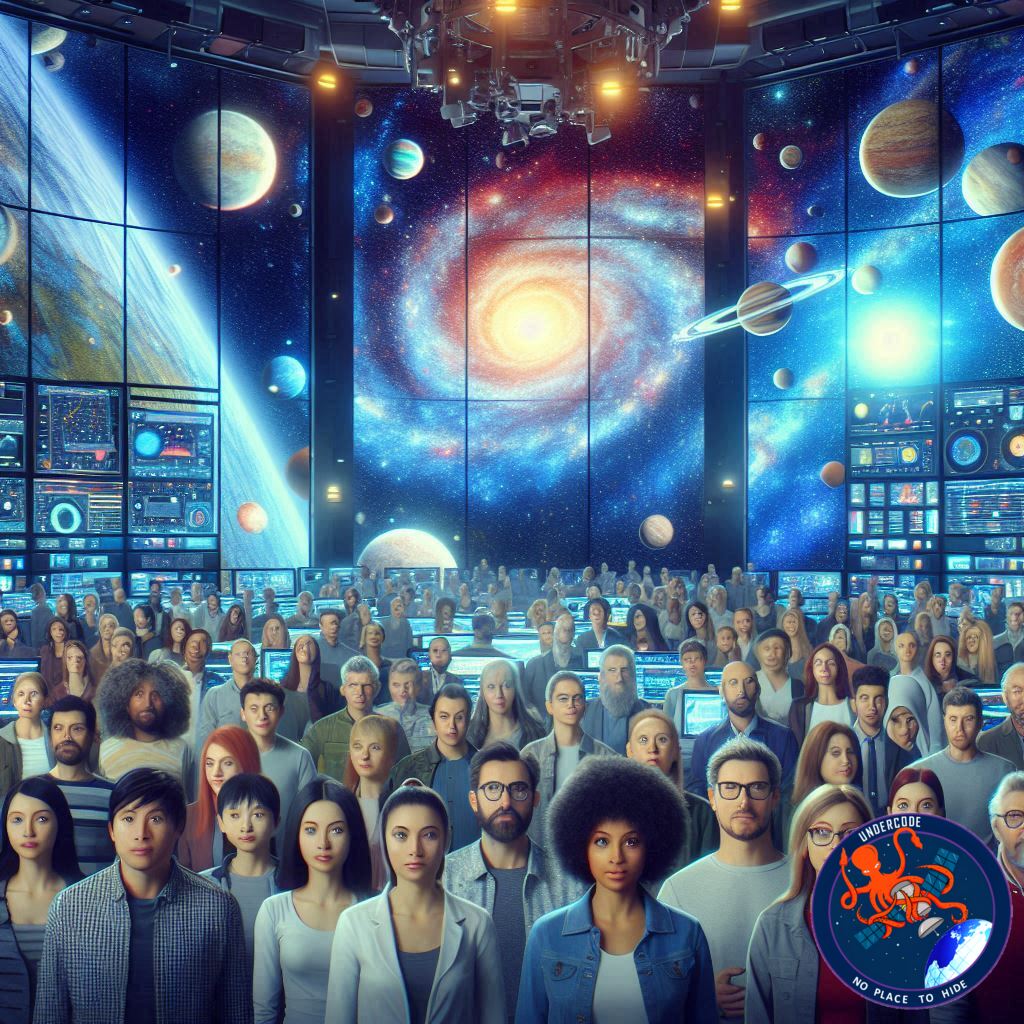
A Rising Movement in Space Exploration
A quiet revolution is unfolding far from the laboratories of NASA and university observatories. It is happening in living rooms, on back patios, and in improvised home observatories where thousands of everyday people are stepping into the role of astronomers. Exoplanet Watch, a NASA-affiliated citizen-science initiative, has opened the doors to a community where beginners, hobbyists, and seasoned sky watchers collaborate to study alien worlds. This project is more than a scientific effort. It is a living, breathing community built on curiosity, inclusivity, and the shared thrill of discovering something that exists hundreds of light-years away.
Below is a full English rewrite and expansion of the original article, crafted to be more vivid, human, and compelling.
🌍 Summary of the Exoplanet Watch Community
A Global Invitation to Explore New Worlds
Exoplanet Watch stands as one of the most accessible astronomy communities in the modern era. It welcomes absolutely anyone, regardless of experience, background, or scientific training. Participants, known as Watchers, can join without owning a telescope, and they can immediately step into ongoing scientific discovery. More than three thousand Watchers interact daily, sharing sky images, teaching newcomers, discussing exoplanet observations, and learning how to detect the faint dips in starlight that reveal a distant planet crossing its host star.
An Open Door to Beginners
The program emphasizes inclusivity. Newcomers receive guidance through a New User Checklist, opportunities to ask questions in Slack, and pathways to learn astrophotography, light-curve analysis, and observation planning. There is no barrier to entry. The project encourages participants to invite friends, experiment, explore, and enjoy the cosmos at their own pace.
A Community Built on Respect and Ethical Participation
All Watchers agree to follow the American Astronomical Society’s Code of Ethics and Anti-Harassment Policies, reinforcing a culture where everyone feels welcome. Issues can be reported privately through email, Slack, or JPL’s Ethics Program, ensuring a safe and supportive environment for every member.
Celebrating Community Achievements
Each month, Exoplanet Watch features a Watcher of the Month, highlighting individuals who show passion, dedication, or unique contributions. Recently, Deanna Rose from Texas, an IT professional by day and astronomy enthusiast by night, shared her love for exploring “strange new worlds” with her ZWO SeeStar S50 telescope. Her blend of Star Trek inspiration and real scientific engagement embodies the spirit of the project.
The Heart of the Milky Way Captured by Watchers
The Astrophoto of the Month section showcases extraordinary imagery produced by members. One recent highlight, “Milky Way Heart in Radio” by Dr. Joe Bright, Dr. Wael Farah, JT Earwicker, and the ATA team, revealed the Galactic Center in radio wavelengths. The image uncovered structures invisible to optical telescopes, including arcs of plasma and the supermassive black hole Sagittarius A. These contributions show how citizen science can capture wonders typically reserved for large observatories.
A Place to Learn, Collaborate, and Share
Community members frequently post in the astrophotography Slack channel, exchanging techniques, discussing equipment, and celebrating each other’s work. The platform provides a unique blend of scientific collaboration and creative expression, empowering people to explore the universe from home.
What Undercode Say:
The Expansion of Citizen Science
The rise of Exoplanet Watch represents a fundamental shift in how scientific research is conducted. Instead of limiting discoveries to a small group of institutions, the program decentralizes astronomy by mobilizing a vast network of observers. This structure creates resilience, diversity of data, and a deeper sense of ownership among participants.
Democratizing Astrophysics
What stands out most is the way the project democratizes access to real exoplanet science. Historically, detecting exoplanets required high-end observatories and specialized teams. Today, affordable telescopes and advanced image-processing software make it possible for ordinary people to capture transits. Exoplanet Watch takes this one step further by removing equipment barriers entirely. People without telescopes can still participate by analyzing existing datasets or contributing through discussions, planning, and education.
The Power of Community-Driven Data
Exoplanet transit observations require repeated monitoring to refine orbital periods and confirm changes in planetary motion. Professional observatories cannot observe continuously, but a distributed global community can. Citizen scientists fill observational gaps, generating data that strengthen measurements and increase accuracy for missions like TESS and JWST.
A Psychological Component: The Joy of Contribution
Deanna Rose’s testimonial reflects a broader emotional truth. People don’t just join the project to look at stars. They join to feel part of something meaningful. The blend of learning, challenge, and contribution triggers deep motivation. It transforms astronomy from distant theory into personal involvement. The feeling of capturing your first transit curve or contributing to real research can be profoundly rewarding.
Why This Matters in the Long Run
The future of astrophysics may rely heavily on collaborative citizen networks. As space telescopes gather increasing amounts of data, the bottleneck is no longer observation but analysis. Citizen science bridges this gap. It builds a trained, enthusiastic global workforce supporting missions that will define the next fifty years of space exploration.
The Cultural Influence
Exoplanet Watch has a cultural dimension as well. Sci-fi fans like Deanna bring their imagination into real science, fulfilling dreams that once belonged solely to fiction. This convergence of culture and science nurtures creativity, innovation, and long-term engagement.
The Hidden Benefit: Skill Building
Participants learn data analysis, astrophotography, light-curve interpretation, and scientific communication. These are transferrable skills that build technological literacy and deepen understanding of how modern science works.
A Future Powered by Citizen Discovery
With continuous growth and increasing visibility, Exoplanet Watch could soon become one of the largest distributed observatories on Earth. Its model might inspire similar networks in asteroid tracking, climate monitoring, and deep-sky imaging. The potential is enormous, and the human enthusiasm behind it makes its future even brighter.
🔍 Fact Checker Results
Exoplanet Watch is open to all participants, including beginners. ✅
A telescope is not required to join or contribute. ✅
Monthly features such as Watcher of the Month and Astrophoto of the Month are official program highlights. ✅
📊 Prediction
Over the next few years, Exoplanet Watch is likely to grow exponentially 🌌.
As more low-cost telescopes enter the market and AI-enhanced tools simplify data analysis, participation will surge 📈.
Expect citizen scientists to produce an increasing percentage of transit data used in professional exoplanet research. 🚀
🕵️📝✔️Let’s dive deep and fact‑check.
References:
Reported By: science.nasa.gov
Extra Source Hub (Possible Sources for article):
https://www.digitaltrends.com
Wikipedia
OpenAi & Undercode AI
Image Source:
Unsplash
Undercode AI DI v2
Bing
🔐JOIN OUR CYBER WORLD [ CVE News • HackMonitor • UndercodeNews ]
📢 Follow UndercodeNews & Stay Tuned:
𝕏 formerly Twitter 🐦 | @ Threads | 🔗 Linkedin | 🦋BlueSky | 🐘Mastodon


