
Listen to this Post
Introduction
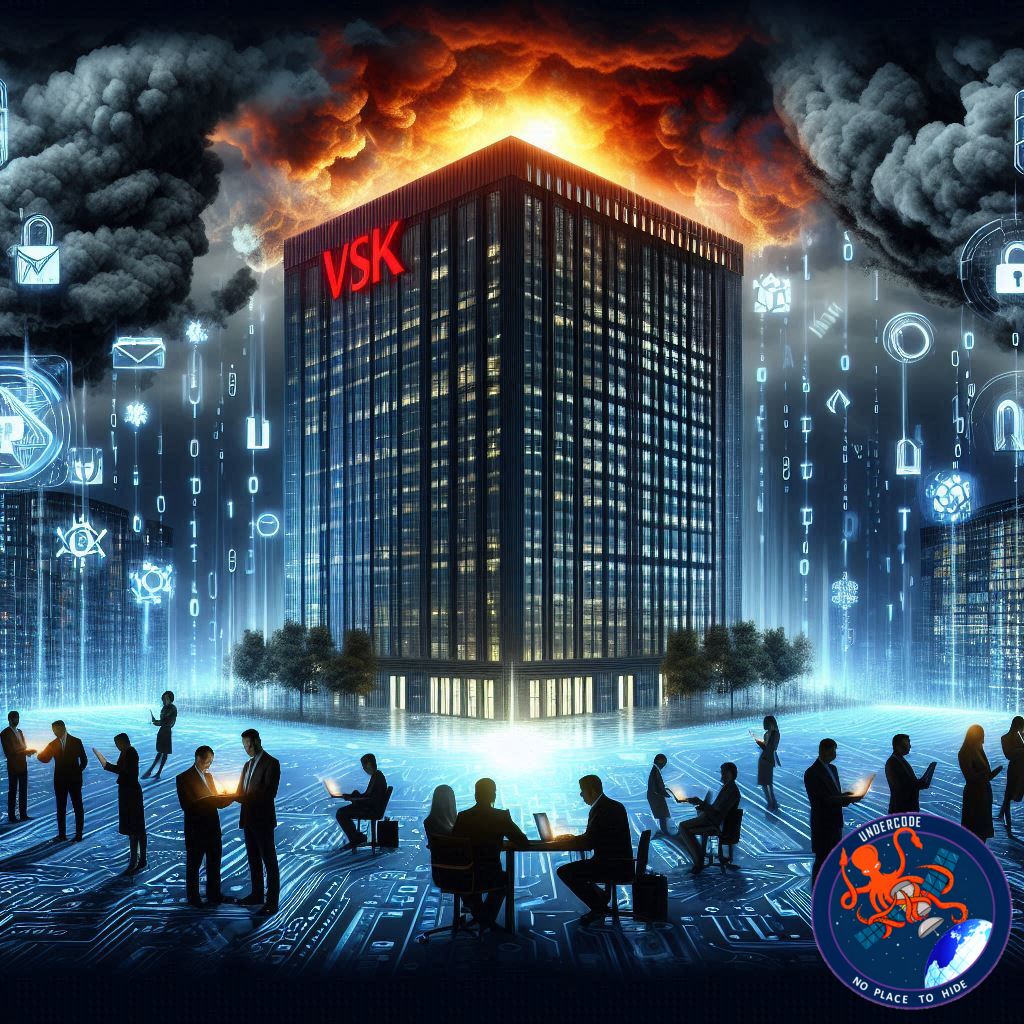
Imagine waking up to find that your insurer’s website is offline, your policy cannot be amended, and medical booking is impossible. That’s exactly the scenario unfolding across Russia after a major cyberattack crippled VSK Insurance House (VSK). In the midst of sweeping geopolitical tensions, the hit on this extensive insurer lays bare how vulnerable even large, critical‑service firms are to cyber disruption. This incident not only rattles Russia’s insurance sector, but also raises urgent questions about systemic cyber‑risk, national security, and business continuity in an era where war—or something very like it—may now play out in the digital domain.
the Incident
The attack on VSK, one of Russia’s largest universal insurers, came to public light after the firm reported a “large‑scale cyberattack” on November 12, with confirmed service disruptions starting November 13.
The Record from Recorded Future
VSK serves approximately 33 million individuals and over 500,000 businesses, providing a wide range of coverages—property, transport, health, travel, cargo and corporate insurance.
The Record from Recorded Future
The breach has taken down VSK’s website, mobile app, email systems and other digital services, leaving customers unable to buy insurance, adjust policies, obtain guarantee letters or book medical appointments.
The Record from Recorded Future
Some medical providers reportedly refused to offer services because they couldn’t verify coverage.
The Record from Recorded Future
While VSK insists that customer and partner data remain safe and that physical offices remain open, it also revealed that its corporate domain was hijacked and redirected visitors to fraudulent Telegram channels.
The Record from Recorded Future
The insurance group hasn’t revealed who is behind the attack or their objective—but multiple Russian cybersecurity specialists believe it to be a ransomware event.
The Record from Recorded Future
Interestingly, VSK was itself under Western sanctions in 2024 for alleged links to marine coverage of Russian‑linked tankers and logistics chains.
The Record from Recorded Future
This breach appears amid a wider spike of cyber‑attacks targeting major Russian institutions—like the port operator Port Alliance and an agricultural/food‑safety regulator—suggesting either financial crime or geopolitical manoeuvres, or perhaps both.
The Record from Recorded Future
What Undercode Say:
Market exposure and systemic risk uncovered
From a risk‑perspective, the VSK cybersecurity incident highlights how deeply integrated critical business services depend on digital infrastructure—and how single points of failure can cascade. Insurance companies are often considered less exposed than banks, but when an insurer servicing tens of millions loses its online functionality, claims cannot be processed, coverage verification fails, and medical treatment access gets blocked. The message is clear: operational resilience matters as much as capital adequacy.
Intersection of cybercrime and geopolitics
While VSK has not pinned the attack to any state or group, the timing and scale suggest more than a typical financially motivated hack. Given the sanctions background and the current Russia‑Ukraine conflict theatre, there is a strong possibility that this event occupies a hybrid zone between cybercrime and cyber‑warfare. The attack could serve as a pressure tool, a signalling mechanism, or simply opportunistic. Either way, insurers and critical infrastructure firms must anticipate threats that blur criminal profit‑seeking and state strategic intent.
Insurance sector under new strain
Traditionally, insurers themselves were risk carriers, not risk engines. But now, they are being thrust into the breach—literally. With VSK disrupted, policy fulfilment falters, third‑party services (like medical providers) get impacted, and reputational damage spikes. This triggers multiple knock‑on effects: increased claim backlog, regulatory scrutiny, investor anxiety and potential liability for non‑performance.
Technical and strategic lessons
On the defensive side, this incident reinforces the need for segmented networks, robust backup regimes, offline fallback modes for core services, and clear incident‑response plans. On the strategic side, companies must consider how sanctions exposure, geopolitical alignment and external threat intelligence factor into cyber risk modelling. A firm with sanctioned status or links to sensitive sectors may face elevated adversarial interest.
Implications for the Russian market
In Russia’s large insurance market, where digitalisation has been accelerating (for example, insurers partnering with tech firms for monitoring, claims automation, and cybersecurity).
Tadviser
+1
The VSK event may slow digital adoption or shift budgets away from innovation toward resilience. Smaller insurers might face pressure—either from customers losing trust or from increased regulatory demands—leading to consolidation, higher premiums and tighter margins.
Global ripple‑effects
Although the incident is rooted in Russia, the lessons are global. Insurers worldwide are part of interconnected ecosystems—service vendors, medical networks, policyholder portals. A failure in one region could spark cross‑border exposures. Further, cyber‑insurance markets may reassess underwriting when large carriers themselves become victims. Exclusions for force majeure or war‑related cyber events (as seen in other contexts) may proliferate.
Reuters
+1
This could mean higher premiums, tighter coverage and less appetite for insuring cyber risk.
Reputational and trust dimension
Insurance is built on trust—policyholders expect access when they need it. A digital outage disrupts that promise. For VSK, the brand impact will be severe: customers unable to adjust policies or book treatments will be irritated, medical providers will complain, and regulators may demand accountability. Rebuilding trust takes time; for competitors, this opens an opportunity.
Potential ripple into regulatory oversight
In the wake of such incidents, regulators often step in. They may require mandatory incident reporting, tighter controls on IT governance in insurance firms, stress‑testing of cyber resilience and closer coordination with national‑security apparatus. Particularly in jurisdictions where insurers serve critical national‑infrastructure roles, oversight will increase.
Long‑term strategic thinking for insurers
In the long term, insurers must treat cyber‑resilience not as a cost centre but as an integral part of underwriting and operations strategy. They may need to invest in advanced detection, multifactor authentication, segmentation, backup rehearsal, and even war‑game scenarios where nation‑state‑backed actors target them. Moreover, board‑level awareness and scenario planning must become standard.
What this means for clients and service users
For policyholders, this event is a wake‑up call: ensure your insurer has strong digital resilience, ask about backup processes, offline support mechanisms and incident‑response transparency. For medical or service providers reliant on insurers for verification, diversify dependencies and maintain alternative workflows.
Final thought
The VSK incident is more than a headline—it flags a new era where insurers are no longer just administrators of risk, but potential targets of large‑scale cyber disruption. Firms and regulators alike will need to adapt rapidly.
Prediction
🛡️ Within the next 12–24 months, we will see a wave of “insurer digital resilience audits” mandated by regulators in multiple jurisdictions—especially in Europe and Asia‑Pacific. Insurers will also begin to embed cyber‑attack clauses in policy terms, distinguishing between “ordinary” cybercrime and state‑linked or war‑like events. Premiums for cyber‑insurance will climb significantly as underwriters adjust models to account for the fact that carriers themselves can be victims. In parallel, the number of major insurer‑cyber incidents will rise, driven by geopolitical friction and increased ransomware sophistication.
Fact Checker Results
VSK confirmed a large‑scale cyberattack that began November 12 and affected its infrastructure. ✅
The Record from Recorded Future
The insurers’ service disruptions impacted website, app, email and medical‑booking workflows for customers. ✅
The Record from Recorded Future
VSK denies data compromise though alleged breach visuals circulate; authenticity unverified. ❌
The Record from Recorded Future
🕵️📝✔️Let’s dive deep and fact‑check.
References:
Reported By: x.com
Extra Source Hub (Possible Sources for article):
https://www.instagram.com
Wikipedia
OpenAi & Undercode AI
Image Source:
Unsplash
Undercode AI DI v2
Bing
🔐JOIN OUR CYBER WORLD [ CVE News • HackMonitor • UndercodeNews ]
📢 Follow UndercodeNews & Stay Tuned:
𝕏 formerly Twitter 🐦 | @ Threads | 🔗 Linkedin | 🦋BlueSky | 🐘Mastodon


