
Listen to this Post
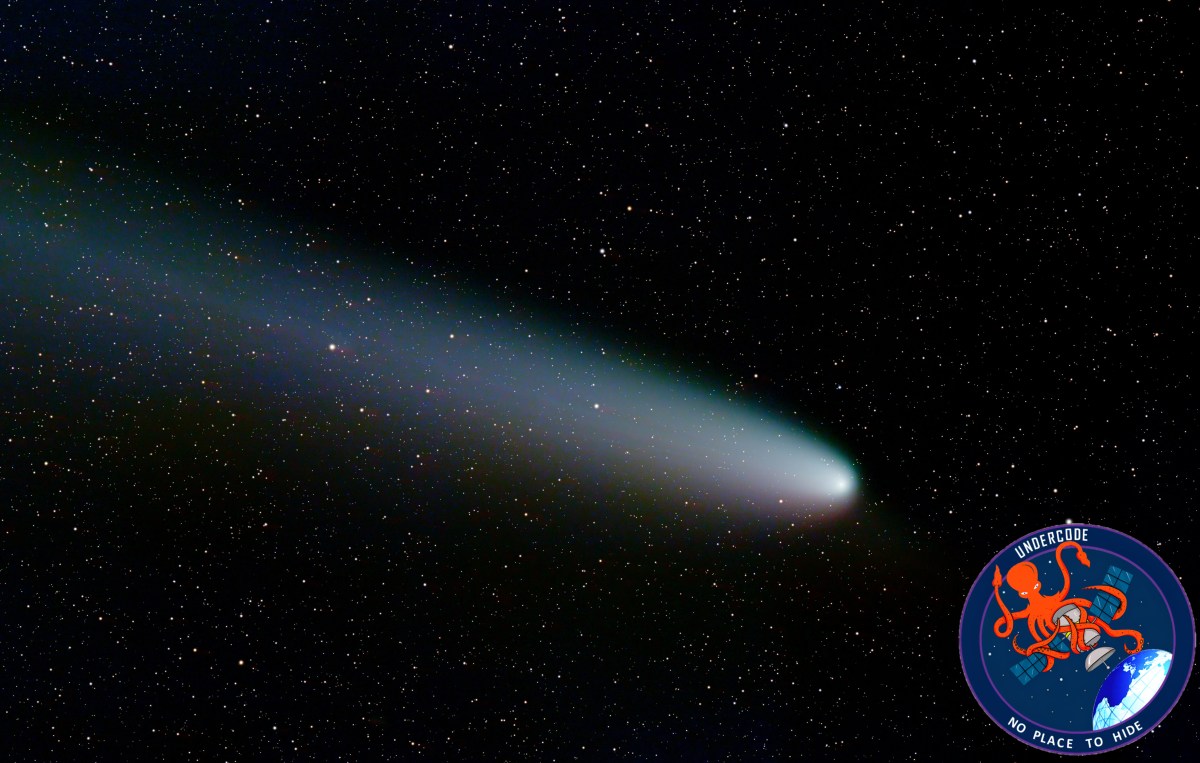
A New Cosmic Stranger Arrives
Space is rarely quiet, but every so often something truly extraordinary drifts into our neighborhood. When interstellar comet 3I/ATLAS crossed the outer boundary of our solar system, it became only the third confirmed object ever observed entering from another star system. NASA’s STEREO mission, a spacecraft designed to study solar storms and the flow of charged particles, managed to catch an unexpected and historic glimpse of this wandering visitor. What makes this moment even more captivating is that scientists initially believed STEREO’s cameras would be too limited to see the comet at all.
Main Summary
NASA’s STEREO observatory recorded interstellar comet 3I/ATLAS between September 11 and October 2, offering a rare look at an object formed around a distant star system. Although STEREO is not designed for deep-space comet hunting, its Heliospheric Imager-1 instrument, a visible-light camera, captured subtle brightness changes after scientists applied advanced image-processing techniques. Through the method of stacking multiple exposures, the comet emerged as a faint brightening in the center of the aligned images. This technique allowed researchers to detect something otherwise invisible to the spacecraft’s standard imaging capabilities.
This discovery is part of a broader campaign across multiple space missions. NASA’s PUNCH mission, ESA and NASA’s SOHO spacecraft, and additional heliophysics and planetary missions have all been observing 3I/ATLAS. While thousands of comets have been cataloged over the decades, this marks the first time that NASA’s heliophysics-focused fleet has knowingly tracked an interstellar object. The comet’s origins lie beyond our Sun’s gravitational reach, meaning it formed from materials outside the familiar recipe of the solar system.
Comet 3I/ATLAS was first identified in July 2025 by the ATLAS survey telescope in Rio Hurtado, Chile. The ATLAS system is designed for planetary defense, scanning the skies for objects that could pose a threat to Earth. In this case, the threat is nonexistent. The comet will pass through the solar system and return to interstellar space, never crossing paths with our planet. But its presence offers a priceless scientific opportunity.
Studying interstellar objects gives astronomers clues about how other star systems form and evolve. Materials trapped inside comets act like time capsules. They reveal chemical signatures from the environments where they were created, helping researchers compare distant planetary nurseries with our own. For scientists working in heliophysics, this is also a chance to observe how the solar wind interacts with a foreign body not shaped by our Sun’s influence.
This event also highlights the growing synergy across NASA missions. Instruments originally designed for solar observation are now contributing to planetary science. Through cross-mission collaboration, researchers can compare different types of data, from visible-light imaging to polarimetric measurements. These overlapping views build a fuller picture of the comet’s size, structure, brightness, and possible outgassing activity.
Even though the comet will soon fade into the darkness beyond the heliopause, the collected data will remain invaluable. Its brief visit strengthens the idea that interstellar objects are more common than previously believed. With more advanced sky surveys coming online, astronomers may see additional wanderers in the coming years. For now, 3I/ATLAS stands as a gentle reminder that our solar system is not an isolated island, but a small port along the bustling river of the galaxy.
What Undercode Say:
The sudden appearance of comet 3I/ATLAS in STEREO’s field of view is more than a scientific surprise. It is a test case for the expanding capability of space missions that were never intended to perform deep-space comet imaging. STEREO’s detection highlights the versatility of spacecraft engineering, especially when combined with modern data-processing strategies that reveal signals hidden beneath noise.
From a scientific standpoint, 3I/ATLAS offers an extraordinary laboratory. Interstellar comets are untouched by the solar system’s chemical patterns, meaning their ices and dust grains can tell us what distant protoplanetary disks looked like billions of years ago. Comparing this material to that of local comets, like those in the Kuiper Belt or Oort Cloud, could answer long-debated questions about whether planetary systems share similar building blocks or emerge from entirely unique environments.
Another point worth analyzing is the role of heliophysics spacecraft in planetary discovery. Ordinarily, these missions focus on particle flows, solar eruptions, and the dynamics of the solar wind. Yet their wide-field imagers give them the unique advantage of scanning vast regions of space continuously. The fact that STEREO and SOHO both contributed to the observation shows how multipurpose NASA’s fleet has unintentionally become. Future mission planners may even consider building hybrid spacecraft capable of solar monitoring and interstellar object tracking.
The larger implication touches on galactic dynamics. Every interstellar object discovered so far has arrived with no warning, no predictable trajectory, and no clear history. Their paths suggest they were ejected from young star systems long before reaching ours. This paints a picture of a chaotic galaxy, one where gravitational interactions frequently fling debris across enormous distances. As our detection capabilities improve, we may find that interstellar wanderers pass by far more often than anyone imagined decades ago.
There is also strategic value in observing interstellar objects early in their approach. The sooner they are detected, the more time scientists have to analyze their composition, rotation, and motion. With 3I/ATLAS, the detection came early enough to observe it across several missions, but still late compared to what future survey telescopes might achieve. Instruments like the Vera Rubin Observatory will likely identify future interstellar visitors months or even years in advance.
On a technological level, stacking techniques could become standard practice across sky-survey operations. They maximize the utility of existing instruments without requiring hardware upgrades. As computational imaging evolves, missions like STEREO may gain new scientific abilities simply through improved processing pipelines.
For NASA’s heliophysics division, the successful detection reinforces the importance of continuous solar system monitoring. Even when their focus lies on the Sun, wide-field cameras capture a surprising amount of incidental information. This strengthens the case for maintaining long-lived spacecraft, as each year brings unexpected scientific opportunities.
Finally, the fleeting nature of 3I/ATLAS reminds researchers that interstellar science often comes with a single chance. Once the comet leaves, its secrets travel with it across the galaxy. The data collected over these weeks will fuel years of research, helping shape theories on cosmic chemistry, solar system evolution, and planetary formation across distant stars.
🔍 Fact Checker Results
The comet is confirmed to be interstellar in origin. ✅
STEREO was not originally designed to observe such faint distant objects. ✅
The comet poses any danger to Earth is false. ❌
📊 Prediction
Future interstellar objects will be detected more frequently as survey technology improves. 🌠
Wide-field heliophysics missions may become unexpected contributors to planetary science. 🔭
Scientists may soon classify interstellar comets based on their chemical fingerprints. 📘
🕵️📝✔️Let’s dive deep and fact‑check.
References:
Reported By: science.nasa.gov
Extra Source Hub (Possible Sources for article):
https://www.quora.com/topic/Technology
Wikipedia
OpenAi & Undercode AI
Image Source:
Unsplash
Undercode AI DI v2
Bing
🔐JOIN OUR CYBER WORLD [ CVE News • HackMonitor • UndercodeNews ]
📢 Follow UndercodeNews & Stay Tuned:
𝕏 formerly Twitter 🐦 | @ Threads | 🔗 Linkedin | 🦋BlueSky | 🐘Mastodon


