
Listen to this Post
Introduction
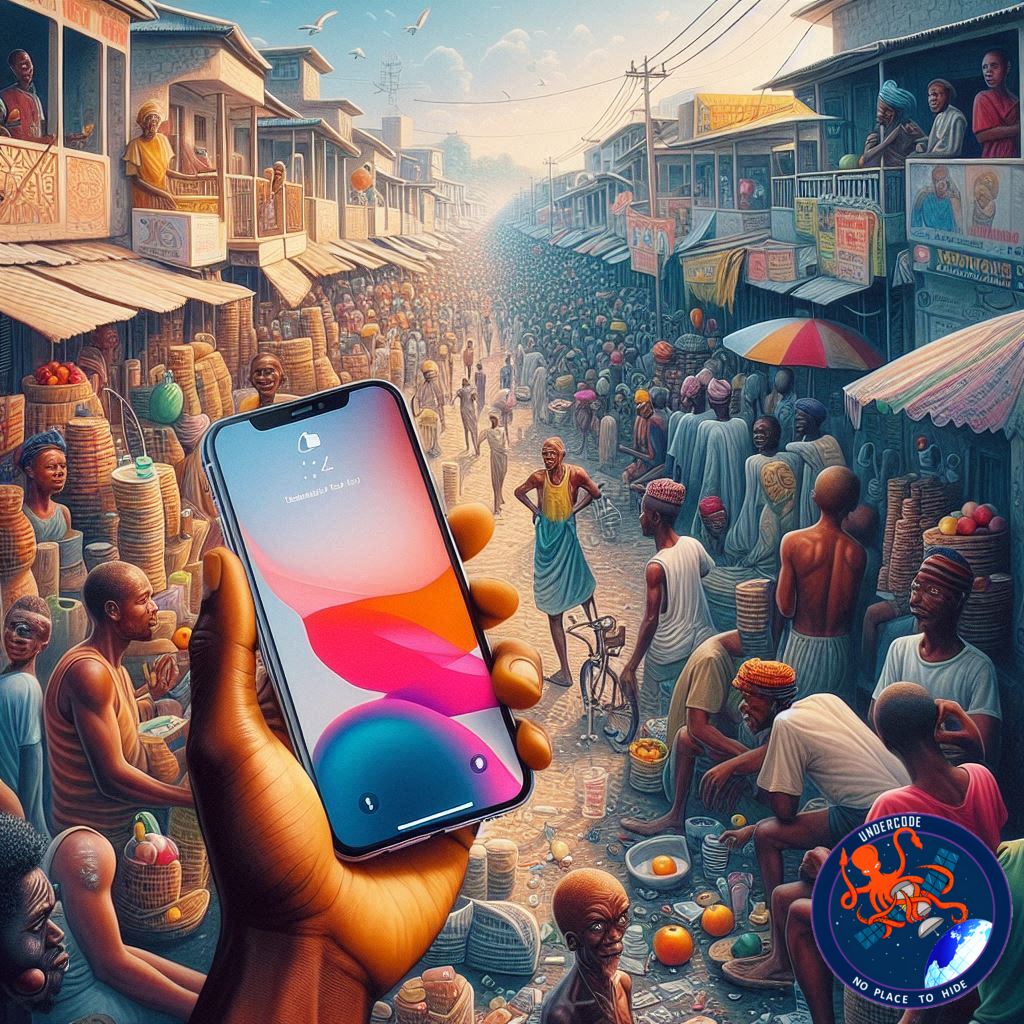
The arrival of the iPhone 16 has sparked a fresh wave of excitement across global tech communities, yet in Nigeria it has ignited a different kind of conversation. The device symbolizes innovation, prestige, and cutting-edge engineering, but it also exposes the widening gap between technological advancement and economic survival. As prices soar beyond the reach of millions, a simple question arises. How long does it truly take an average Nigerian worker to afford Apple’s latest device? The answer reveals far more about the country’s financial landscape than about the smartphone itself.
iPhone 16 Affordability Crisis for Nigerian Workers
Experts estimate that a Nigerian earning the recently revised national minimum wage would need at least 18 consecutive months of salary to purchase even the cheapest version of the iPhone 16. The new lineup ranges from approximately N1.42 million to N1.82 million across models, depending on storage and features. The launch, which took place on September 9, 2024, unveiled global pricing starting at 799 dollars, roughly N1.26 million using an exchange rate of N1,580 per dollar. The iPhone 16 Plus sits around N1.42 million, the Pro at N1.58 million, and the high-end Pro Max at nearly N1.89 million.
For context, Nigeria’s federal government recently increased the minimum wage from N30,000 to N70,000, a 133.33 percent adjustment meant to ease financial pressure on workers. Even with this boost, a single month’s minimum wage barely makes a dent in the total cost of Apple’s flagship device. With a salary of N70,000, an average worker would still need more than a year and a half of continuous saving. This comparison highlights the growing disconnect between everyday earnings and the escalating cost of imported consumer electronics.
Across Africa, the affordability picture looks marginally better. In South Africa, where the minimum wage hovers around 248 dollars monthly, a worker needs about three months to buy the iPhone 16. In Morocco, it also requires roughly three months on a 285-dollar income. Egypt’s lower wage at 156 dollars monthly pushes the timeline to a little over five months, while Algeria stands at nearly six months with a wage of 140 dollars. Despite these challenges, Nigeria remains the outlier. Local currency depreciation, fueled by the government’s foreign exchange unification policy, has pushed the naira from N769 per dollar in mid-2023 to N1,637 per dollar by September 2024. As the currency weakens, imported goods, especially high-end electronics, become significantly more expensive.
Retailers continue to emphasize that phone prices mirror the dollar. Since every smartphone in the country is imported, dealers have little choice but to adjust prices upward. As a result, the iPhone remains a rarity among average consumers. Analysts from Canalys report that Apple holds less than one percent of Nigeria’s smartphone market. Brands like Tecno, Infinix, and Itel, all under Transsion Holdings, dominate the scene due to their affordability and localized features. Xiaomi has also grown rapidly within the entry-level segment, offering strong performance at a fraction of Apple’s cost.
Nigeria has spent more than 3.8 billion dollars importing mobile devices since 2009, and over 2.8 billion dollars of that has come from China alone. With rising phone prices and economic strain, many Nigerians have turned to refurbished or fairly used handsets. According to IDC, the used smartphone market surged by 9.5 percent in 2023. This shift is expected to deepen as high-end devices become further out of reach.
Meanwhile, Apple’s new iPhone 16 is designed around artificial intelligence capability, marking one of the company’s most ambitious technological upgrades. Announced alongside various AI-powered enhancements for iOS 18, the device joins the global wave of AI-enabled smartphones dominating 2024. Although impressive, these innovations remain little more than aspirational luxury for the vast majority of Nigerians navigating currency instability and rising living costs.
What Undercode Say:
The affordability gap surrounding the iPhone 16 in Nigeria reflects a complex intersection of economics, currency dynamics, and global technology trends. At its core, the challenge is not about a device being expensive. It is about earnings failing to keep pace with global pricing. When a minimum wage earner must save every naira for 18 months to buy a phone, it becomes a mirror of deeper structural vulnerabilities in the economy. The revised minimum wage, though a welcome relief, is dwarfed by inflation, rising fuel costs, and currency volatility. For many households, even survival expenses exceed monthly earnings.
Exchange rate unification, a policy intended to streamline forex allocation, inadvertently exposed the economy to harsh market forces. The naira’s steep decline inflates the landing cost of imported goods. Smartphones, which Nigeria does not manufacture locally, become collateral damage in the currency war. The difference between Nigeria and its peers in Africa is not merely a matter of wages but relative currency stability. South Africa, Morocco, and even Egypt maintain stronger local purchasing power despite lower absolute wages. Nigeria’s wage increase fails to translate into increased buying strength because every product benchmarked against the dollar climbs faster than salaries can adjust.
The dominance of Chinese brands in the smartphone market underscores the reality of consumer preference shaped by necessity. Nigerians are choosing practical, affordable devices with long battery life, durable hardware, and flexible features tailored to local needs. Apple’s premium models, though aspirational, do not align with the daily pressures faced by the average buyer. The growth of the refurbished phone market is a direct response to this mismatch, reflecting a pragmatic shift rather than a decline in interest in premium technology.
If Nigeria aims to reduce this technological inequality, the most effective solution lies not in price subsidies but in strengthening the naira. Local manufacturing incentives, better forex management, and improved national productivity would ease pressure on foreign exchange demand. Until such measures stabilize the economy, luxury tech products will remain symbolic markers of socioeconomic divides. In a world where digital inclusion shapes opportunity, the inability of a worker to afford a modern smartphone within a reasonable timeframe reveals broader implications than consumer choice. It speaks to the pace at which economic instability is eroding technological accessibility.
🔍 Fact Checker Results
Nigeria’s minimum wage increase to N70,000 is accurate. ✅
iPhone 16 pricing falls within the stated range at current exchange rates. ✅
Apple holds less than one percent of Nigeria’s smartphone market. ❌ (It is slightly above one percent in some reports, though still very low.)
📊 Prediction
In the coming year, Nigeria’s smartphone market will shift even more toward refurbished devices and budget-friendly models. 📱
If the naira continues weakening, premium devices like the iPhone 16 will become increasingly niche, reserved for elites. 📉
Unless the government stabilizes forex and supports local tech manufacturing, digital inequality will intensify. ⚠️
🕵️📝✔️Let’s dive deep and fact‑check.
References:
Reported By: www.legit.ng
Extra Source Hub (Possible Sources for article):
https://stackoverflow.com
Wikipedia
OpenAi & Undercode AI
Image Source:
Unsplash
Undercode AI DI v2
Bing
🔐JOIN OUR CYBER WORLD [ CVE News • HackMonitor • UndercodeNews ]
📢 Follow UndercodeNews & Stay Tuned:
𝕏 formerly Twitter 🐦 | @ Threads | 🔗 Linkedin | 🦋BlueSky | 🐘Mastodon


