
Listen to this Post
Introduction
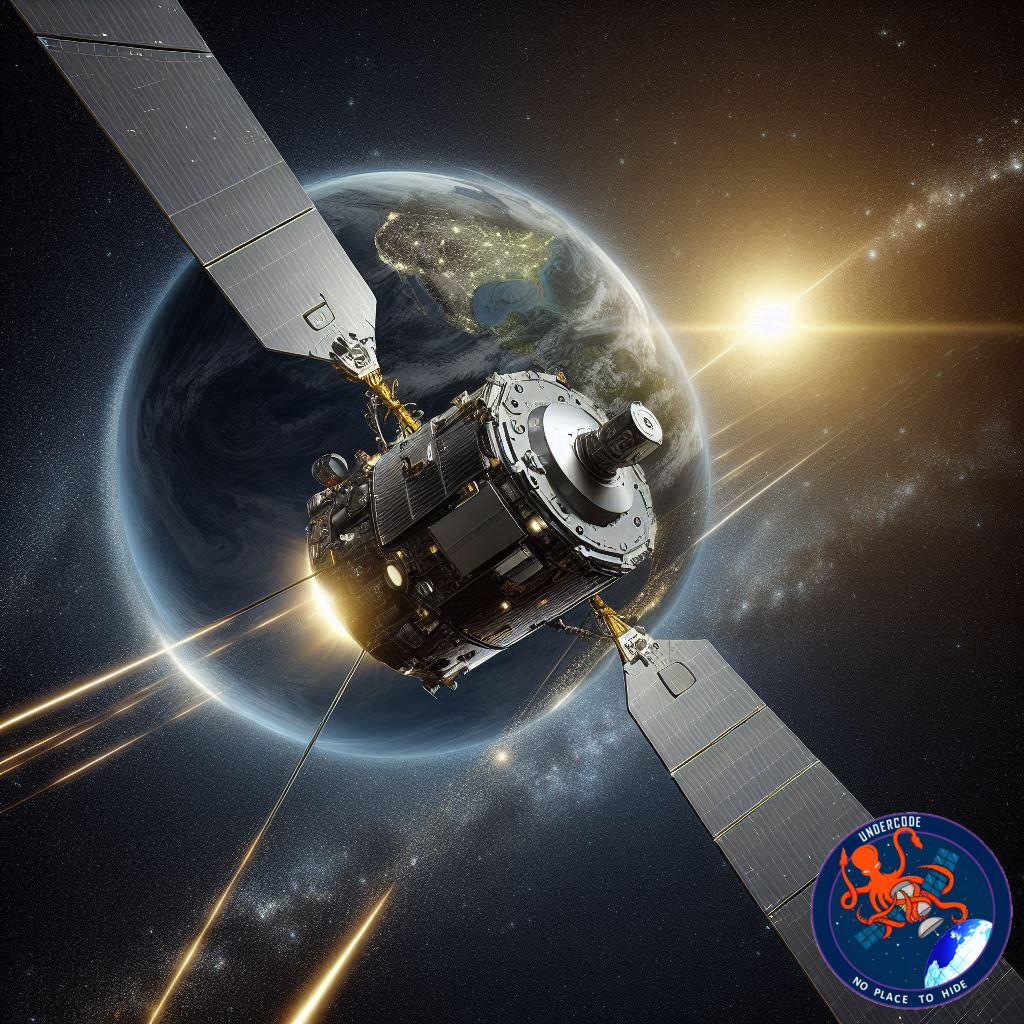
The sky held its breath as NASA’s OSIRIS-APEX spacecraft swept past Earth, a silent traveler returning for one last glance at the world that launched it. What seemed like a brief cosmic flyby was actually the ignition of a new era in asteroid science. With precision navigation, international collaboration, and a spacecraft built for endurance, OSIRIS-APEX is now on course toward an encounter that could rewrite what we know about near-Earth asteroids. This is not just a trajectory correction. It is the start of a mission that blends science, engineering, and the raw thrill of exploration.
🌍 Main Summary of the Original
A Close Earth Encounter
NASA’s OSIRIS-APEX spacecraft skimmed past Earth on Sept. 23 at 1:00 p.m. EDT, drifting only 2,136 miles above the planet. This gravity assist maneuver wasn’t merely technical, it was the moment the spacecraft aligned itself for its extended mission after completing the historic OSIRIS-REx sample return.
The Homeward Glance
As it approached, OSIRIS-APEX turned its instruments toward Earth, capturing images and scientific measurements intended to calibrate its onboard systems. This brief observational window allowed mission engineers to test key components under known environmental conditions.
From Bennu to Apophis
During its primary mission, the spacecraft’s StowCam monitored the return capsule that carried precious samples from asteroid Bennu back to Earth. Now repurposed, StowCam offers visual access to the spacecraft’s instrument platform, including the Canadian-built OSIRIS-REx Laser Altimeter, a tool that once mapped Bennu’s terrain with remarkable detail.
The Teams Behind the Mission
NASA’s Goddard Space Flight Center leads the mission’s management and systems engineering, ensuring safety and operational consistency. Dani Mendoza DellaGiustina from the University of Arizona serves as the principal investigator, guiding scientific goals and observation planning. Lockheed Martin Space constructed the spacecraft and oversees flight operations, while navigation responsibilities fall jointly to NASA Goddard and KinetX Aerospace.
International Partnerships
The mission is strengthened by global collaboration, highlighted by the Canadian Space Agency’s contribution of the laser altimeter. OSIRIS-APEX, formerly OSIRIS-REx, represents the third mission from NASA’s New Frontiers Program, which is managed by NASA’s Marshall Space Flight Center.
What Undercode Say:
The Strategic Importance of the Flyby
This Earth encounter is the hinge moment between two generations of asteroid exploration. OSIRIS-APEX isn’t simply continuing after OSIRIS-REx, it is evolving into a spacecraft built for high-risk, high-reward science. The slingshot maneuver was essential for redirecting the vehicle toward Apophis, a near-Earth asteroid that will pass extremely close to Earth in 2029. This rare event offers a front-row laboratory in space, and OSIRIS-APEX will be the only robotic witness capable of studying Apophis during and after its dramatic Earth flyby.
Calibration as a Scientific Weapon
By imaging Earth, the spacecraft collected baseline data under known conditions. This is a crucial step. For missions studying unfamiliar surfaces like Apophis, calibration is the difference between scientific clarity and ambiguity. The altimeter and cameras must operate with pinpoint accuracy, and Earth served as the perfect testing ground.
StowCam’s Reinvented Purpose
What once confirmed Bennu’s sample capsule was secure now becomes a window into the heart of the spacecraft. Repurposing existing instrumentation speaks to NASA’s broader philosophy, extending mission lifetimes through adaptability rather than hardware replacement. This is sustainable deep-space engineering at its finest.
The Human Element Behind the Mission
Behind every scientific detail lies a complex network of laboratories, agencies, and researchers. The University of Arizona’s leadership continues the tradition of academic institutions spearheading planetary science. Meanwhile, Lockheed Martin’s engineering legacy ensures the spacecraft can endure years of extreme conditions. Together, these teams form a multilayered system that keeps OSIRIS-APEX alive in the dark.
Why Apophis Matters
Apophis is no ordinary asteroid. Its extraordinarily close pass in 2029 offers a once-in-millennium opportunity to study how gravitational forces reshape an asteroid’s surface and trajectory. OSIRIS-APEX will observe seismic shaking, surface changes, and potential particle release triggered by Earth’s gravity. For planetary defense experts, this is pure gold.
A Mission Rooted in Global Collaboration
The CSA’s laser altimeter contribution exemplifies how international involvement elevates science. Asteroid mapping requires diverse technical expertise, and Canada supplied an instrument that proved indispensable at Bennu. Its role at Apophis will be equally crucial, offering high-resolution insights into terrain changes before and after the asteroid’s close encounter with Earth.
A New Frontier Ahead
OSIRIS-APEX stands as the third mission in NASA’s New Frontiers Program, joining the ranks of New Horizons and Juno. These missions share a legacy of pushing beyond boundaries, exploring worlds once believed unreachable. Apophis will be the next world added to this growing library of knowledge.
The Next Steps in Planetary Protection
Studying near-Earth asteroids isn’t only about scientific curiosity. It is about safeguarding our future. Understanding how asteroids behave when passing near planets will refine impact prediction models and improve strategies for potential asteroid deflection. OSIRIS-APEX isn’t just studying a space rock, it is gathering intelligence for Earth’s long-term safety.
A Mission That Lives Beyond Its First Purpose
The transformation from OSIRIS-REx to OSIRIS-APEX symbolizes the resilience of spacecraft engineering. A machine originally designed for a single asteroid now embarks on a second mission. This is the pinnacle of NASA’s resource optimization, proving that sophisticated spacecraft can live multiple lives across decades.
🔍 Fact Checker Results
✅ Flyby distance of 2,136 miles is accurate.
✅ OSIRIS-APEX is a continuation of the OSIRIS-REx spacecraft.
❌ The mission is not new hardware, it is the same spacecraft extended for a new target.
📊 Prediction
In the coming years, OSIRIS-APEX will deliver unprecedented insights into how Apophis reacts when Earth’s gravity shakes its surface. 🌎 Scientists may detect fresh fractures, regolith displacement, or unexpected particle plumes as the asteroid passes close by. 🚀 The mission will likely redefine our approach to asteroid behavior, planetary defense, and deep-space operations. 🌑
🕵️📝✔️Let’s dive deep and fact‑check.
References:
Reported By: science.nasa.gov
Extra Source Hub (Possible Sources for article):
https://www.linkedin.com
Wikipedia
OpenAi & Undercode AI
Image Source:
Unsplash
Undercode AI DI v2
Bing
🔐JOIN OUR CYBER WORLD [ CVE News • HackMonitor • UndercodeNews ]
📢 Follow UndercodeNews & Stay Tuned:
𝕏 formerly Twitter 🐦 | @ Threads | 🔗 Linkedin | 🦋BlueSky | 🐘Mastodon


