
Listen to this Post
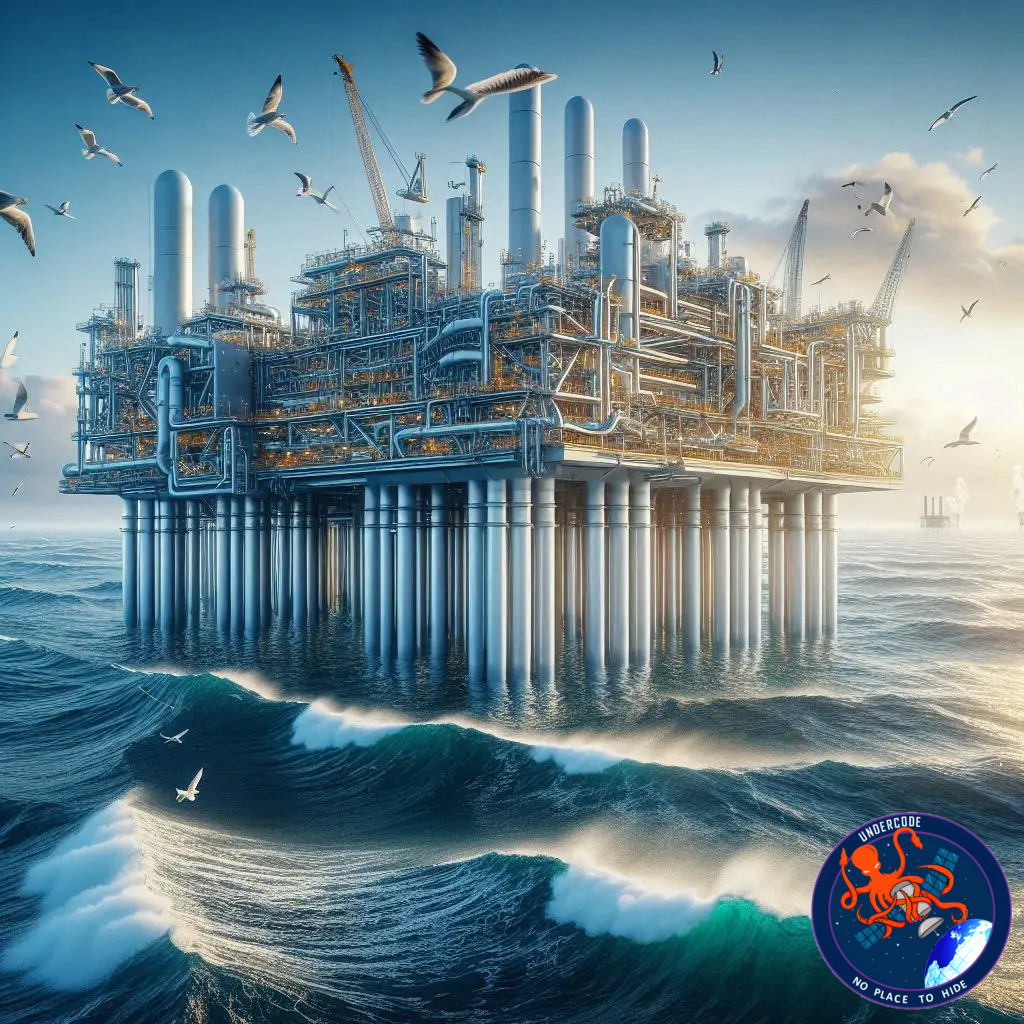
The North Sea is on the verge of hosting a groundbreaking climate initiative as Europe prepares to see its first fully operational offshore CO2 storage site. The remote Nini oil field, once a hub for fossil fuel extraction, is being transformed into a permanent underground repository for carbon dioxide. This bold project, led by chemical giant INEOS under the Greensand Future initiative, represents a significant step in Europe’s efforts to mitigate climate change while balancing industrial activity.
Turning Oil Fields into Carbon Sinks
From a helicopter, the Nini oil field appears as a distant dot on the horizon, its rugged landscape belying the ambitious plans underway. Traditionally an oil extraction site, Nini is now being repurposed for a process that almost reverses its original function: capturing carbon dioxide and injecting it deep beneath the seabed. INEOS plans to store liquefied CO2 in depleted oil reservoirs located approximately 1,800 meters below the surface.
The Siri platform, near the unmanned Nini field, serves as the operational hub for this initiative. When commercial operations begin next year, Greensand is expected to mark the European Union’s first offshore CO2 storage facility.
Scaling Up Carbon Capture
Initially, Greensand will store 363,000 metric tonnes of CO2 per year. By 2030, INEOS aims to scale operations to capture and store up to 7.3 million metric tonnes annually. CEO Mads Gade highlights Denmark’s vast storage potential, claiming it could handle several centuries’ worth of the nation’s emissions. The project has already forged agreements with Danish biogas facilities to deposit their captured carbon in Nini’s depleted reservoirs.
Supporting infrastructure includes a “CO2 terminal” at the Port of Esbjerg and a purpose-built carrier vessel, Carbon Destroyer 1, currently under construction in the Netherlands. These elements are crucial to transporting and temporarily storing the liquefied CO2 before its deep-sea injection.
CCS as a Climate Tool
Proponents of carbon capture and storage (CCS) argue that it is a critical tool for reducing greenhouse gas emissions. The Intergovernmental Panel on Climate Change (IPCC) has recognized CCS as a means of fighting global warming. The EU plans to develop at least 227 million metric tonnes of CO2 storage annually by 2040, supporting its target of net-zero emissions by 2050.
Denmark’s geological surveys affirm that the Greensand sandstone formations are ideal for CO2 storage. Tiny cavities within the rock can accommodate large volumes of liquefied gas, while the overlying seal rock can withstand the pressures induced by storage operations. According to senior researcher Niels Schovsbo, there are no harmful reactions between the reservoir rock and the injected CO2, making the site both secure and technically sound.
Challenges and Criticism
Despite the promise of CCS, its limitations are significant. Globally, the technology captures only a small fraction of emissions and often relies on energy from fossil fuels to operate. The Greensand project’s maximum target of 7.3 million metric tonnes of CO2 per year is modest compared to the 34.5 billion metric tonnes of global emissions recorded last year.
Environmentalists warn against relying on CCS as a substitute for emission reductions. Helene Hagel of Greenpeace Denmark notes that while CCS may be useful in sectors with hard-to-abate emissions, widespread reliance risks delaying essential emission cuts across industries.
Gade defends INEOS’s dual approach of developing CO2 storage while continuing limited North Sea oil production. He emphasizes that reducing Europe’s energy import footprint and supporting a transition toward cleaner energy are central to the project’s rationale.
What Undercode Say:
The Greensand Future project is emblematic of the delicate balance Europe faces between industrial continuity and climate responsibility. Repurposing oil fields for CO2 storage reflects a pragmatic use of existing infrastructure, potentially accelerating the EU’s decarbonization timeline without halting industrial activity. Technical assessments suggest the Nini field’s geology is exceptionally suitable for CCS, minimizing the risk of leakage—a critical consideration often questioned by environmentalists.
However, the project underscores the limitations of CCS as a large-scale solution. Even at its 2030 target, Greensand will only offset a tiny fraction of global emissions, highlighting the need for parallel strategies: aggressive renewable energy deployment, energy efficiency improvements, and behavior-driven emission reductions. While INEOS frames CCS as an enabler of industrial sustainability, critics are right to stress that it cannot replace deep cuts in fossil fuel consumption.
The collaboration with biogas facilities and investment in purpose-built infrastructure show a forward-thinking approach, suggesting that CCS could integrate into a broader European climate strategy if scaled carefully. Yet, questions remain about cost-effectiveness, long-term monitoring, and societal acceptance of large-scale underground CO2 storage. The project is as much a test of governance, regulatory oversight, and public trust as it is a technical endeavor.
CCS may also inadvertently influence energy policy decisions, potentially justifying continued fossil fuel operations under the banner of “responsible emissions management.” While Denmark’s geology makes it ideal for storage, reliance on CCS could create moral hazard, where industries use storage as a buffer instead of investing in true emission reductions.
Still, the project demonstrates that CCS is more than a theoretical concept; it is actionable today. If successful, Greensand could catalyze a network of European offshore storage sites, laying groundwork for a continent-wide carbon management system. Monitoring, transparency, and independent verification will be key to ensuring these ambitions translate into measurable climate benefits.
In essence, Greensand is both a bold experiment and a cautionary tale: technical ingenuity must be paired with rigorous climate policy and societal accountability to deliver meaningful reductions. The next decade will reveal whether CCS is a genuine climate solution or primarily a stopgap measure for industrial continuity.
Fact Checker Results:
✅ Nini oil field is being repurposed for offshore CO2 storage.
✅ Initial storage target is 363,000 metric tonnes per year, scaling to 7.3 million by 2030.
❌ CCS alone cannot offset global emissions; it captures a tiny fraction compared to worldwide outputs.
Prediction:
🌍 By 2030, Greensand could become a benchmark for offshore CCS operations in Europe, inspiring similar projects across the North Sea. However, the technology’s limited scale suggests it will complement, not replace, aggressive renewable energy expansion and industrial decarbonization strategies. Industrial reliance on CCS may persist, but public scrutiny and policy oversight will shape its role in Europe’s climate transition.
🕵️📝✔️Let’s dive deep and fact‑check.
References:
Reported By: www.euronews.com
Extra Source Hub (Possible Sources for article):
https://www.quora.com/topic/Technology
Wikipedia
OpenAi & Undercode AI
Image Source:
Unsplash
Undercode AI DI v2
Bing
🔐JOIN OUR CYBER WORLD [ CVE News • HackMonitor • UndercodeNews ]
📢 Follow UndercodeNews & Stay Tuned:
𝕏 formerly Twitter 🐦 | @ Threads | 🔗 Linkedin | 🦋BlueSky | 🐘Mastodon


