
Listen to this Post
Introduction
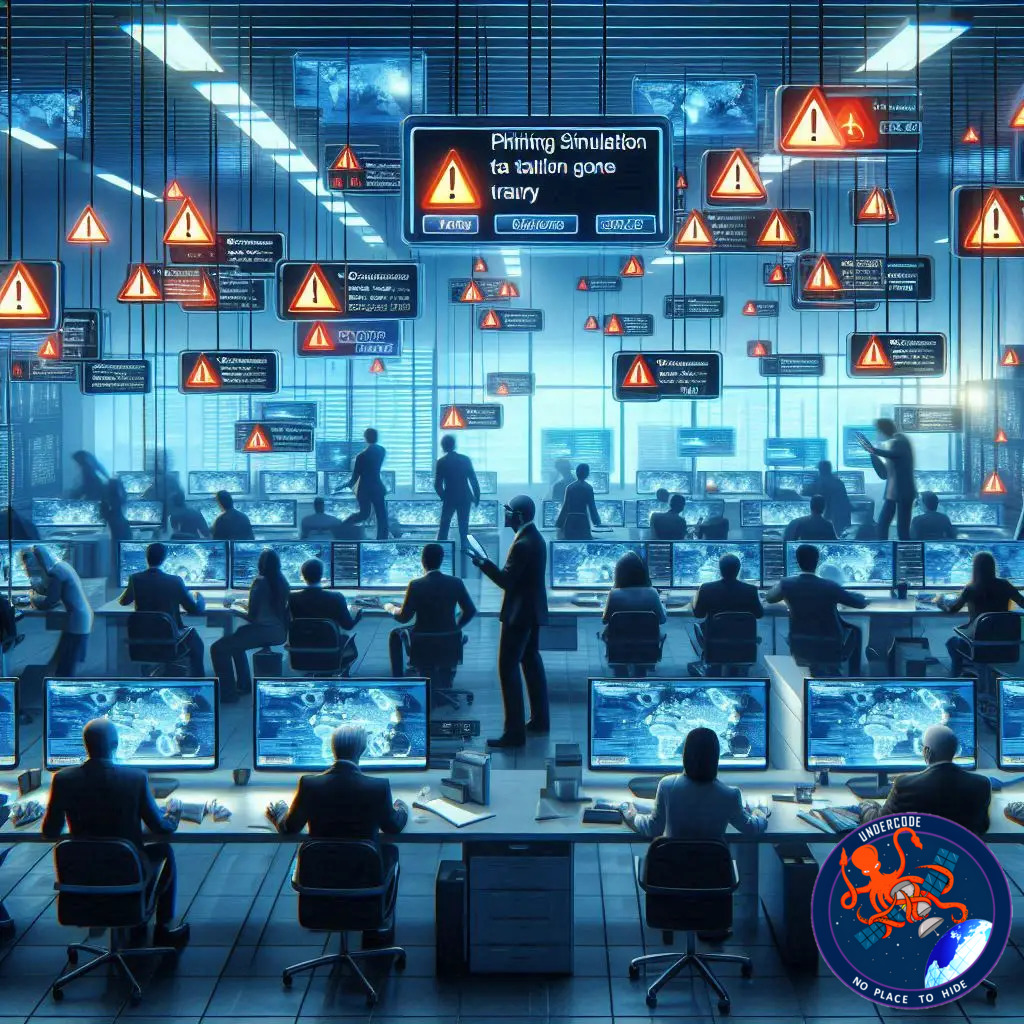
Public institutions have leaned heavily on phishing simulations to strengthen employee awareness, reduce exposure to social-engineering attacks, and build a culture of digital vigilance. Yet beneath the good intentions lies a rising problem: many of these simulated campaigns are unintentionally tripping national CERT alarms, triggering blacklist errors, and consuming threat-response bandwidth that should be reserved for real incidents. A single misconfigured simulation can ripple across monitoring systems, sending automated threat signals to defensive teams and creating noise where clarity is needed most. This article explores why these false alerts happen, what they cost, and how public organizations can restore confidence in their own testing frameworks.
Simulation Signals and Their Consequences
A number of public administrations continue launching phishing tests without fully considering the threat-intelligence pipelines they intersect with. CERT platforms, tuned to pick up suspicious indicators, may interpret these exercises as genuine malicious activity.
CERT Blacklists Becoming Unintentionally Polluted
When a phishing simulation mimics a real attack too closely—or lacks prior notification—CERT systems record its domains, IPs, or payload markers as malicious. These false positives then propagate to blacklist feeds, causing widespread filtering errors that affect internal and external communications.
Operational Noise Crowds Out Real Threats
The more noise CERT teams encounter, the higher the risk that analysts overlook genuine compromises. Time spent parsing simulation artifacts reduces capacity for real incidents, slowing response cycles and increasing overall exposure.
Why Public Administrations Are Especially Vulnerable
Government networks operate under rigid protocols, with layered monitoring tools that treat every anomaly as potential national-scale risk. A single simulation campaign can cascade across provinces, agencies, or ministries.
The Technical-Indicator Problem
Simulations often copy real phishing kits, including spoofed login pages, deceptive redirects, and behavioral patterns that CERT engines interpret as hostile. Without proper tagging or approved identifiers, these tests become indistinguishable from active threats.
The Missing Pre-Notification Step
Experts repeatedly emphasize that advance notification to CERT—combined with scoped technical indicators—dramatically minimizes the odds of false alarms. Yet many organizations skip this step, treating simulations as internal-only events.
A Governance Gap Widens
Policy frameworks governing cybersecurity exercises often lag behind the tools used to conduct them. Without harmonized standards, public bodies run tests that collide with national monitoring rules.
Where Best Practices Break Down
Although guidance exists, busy security teams may not apply it consistently. As a result, the misalignment between simulation operators and CERT defenders grows wider each year.
The Amplifier Effect of Automated Defense Systems
Modern monitoring systems propagate alerts quickly. A single incorrect threat tag can travel across multiple databases, infecting trust zones and producing unnecessary escalations.
Small Incidents Become Large Administrative Burdens
When simulation artifacts end up on blacklists, entire agencies may suffer blocked email domains or disrupted workflows. Reversing these entries requires investigation, paperwork, and cross-agency coordination.
A Cultural Misread of ‘Realism’
Some administrators believe “more realistic equals more effective.” But when simulations become indistinguishable from genuine threats, realism turns into operational risk.
A Strain on Public-Sector IT Teams
Already pressured by limited staffing, government IT teams cannot afford additional workload generated by false flags and emergency triage that isn’t truly necessary.
A Call for More Responsible Simulation Design
The cybersecurity community continues pushing for a balanced approach: realistic simulations paired with controlled signals and transparent communication paths.
Threat Intelligence Needs Clean Data
CERT analysts rely on high-fidelity indicators. When simulations contaminate those feeds, overall national threat visibility suffers.
What Good Governance Looks Like
Effective frameworks integrate simulation protocols with CERT workflows, ensuring that noise never outpaces signal.
What Undercode Say:
A deeper look at the issue reveals a structural tension between two equally important defensive mechanisms: employee readiness and national-scale threat monitoring. When these mechanisms operate without coordinated governance, their collision becomes inevitable.
How Phishing Simulations Become Invisible Threat Fog
Phishing exercises aren’t just emails—they generate footprints across mail gateways, DNS logs, network telemetry, sandbox engines, and endpoint sensors. Without metadata tagging, the digital residue is indistinguishable from real attacker infrastructure. Undercode notes that this fog dilutes precision, the foundation on which CERT intelligence systems rely.
Why Pre-Notification Isn’t Optional Anymore
CERTs don’t need complete playbooks, just enough context to recognize friendly fire. A simple pre-notification that includes domains, sending IPs, and timing windows gives analysts the clarity they need. Undercode emphasizes that this single administrative step prevents downstream blacklisting chaos.
The Governance Problem Is Bigger Than Technology
Most public organizations lack unified simulation policies. Teams operate independently, spinning up third-party tools that don’t integrate with national threat pipelines. Undercode underscores that fragmented governance creates preventable risk, especially when simulations operate across shared digital infrastructure.
The Hidden Cost of False Threat Data
Every false positive consumes analyst time, reduces situational awareness, and forces manual corrections in blacklist repositories. Over time, this erodes trust in automated detection systems. Undercode argues that clean data is the lifeblood of national cybersecurity, and simulations must protect that integrity.
Why CERT Systems Misinterpret Simulations
Modern CERT engines are powered by machine-learning models that learn from historical attacks. When simulations replicate those attack markers, the models treat them as active threats. Undercode stresses: the more realistic the imitation, the more convincing it becomes to automated defense tools.
Public-Sector Impact Goes Beyond Alerts
An inspired but careless phishing test can disrupt procurement email chains, inter-agency communication, citizen-service portals, and authentication systems that depend on email verifications. Undercode highlights that fallout from a single simulation can ripple across entire ministries.
How Agencies Can Rebuild Simulation Trust
Undercode recommends a three-pillar strategy:
Transparency with CERTs — share indicators, schedule windows, and purpose.
Technical Hygiene — ensure simulation domains are clearly tagged, registered, and controlled.
Governance Alignment — consolidate simulation standards under a national policy framework.
The Future Requires Smarter Coordination
As cyberattacks grow more complex, public-sector defenses must function as unified ecosystems—not isolated islands. Simulations that strengthen local readiness must not weaken national detection. Undercode believes the path forward lies in harmonizing innovation with oversight.
Fact Checker Results
CERT false alarms caused by phishing simulations are confirmed and documented. ✅
Blacklist pollution occurs when simulations mimic real threats without coordination. ✅
No evidence suggests CERTs oppose simulations; they require structured communication. ❌
Prediction
Simulations will become more regulated as national cyber frameworks mature. 📌
CERTs and public bodies will adopt mandatory pre-notification workflows. 🔧
Realistic simulations will continue, but their signals will carry standardized, machine-readable identifiers. 🔮
🕵️📝✔️Let’s dive deep and fact‑check.
References:
Reported By: x.com
Extra Source Hub (Possible Sources for article):
https://www.twitter.com
Wikipedia
OpenAi & Undercode AI
Image Source:
Unsplash
Undercode AI DI v2
Bing
🔐JOIN OUR CYBER WORLD [ CVE News • HackMonitor • UndercodeNews ]
📢 Follow UndercodeNews & Stay Tuned:
𝕏 formerly Twitter 🐦 | @ Threads | 🔗 Linkedin | 🦋BlueSky | 🐘Mastodon


