
Listen to this Post
A Growing Storm Around A Global Tech Giant
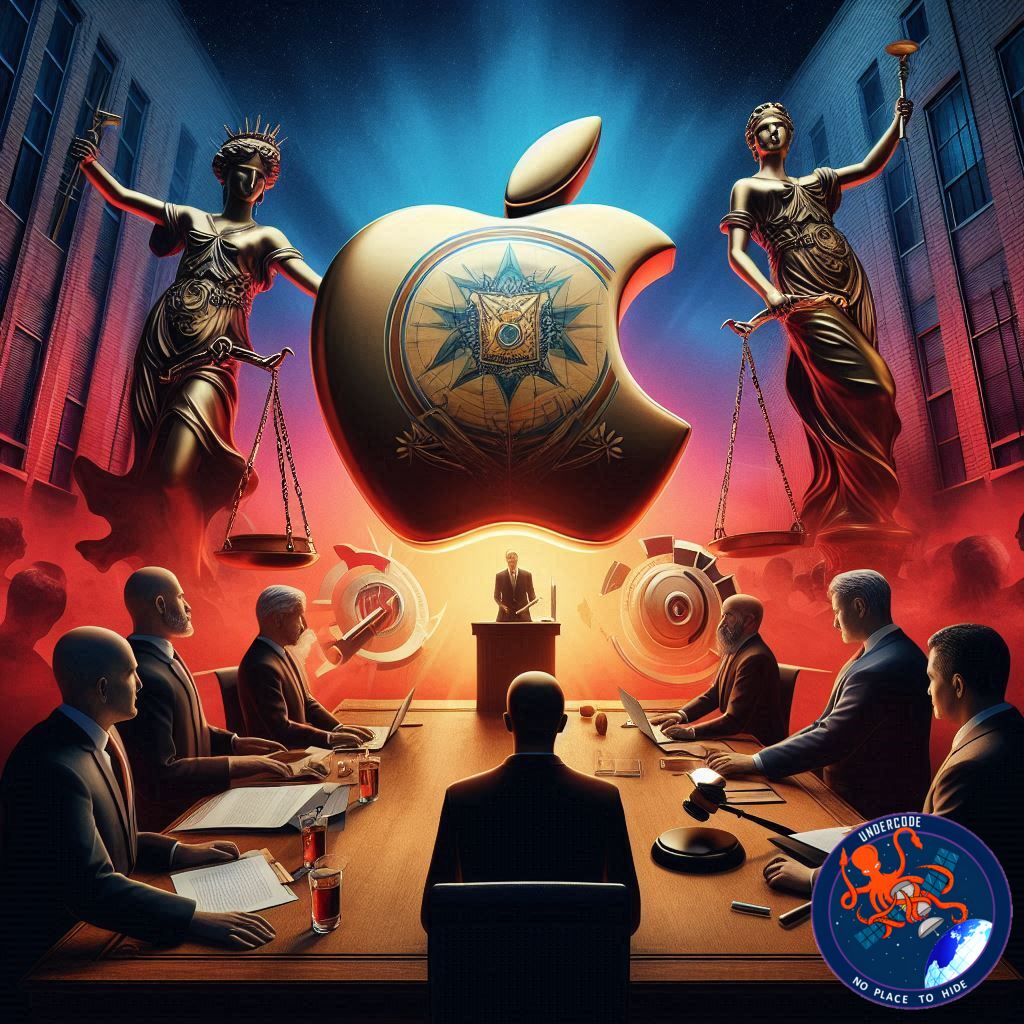
India’s tech and regulatory landscape is changing quickly, and one of the world’s biggest companies now finds itself in the center of a legal storm. Apple has filed an aggressive challenge against India’s newly amended antitrust penalty law, a law that allows the Competition Commission of India to calculate fines using a company’s global turnover, not only its India revenue. For Apple, this creates a potential financial exposure of up to 38 billion dollars, a risk large enough to trigger one of the most consequential legal battles the Indian technology ecosystem has seen in years.
Summary Of The Original
Apple Pushes Back Against A Penalty Framework That Could Reshape Tech Regulation
India’s new antitrust penalty law, amended in 2024, gives regulators the power to calculate penalties using a company’s worldwide turnover. Apple is challenging this framework at the Delhi High Court, stating that such an approach could lead to shockingly disproportionate fines. Internal filings show that Apple’s maximum exposure could be around 38 billion dollars, calculated at 10 percent of its global turnover over three fiscal years. Apple argues that this method is arbitrary, unjust, unconstitutional, and lacks reasonable proportionality.
A Case Rooted In Ongoing Disputes
The conflict originates from an antitrust battle started in 2022, involving Tinder-owner Match Group and several Indian startups. They accused Apple of abusing dominance in its iOS app ecosystem. Investigators allegedly found anti competitive conduct, although Apple denies all wrongdoing and the CCI has not issued its final decision. Apple is now seeking protection from what it calls the retroactive and unfair application of the new law, citing an earlier unrelated case from November 10 in which the CCI used the global turnover rule for a violation that occurred a decade prior.
Apple Defends Itself As A Smaller Player In India
The company maintains that it is still a relatively small competitor in India compared to Android, which dominates the smartphone market. Yet Apple’s user base in the country has quadrupled in the last five years, making India one of the company’s fastest growing markets. The CCI previously concluded that Apple was preventing third party payment processors from operating within in-app purchases, where Apple’s fee can reach 30 percent. Match Group argued that global turnover penalties would deter repeated violations, while Apple contends that fines should only apply to the revenue of the specific segment involved in wrongdoing.
The Example Apple Used To Make Its Case
In court, Apple compared the situation to fining a stationery business based on the revenue of its separate toy division. If the toy division makes only 100 rupees, but the stationery arm earns 20,000 rupees, Apple argues it makes no sense to fine the entire business based on global revenue outside the alleged violation. Legal experts say the law now clearly empowers the CCI to consider global turnover, which means Apple faces an uphill battle when its plea is heard on December 3.
What Undercode Say:
A High Stakes Legal Gambit
Apple’s challenge is far more than a procedural objection. It represents a philosophical clash between national regulation and global corporate power. India is signaling that it wants penalties strong enough to influence the behavior of trillion-dollar companies. Apple is signaling that such penalties must remain grounded in the specific market where the alleged violation takes place. The battle exposes how regulators worldwide are testing new tools to rein in digital gatekeepers whose influence crosses borders and economies.
The Broader Conflict Over Digital Market Fairness
The dispute also highlights a growing pattern. Across Europe, the United States, South Korea, and now India, regulators are trying to ensure fair access to app ecosystems. Apple’s restrictive in-app payment rules have long been criticized by developers who feel cornered by fees that could reach 30 percent. India’s startups have grown more vocal, arguing that they cannot compete or innovate freely when enclosed within Apple’s controlled environment. Apple counters that its ecosystem protects users from fraud and maintains consistent quality standards. The philosophical tension between innovation and regulation is at the heart of this case.
Why The 38 Billion Dollar Exposure Matters
A penalty at that scale would not merely be punitive. It would reshape Apple’s global compliance strategy. Even the possibility of such fines signals that India wants to be seen as a strong regulator, not a market that bends to multinational influence. Apple fears that if India succeeds in applying global turnover penalties, other nations may adopt similar frameworks, creating a ripple effect that could multiply the financial risks of any future antitrust dispute. The company’s filing reflects an attempt to stop that trend before it spreads.
The Retroactivity Question
The retrospective use of the new penalty rules is a key trigger for Apple’s constitutional challenge. Retroactive penalties undermine business predictability. Regulators argue that the amendment clarifies existing powers. Apple argues it changes the game entirely. Courts will now have to decide whether regulatory reforms can apply to decades old violations. Their decision will shape how companies evaluate legal risk in India going forward.
Apple’s Framing As A Minor Player
Apple’s insistence that it is only a “small player” in India cannot be dismissed. Android controls the vast majority of the Indian smartphone market. Apple’s presence is growing, but still modest by comparison. If a company without majority market share can be fined based on global turnover, Apple fears the same rule could be applied in any emerging market where it remains a minority player. This makes India’s ruling a global precedent.
The Political And Economic Backdrop
The Indian government is aggressive in its push for competitive digital markets. The country is building a powerful digital regulatory regime, from competition laws to online marketplace rules. Apple’s challenge lands at a time when India wants to assert sovereignty over digital commerce. The case will therefore test the balance between national lawmaking power and multinational influence.
How The Outcome Could Shape Other Industries
If Apple loses, the precedent could impact global firms operating in sectors like e-commerce, cloud services, fintech, and social media. Any sector dominated by large global companies could become subject to global turnover fines. Regulators in other countries may take notice. Apple’s court filing is not only about protecting itself but about drawing a line around how far national regulators can reach into global business revenue.
Why Developers Are Watching Closely
Startups and app developers see this case as a turning point. Many have argued for years that Apple’s payment policies create artificial barriers and reduce consumer choice. They hope a strong regulatory stance will open alternative payment channels and lower costs. The outcome may shift bargaining power within app economies across India. A win for Apple could maintain the status quo. A win for the CCI could break open the ecosystem.
A Legal Battle With Global Consequences
This case is not an isolated regulatory skirmish. It is a global symbolic confrontation. The Delhi High Court ruling will either validate India’s assertive regulatory approach or set boundaries on the enforcement of global turnover based penalties. No matter the outcome, Apple, developers, regulators, and tech observers worldwide will feel the impact.
🔍 Fact Checker Results
Global turnover penalties are confirmed in the 2024 amendment to India’s antitrust law. ✅
Apple’s estimated 38 billion dollar exposure is based on its own court filing. ✅
The CCI has not issued a final ruling in the original antitrust case against Apple. ❌
📊 Prediction
India’s regulatory stance is unlikely to soften soon, and courts may prioritize legislative clarity over corporate objections. 📈
Apple may win partial relief, but full exemption from global turnover penalties appears unlikely. 🔧
The ruling could inspire similar laws in emerging markets seeking stronger control over large tech companies. 🌏
🕵️📝✔️Let’s dive deep and fact‑check.
References:
Reported By: www.deccanchronicle.com
Extra Source Hub (Possible Sources for article):
https://www.quora.com/topic/Technology
Wikipedia
OpenAi & Undercode AI
Image Source:
Unsplash
Undercode AI DI v2
Bing
🔐JOIN OUR CYBER WORLD [ CVE News • HackMonitor • UndercodeNews ]
📢 Follow UndercodeNews & Stay Tuned:
𝕏 formerly Twitter 🐦 | @ Threads | 🔗 Linkedin | 🦋BlueSky | 🐘Mastodon


