
Listen to this Post
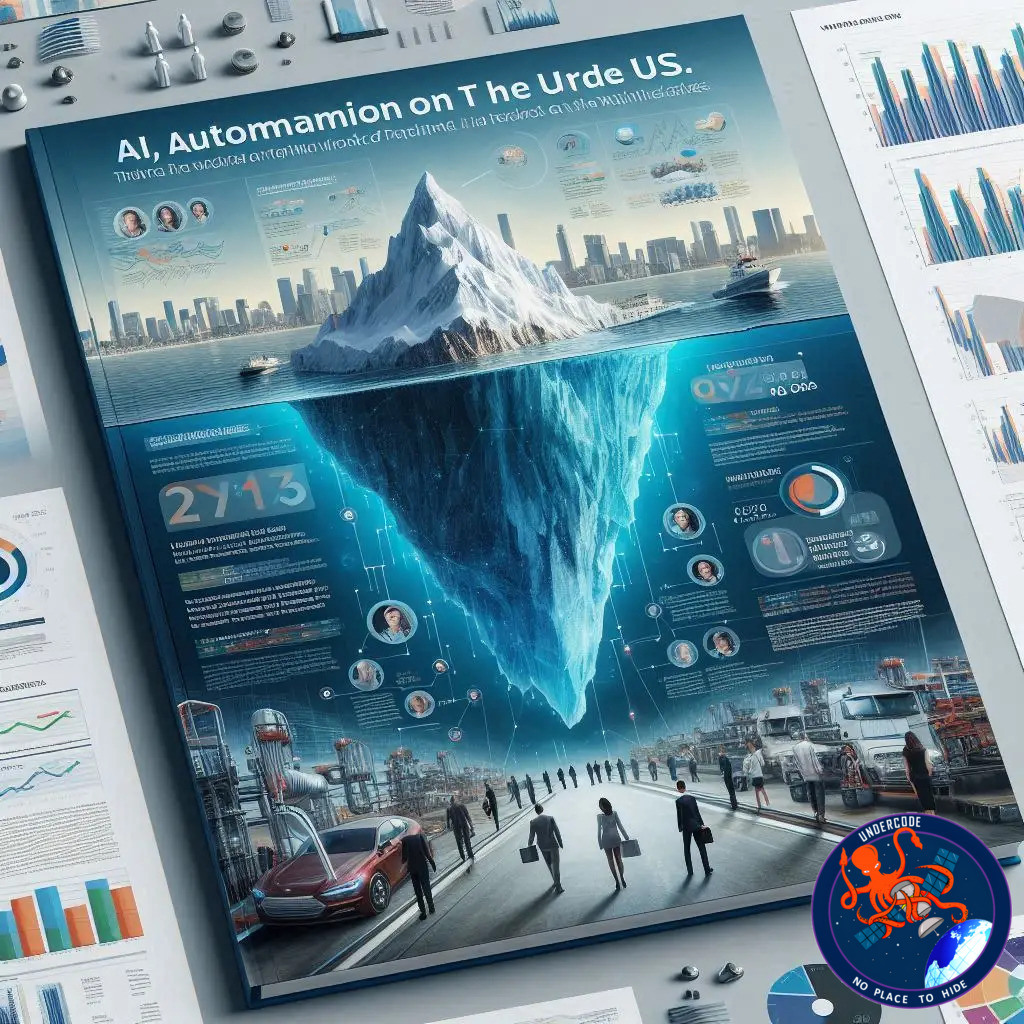
Introduction: Rising Automation Pressures Reshape the American Labour Market
A sweeping new study from the Massachusetts Institute of Technology puts a hard number on a question that has hovered for years. How many US jobs can artificial intelligence already perform today, not someday in the future but right now? Using a high-resolution model of the American workforce, researchers reveal that automation is not confined to Silicon Valley or specialised tech hubs. Instead, it is quietly reshaping industries across finance, healthcare, logistics, and professional services. The findings are sobering, ambitious and deeply instructive for policymakers who must now prepare for a wave of disruption that is both mathematically measurable and geographically widespread.
the Original
AI Exposure Across the National Workforce
A new MIT study estimates that AI systems today can already perform the equivalent of 11.7 percent of current US job tasks. That figure corresponds to roughly 1.2 trillion dollars in wages spread across multiple sectors, including finance, healthcare, logistics, and administrative services.
The Iceberg Index and Its Approach
The study is powered by the Iceberg Index, a simulation tool developed by MIT and Oak Ridge National Laboratory. The index treats the entire US workforce of 151 million individuals as agents defined by skills, tasks, occupations, and geographic locations. It models more than 32,000 skills across 923 occupations and distributes them across 3,000 counties to determine where current AI systems can already handle specific job functions.
Visible Versus Hidden Exposure
Researchers highlight a striking contrast between visible layoffs in technology and computing sectors and the much larger hidden exposure across other industries. Tech-related wage exposure amounts to just 2.2 percent of the total, or around 211 billion dollars. Yet beneath the surface lie routine tasks in HR, finance, logistics, office administration, and other fields that together represent the full 1.2 trillion dollars of at-risk labour.
Policy Tool, Not a Prediction Engine
The Iceberg Index does not aim to predict exactly when or where jobs will disappear. Instead, it offers policymakers a structured environment to test scenarios before investments and legislative decisions are made. It enables governments to simulate how AI shifts skills, employment flows, and local economic indicators before those effects appear in the real world.
State-Level Collaboration and Validation
Tennessee, North Carolina and Utah participated in validating the model with their own labour data. Tennessee has already referenced the index in its statewide AI Workforce Action Plan. Utah is preparing a similar document. North Carolina lawmakers note that the tool’s precision, which can drill down to census blocks, helps match existing skills to future automation risks and understand potential shifts in GDP and employment within different regions.
Nationwide View of Automation Hotspots
One of the index’s key contributions is its ability to reveal exposed occupations across all 50 states, including inland and rural areas. The report emphasises that Project Iceberg helps policymakers identify risk hotspots, prioritize training or infrastructure investments, and test interventions before committing costly resources.
What Undercode Say:
High-Resolution Mapping Shifts the Future of Workforce Planning
The Iceberg Index represents an evolution in labour analytics. Traditional forecasts rely heavily on surveys or historical models. This tool, however, simulates worker behaviour at an individual skill level, which offers unmatched granularity. It turns the labour force into a dynamic digital twin where policymakers can stress-test assumptions long before real workers feel the impact.
A New Lens on Hidden Vulnerabilities
What makes this study powerful is the way it exposes invisible vulnerabilities. Public discussions often focus on AI-related job losses in tech, yet those roles constitute only a small slice of the overall wage exposure. The real disruption lies in repetitive administrative tasks woven through every industry. When you aggregate thousands of small task shifts across HR departments, call centres, logistics teams, or billing units, the total impact becomes enormous.
Why 11.7 Percent Is More Significant Than It Seems
Even though 11.7 percent may sound modest at first glance, it accelerates a much larger structural transformation. These are not fringe or speculative future tasks. They are functions that AI systems can handle with capabilities available today. This creates pressure for companies to re-evaluate cost structures and efficiency strategies, and it raises the stakes for governments who must prepare the workforce before displacement becomes widespread.
A National Map That Reveals New Patterns
The model’s county-level precision is especially important. AI exposure is not uniform; it is shaped by the skill concentration of local economies. Rural regions that rely on administrative processing or transport coordination may face more disruption than major cities that have diversified labour pools. For the first time, state leaders can identify which communities stand on fragile ground and which are positioned to adapt.
From Prediction to Preparedness
The Iceberg Index’s greatest strength is that it does not claim to predict job losses. It instead equips policymakers with scenario planning tools. They can test how retraining investments affect regional resilience or how new education pathways could mitigate displacement. This transforms workforce planning from reactive crisis management to proactive design.
The Coming Era of Skill Displacement, Not Job Displacement
The researchers’ message is subtle but critical. Jobs do not vanish overnight. Tasks shift first. When enough tasks migrate, roles begin to evolve. This means that the most urgent challenge is not unemployment but skill mismatch. Without new learning pathways, millions of workers may become stranded in roles where the most valuable tasks have migrated to automated systems.
The Economic Stakes Are Enormous
With 1.2 trillion dollars in wages exposed, the financial implications rival some of the largest economic transformations in US history. Policymakers who treat AI as a narrow tech-sector issue are underestimating its systemic footprint. The index shows that automation is a mainstream economic force that will ripple across supply chains, education systems and labour markets for decades.
A Framework Built for Public Accountability
Another strength of the Iceberg Index is its transparency. By showing localised data, it empowers state governments to communicate clearly with citizens. Residents can see why policy investments or retraining initiatives are directed toward certain regions rather than others. This could help prevent political backlash and maintain trust during technological transitions.
If Used Properly, It Becomes a National Safety Instrument
The US now has a tool capable of preventing blind spots in the transition to AI-driven productivity. Whether policymakers will use it effectively remains a separate question. The study’s value will depend on the political willingness to take early action, invest in retraining, and design resilient economic systems before disruption accelerates.
Fact Checker Results
✅ The study confirms that AI can already perform tasks equal to 11.7 percent of US workforce labour.
✅ Wage exposure estimates reach approximately 1.2 trillion dollars across major industries.
❌ The Iceberg Index does not predict job losses by date or location; it only simulates scenarios for policymaking.
Prediction
AI-related task automation will spread deeper into administrative and operational roles over the next decade. 📊
States that adopt early retraining strategies will see faster economic adaptation and reduced shock in rural regions. 📈
Localised skill modelling tools like the Iceberg Index will become standard instruments for national workforce planning. 🔍
🕵️📝✔️Let’s dive deep and fact‑check.
References:
Reported By: timesofindia.indiatimes.com
Extra Source Hub (Possible Sources for article):
https://www.linkedin.com
Wikipedia
OpenAi & Undercode AI
Image Source:
Unsplash
Undercode AI DI v2
Bing
🔐JOIN OUR CYBER WORLD [ CVE News • HackMonitor • UndercodeNews ]
📢 Follow UndercodeNews & Stay Tuned:
𝕏 formerly Twitter 🐦 | @ Threads | 🔗 Linkedin | 🦋BlueSky | 🐘Mastodon


