
Listen to this Post
Introduction
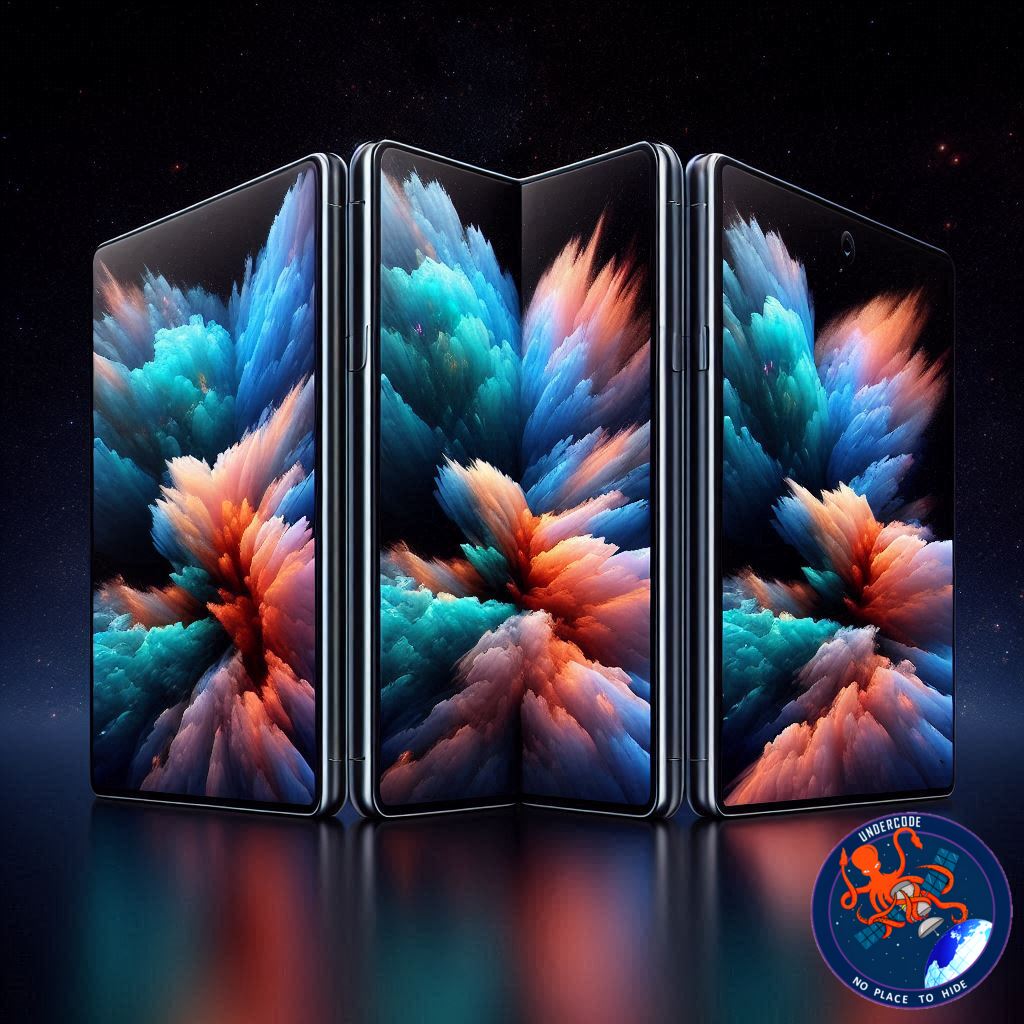
For years, the tech world whispered about a Samsung phone that could fold not once, but twice. A mythical device that promised a tablet-sized experience inside a pocket-friendly frame. Today, that myth turned into a headline. Samsung has officially unveiled the Galaxy Z TriFold—its first trifold smartphone—and with it, the final answers everyone wanted: the price, the release dates, and the markets lucky enough to get it first.
Below is a full, human-style rewrite of the original article, expanded with deeper narration, context, and analysis.
Official Announcement and First Details
Samsung has finally ended the cycle of leaks, renders, and speculative pricing that surrounded its first tri-folding smartphone. After months of anticipation, the Galaxy Z TriFold is now a real product—introduced as the newest piece in Samsung’s expanding family of foldable form factors, which now includes three distinct designs.
Pricing Clarity After Months of Rumors
One of the biggest mysteries was the price tag. Earlier rumor mills suggested shocking numbers, some reaching as high as $3,000. Samsung proved those estimates wrong. The Galaxy Z TriFold will debut in South Korea at KRW 3,590,400, equivalent to roughly $2,500—a steep figure, yet lower than the exaggerated predictions.
Initial Launch Market Confirmed
South Korea will be the first country where buyers can actually walk into a store and hold this experimental device. The official South Korea release date is December 12, 2025, marking the phone’s debut just in time for peak holiday shopping.
Rollout Timeline for Global Markets
While exact dates for every market remain unclear, Samsung outlined the broader rollout plan. The device will appear before the end of December in China, Taiwan, Singapore, and the UAE, signaling Samsung’s confidence in launching this product first in markets where foldables already have strong traction.
US Release Window Set for Early 2026
American consumers will need patience. Samsung noted that the TriFold will reach the United States sometime in Q1 2026, meaning any time between January and March. It’s a slower rollout than some expected, but one that aligns with Samsung’s history of cautious scheduling for unconventional devices.
Price Comparison With Fold 7
Samsung’s newest tri-fold costs about $700 more than the Galaxy Z Fold 7. Given that the TriFold introduces more complex engineering and a brand-new hinge system, this pricing gap seems calculated rather than surprising.
Hands-On Availability at Select Stores
Samsung will allow potential buyers to explore the TriFold at select flagship stores in the launch regions. This hands-on opportunity may be essential, as the TriFold represents a dramatic shift in smartphone ergonomics—something users will want to test before committing.
Author Background
The original article was written by Adnan Farooqui, a veteran writer at SamMobile known for his long-form posts and deep interest in technology, finance, Swiss timepieces, and Formula 1.
What Undercode Say:
The Galaxy Z TriFold marks a turning point in how Samsung approaches foldable evolution. Not long ago, companies treated folding phones as experiments—fragile prototypes wrapped in luxury pricing. But the TriFold signals a transition: triple-hinge designs are no longer theoretical. They are entering commercial reality.
What makes the TriFold especially interesting is not the engineering alone, but the strategic timing. By releasing it in South Korea first, Samsung taps into a loyal market with high adoption of early-stage foldable technology. This reduces risk while generating real performance data from a tech-savvy audience.
The price point—around $2,500—positioned lower than earlier rumors, indicates Samsung’s attempt to make this device aspirational rather than unattainable. If it were launched at $3,000, it would risk alienating even dedicated foldable enthusiasts. Instead, the pricing structure places the TriFold as an “elite but reachable” product, giving Samsung room to scale and refine future generations.
From a design perspective, tri-folding phones solve a problem the industry has faced for years: how to deliver large-screen productivity without creating giant slabs. The TriFold can be compact, medium-sized, or fully expanded, offering a dynamic screen experience unmatched by any conventional smartphone or tablet.
Still, this new category introduces several questions. How will durability hold up after thousands of folds? Will the hinge collect dust more easily? Can software adapt cohesively to three different display configurations? These concerns will shape the long-term perception of the device far more than the launch spectacle.
The rollout strategy is equally revealing. Samsung placing China, Taiwan, Singapore, and the UAE ahead of the US underscores a shift in global tech influence. Markets in Asia and the Middle East are increasingly driving demand for premium flagships, often outpacing Western markets in adoption speed. Samsung knows this—and is prioritizing accordingly.
In the US, a Q1 2026 launch allows Samsung to observe early performance and correct any hardware issues before exposing the device to the world’s most critical reviewers. It is a risk-managed strategy, one that suggests the TriFold is a long-term bet rather than a one-off novelty.
Ultimately, the Galaxy Z TriFold is not just a product—it is a statement. A declaration that foldable innovation is accelerating, not slowing. Samsung has drawn the line in the sand for competitors: the next phase of mobile evolution is multi-fold hardware, and the race has officially begun.
Fact Checker Results
✅ The price is correctly listed as KRW 3,590,400 (approximately $2,500).
❌ No global release dates beyond Korea are confirmed, only general windows.
✅ Rumors of a $3,000 price were indeed disproven by Samsung’s announcement.
Prediction
Samsung’s TriFold could spark a new category of ultra-premium phones, pushing other brands to experiment with multi-fold designs 📱. Demand will likely start slow but rise as second-generation models refine durability and reduce cost 🔧. By 2027, tri-fold devices may become a mainstream alternative for users seeking tablet power inside a smartphone footprint 🚀.
🕵️📝✔️Let’s dive deep and fact‑check.
References:
Reported By: www.sammobile.com
Extra Source Hub (Possible Sources for article):
https://www.linkedin.com
Wikipedia
OpenAi & Undercode AI
Image Source:
Unsplash
Undercode AI DI v2
Bing
🔐JOIN OUR CYBER WORLD [ CVE News • HackMonitor • UndercodeNews ]
📢 Follow UndercodeNews & Stay Tuned:
𝕏 formerly Twitter 🐦 | @ Threads | 🔗 Linkedin | 🦋BlueSky | 🐘Mastodon


